Can an Essential Oil Diffuser Be Used as a Humidifier?
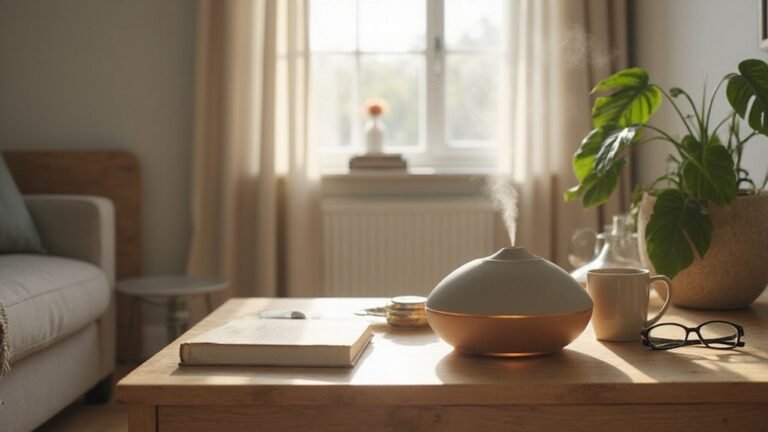
If you’re wondering whether an essential oil diffuser can also act as a humidifier, the short answer is yes, but with limits. While it can add a tiny bit of moisture to the air, it won’t effectively combat dryness or improve air quality.
In this article, you’ll learn why a dedicated humidifier is a better choice for relieving dry skin, static, and other humidifier benefits. Keep reading to see how these two devices really compare.
Why People Ask: Can an Essential Oil Diffuser Replace a Humidifier?
An essential oil diffuser cannot replace a humidifier. While both devices release a visible mist and use water, their functions are very different. Diffusers are designed to disperse fragrances and small amounts of water vapor—typically 30 to 100 milliliters per hour—making them ineffective at significantly increasing room humidity. Humidifiers, on the other hand, release much larger volumes of moisture—around 200 to 700 milliliters per hour—to alleviate dry air. Humidifiers primarily target physical health by alleviating conditions like dry skin, sinuses, and respiratory discomfort. For those wondering about the broader cooling benefits of moisture in the air, even the best units for window air conditioners are not designed to add humidity but to remove it. Many portable air conditioners with window kits are reviewed for their quality, performance, and value as an alternative cooling solution. Choosing a dedicated humidifier over a diffuser is especially important for those who also need to manage excess moisture in their space.
Device maintenance also differs. Diffusers require regular cleaning to prevent oil residue buildup, which can affect performance and air quality. Humidifiers may need cleaning too, but their larger water reservoirs and different components mean maintenance routines are distinct.
If your goal is to add scent to a space, a diffuser works well. But for actual relief from dry air, you need a dedicated humidifier. Relying on a diffuser alone won’t solve humidity problems because it simply isn’t built for that purpose.

3.5L Top-Fill Design: The wide top opening makes refilling and wiping the tank simple. The 1 gallon capacity supports daily use in bedrooms, living rooms, offices, and plant corners without frequent refills.
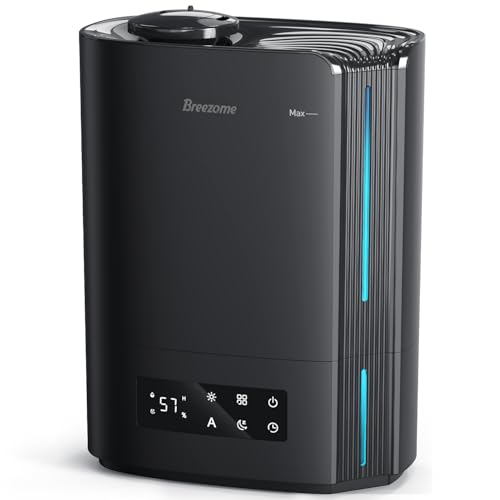
POWERFUL HUMIDIFICATION, PERFECT FOR BEDROOM & BABY ROOM: Our ultrasonic humidifier has a 6L (1.6 gallon) large tank that works great in large rooms up to 500 sq feet. It allows a long lasting humidification for up to 60 hours.

CUSTOM MIST LEVELS AT YOUR FINGERTIPS: Choose from adjustable mist levels to dial in your ideal humidity with high, medium, or low output for personalized comfort in larger spaces. Use for bedrooms, as a baby humidifier for nursery - these diffusers even work for indoor houseplants or living rooms. This ultrasonic humidifier delivers the right amount of cool mist exactly where you need it. Helps with congestion, dry skin, allergies, for a comfortable environment year-round
Diffuser vs. Humidifier: Why Adding Scent Isn’t Adding Humidity
Adding scent with an essential oil diffuser does not significantly increase humidity. Diffusers typically have water tanks holding less than a cup, usually around 1 to 2 ounces. This limits their vapor output to about 30 to 100 milliliters per hour. For context, space heater use can draw significant energy, yet a diffuser’s minimal output means it costs far less to run. In contrast, humidifiers feature much larger reservoirs, often half a gallon or more, enabling them to release 200 to 700 milliliters of water vapor in the same period. Therefore, while you get pleasant aromas, the moisture they produce is minimal and won’t effectively combat dry air. For those suffering from dry eyes, a dedicated humidifier** provides the necessary moisture output to alleviate symptoms. If you seek genuine humidity relief, a humidifier remains the practical choice. Interestingly, water collected from a dehumidifier is not recommended for drinking** due to potential contaminants and microbial growth.
3 Scenarios Where a Diffuser Works for Humidity (and 5 Where It Won’t)
A diffuser can provide a humidity boost in small enclosed spaces—specifically, areas like a compact closet or tiny office. In these environments, the mist from the diffuser becomes visible and hangs in the air, offering a subtle increase in moisture. Over a short period, such as two hours, it can raise the humidity of a small bedroom by 2% to 5%. This is enough to provide temporary relief for dry air but not suitable for sustained humidity control. If your primary goal is aromatherapy, the added moisture remains a secondary benefit. It can support plant care in a tiny terrarium or create a faint air purification effect, but only when low humidity levels are involved. However, a diffuser cannot match the performance of a dedicated dehumidifier for controlling pests that thrive in damp conditions. Additionally, continual use and maintenance are necessary since residue buildup from essential oils requires regular cleaning to ensure safety and optimal operation.
Moisture Output: How Much Does a Diffuser Really Add to a Room?
A diffuser adds only about 20 to 40 milliliters of moisture per hour to a room. This small volume limits its ability to significantly raise humidity levels. For comparison, a dedicated humidifier can output several hundred milliliters to liters of moisture per hour. Running a diffuser for two hours in a 10 by 12-foot room may increase relative humidity by just 2% to 5%. The visible vapor might make it seem like the air is becoming humid, but the actual water added is too little to effectively combat dry skin or sinus discomfort. A dedicated humidifier is specifically engineered to maintain optimal moisture levels for relieving dry mouth and related symptoms. Diffusers are designed primarily for scent distribution, not for humidifying a space. Treat their effect as localized and temporary, not a replacement for whole-room humidification systems. For instance, the InnoGear 400ml Essential Oil Diffuser, with its large capacity water tank, still only disperses a limited volume of moisture per hour, as its primary function is scent distribution. To avoid mold and buildup in a diffuser, regular cleaning is essential, much like following the step-by-step method recommended for dedicated humidifiers. If you are considering a DIY approach to improving air quality, building a simple method with basic materials can offer a more substantial impact on moisture levels than any scent-focused diffuser.

𝙁𝙖𝙨𝙩 𝙃𝙪𝙢𝙞𝙙𝙞𝙛𝙞𝙘𝙖𝙩𝙞𝙤𝙣 𝘼𝙡𝙡 𝙉𝙞𝙜𝙝𝙩: Runs for up to 25 hours on low thanks to its SUPER LARGE capacity of 2.5 liters. The soothing moisture helps quickly relief congestion and dry throat.

[LARGE CAPACITY & LEAK-PROOF TOP FILLING] 2.1-gallon large room humidifier provides up to 48 hours of continuous use for all-night operation; leak-proof top-fill design allows easy water pouring without tilting or spills. 300mL/h mist output humidifies up to 500-800 sq.ft, making it the perfect humidifier large room, humidifiers for bedroom, air humidifier for home, living room and office.

𝙀𝙛𝙛𝙤𝙧𝙩𝙡𝙚𝙨𝙨 𝙍𝙚𝙡𝙞𝙚𝙛 𝙁𝙧𝙤𝙢 𝘿𝙧𝙮 𝘼𝙞𝙧: Designed for ultimate comfort, this humidifier effectively covers rooms up to 505 ft² with a powerful 300 mL/h mist output. Its 6 L tank allows up to 60 hours of quiet, continuous humidification
5 Signs Your Room Needs a Humidifier, Not a Diffuser
If your hygrometer shows below 30 to 35 percent relative humidity, your room needs a humidifier, not a diffuser. Diffusers only add a small amount of moisture, which isn’t enough to combat dry air. You’ll see signs like dry, itchy skin, chapped lips, and a scratchy throat that a diffuser’s mist won’t improve. Static shocks on doorknobs and dust that lingers are additional clues that the air is too dry. Wooden floors might start creaking or warping, and paint edges could lift or crack. Simply using oils won’t fix these issues, since diffusers spread fragrance—not hydration. If you wake up congested or notice nosebleeds, your room’s humidity is likely too low. Turning up your diffuser won’t alleviate dry sinuses or protect furniture; only a humidifier can raise humidity levels into the natural 30 to 50 percent comfort zone. Maintaining proper humidification helps reduce the spread of viruses and bacteria in your home.
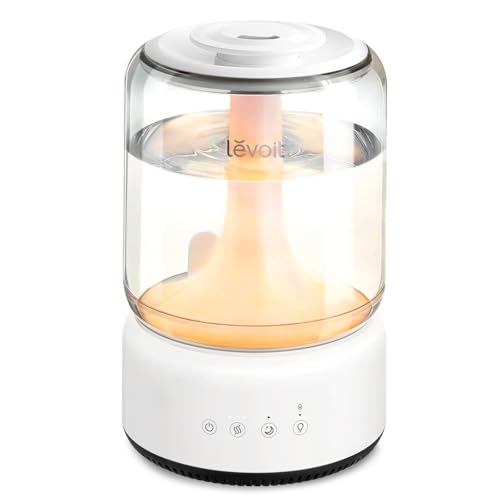
𝑮𝒐𝒐𝒅𝒃𝒚𝒆 𝑫𝒓𝒚 𝑨𝒊𝒓, 𝑹𝒆𝒔𝒕𝒐𝒓𝒆 𝑪𝒐𝒎𝒇𝒐𝒓𝒕: 270 mL/h mist output, 432 ft² coverage, and 46.8-inch mist height* to powerfully humidify your room and relieve dryness fast. *The height includes the product height.

𝟰𝗟 𝗟𝗮𝗿𝗴𝗲 𝗧𝗮𝗻𝗸 𝗳𝗼𝗿 𝗖𝗼𝗻𝘁𝗶𝗻𝘂𝗼𝘂𝘀 𝗖𝗼𝗺𝗳𝗼𝗿𝘁: Enjoy quiet sleep without congestion, coughing, or dry mouth, DREO baby humidifier's ultrasonic atomization brings noise down to 28dB, while its 4L tank provides up to 36 hours of moisture without the need to refill.

𝐅𝐨𝐫𝐠𝐞𝐭 𝐚𝐛𝐨𝐮𝐭 𝐜𝐨𝐧𝐬𝐭𝐚𝐧𝐭 𝐫𝐞𝐟𝐢𝐥𝐥𝐬: With a 3L tank and convenient top-fill design, dreo humidifiers for bedroom offer up to 30 hours of long run time humidification in sleep mode, ensuring dry air is no longer an issue for your family, plants, and baby.
Why Adding Oils to a Diffuser Is Fine, But Adding Oils to a Humidifier Is Not
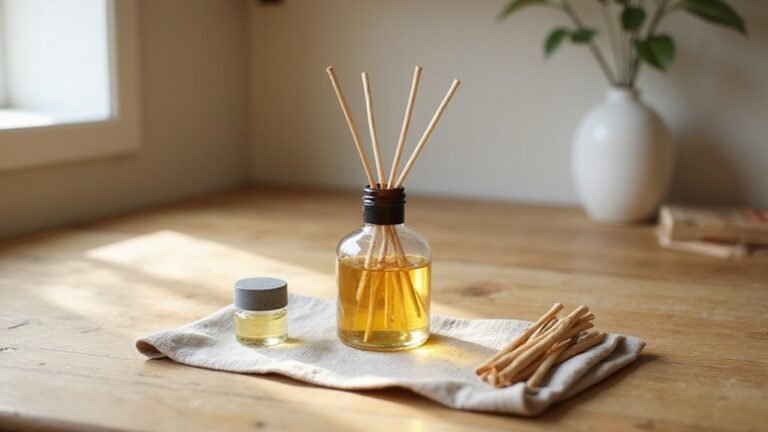
Adding oils to a humidifier is not recommended because it can cause damage to the device. Unlike diffusers, which are specifically designed to handle essential oils with compatible materials and components, standard humidifiers are not built for this purpose. Introducing oils into a humidifier can clog filters, damage the plastic tank, and harm the ultrasonic membrane or wick. This can lead to reduced mist output, device malfunction, and even void your warranty. Furthermore, heating vaporizers to disperse oils can alter the chemical structure of the oils, potentially creating harmful compounds. To safely enjoy aromatherapy, stick to using essential oils solely in a diffuser and keep your humidifier dedicated to pure moisture.
Hybrid Diffuser-Humidifiers: When One Device Does Both
Hybrid diffuser-humidifiers can provide both aromatherapy and a slight increase in humidity, but their capabilities are limited. These ultrasonic units are designed to handle essential oils safely because their water tanks and vibration plates are compatible with oils without damage. However, the mist they produce is relatively low—most release only 30 to 100 milliliters of vapor per hour compared to a traditional humidifier’s 300 to 500 milliliters. In a small bedroom, this typically results in a humidity lift of just 2% to 5% over two hours. The reservoirs are usually compact, ranging from 100 to 500 milliliters, so they are not suitable for whole-room humidification. Always check the product label; if it doesn’t explicitly mention humidification features, you are mostly getting scent dispersion with minimal moisture, not a true dual-function device.

【Great Improve Air Qualities】 Essential oil diffuser humidifiers can product a large number of negative oxygen ion sterilize, remove dust and purify air effectively. Portable for bedroom, office, spa, kitchen, and more!

Difusor to Improve Air Quality: The cool mist aroma diffuser adopted the ultrasonic technology to create a soft environment by adding essential oils.Use it to improve your home's atmosphere quality, cover the smell of pets or smoking, and protect your family from excessively dry season, dust, and more! It suits salon,bedroom,large room, living room, nursery, office, and so on.

Tailored Timer Options: Craft the ideal atmosphere for any activity with four customizable timer settings—continuous diffusion or 60, 180, and 360-minute. Whether you're working, meditating, or winding down for the night, adjust the timer to your exact needs and enjoy a truly personalized ambiance, effortlessly.
Safe Diffuser Use: Avoid Mold, Over-Misting, and Oil Residue
To use ultrasonic diffusers safely and prevent mold, over-misting, and oil residue, follow these guidelines. Always empty the water tank after each use and do not let water sit for more than six hours. Running the diffuser intermittently rather than continuously helps reduce excess moisture buildup. Keep your room’s humidity below 60% by monitoring it with a hygrometer, especially in areas prone to mold growth. Unlike ultrasonic models, evaporative humidifiers rely on a fan to wick moisture and do not produce visible mist. Weekly cleaning with a vinegar soak is crucial to remove oil film that can trap grime and foster mold. Using distilled water minimizes mineral scale formation, which can contribute to residue and damage. Ensure proper ventilation because stale indoor air and diffuser moisture can promote mold growth. After cleaning, dry all parts thoroughly before reassembling or storing the diffuser to prevent mold and residue buildup. In rooms with poor ventilation, diffuser moisture can promote mold growth, so limit use and open a window whenever possible. For those following Dr. Clore’s closed protocol, diffuser effectiveness is determined by oil quantity and particulate size, not by water mist alone. Adding a humidifier instead provides more direct cough relief by increasing overall air moisture without relying on essential oils.
Why a Dedicated Humidifier Beats Any Diffuser for Dry Winter Air
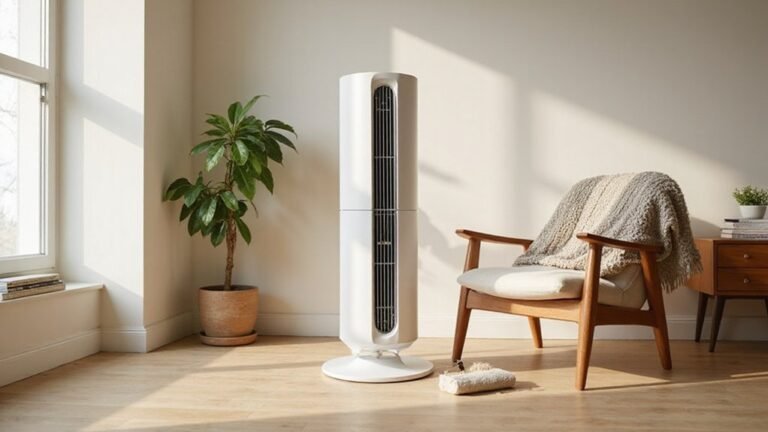
A dedicated humidifier is far more effective than a diffuser for increasing indoor moisture levels during winter. While diffusers output only about 30 to 100 milliliters of mist per hour, a humidifier can produce between 200 and 700 milliliters per hour. That’s a significant difference—about three to seven times more mist—which directly translates into better relief from dry air symptoms like cracked skin, sore throats, and static shocks. An air purifier, by contrast, filters particles from the air rather than adding moisture, but does not increase humidity like a dedicated humidifier does. Additionally, humidifiers use larger amounts of water (up to 6 liters) to achieve this higher output, unlike the minimal water volume in diffusers. For best results, a humidifier should be placed on a level surface away from walls, similar to proper portable air conditioner setup.
Diffusers primarily disperse scent and offer aromatherapy benefits, but they aren’t designed to tackle low humidity levels. In contrast, humidifiers are built specifically to restore moisture in the air, targeting the root cause of winter discomfort. If you want to breathe easier, hydrate your skin, and eliminate static, a dedicated humidifier is the clear choice. Relying on a diffuser alone simply doesn’t cut it when the goal is to combat dry indoor air effectively.