DIY Air Purifier: Does It Really Work?
If you’re wondering whether a DIY air purifier can really clean your home’s air, the answer is yes—when built correctly, they can cut smoke and dust by up to 90% in just 15 minutes.
They often match or even outperform store-bought HEPA units but cost a fraction of the price.
Keep reading to find out which design offers the best value for your space and needs.
What Exactly Can a DIY Air Purifier Do?
A DIY air purifier can effectively reduce airborne particles like smoke, pollen, and dust through media filtration. It can capture fine particulate matter (PM2.5) quickly, with tests showing up to 90% reduction within 15 minutes in small rooms. Choosing a design with multiple filters** can further improve performance, similar to how top window air conditioners maximize airflow. However, without additional sorbent media, it won’t remove odors or gaseous pollutants. To ensure optimal performance, regularly replace filters when they become dirty, as clogged filters diminish airflow and filtration efficiency. Placing your purifier at breathing height in heavily used rooms maximizes particle capture. For example, the Corsi-Rosenthal Box, using four filters in a cube, achieves a clean air delivery rate of 165-239 cfm through increased surface area and reduced airflow resistance. For basements, a similar high-surface-area design can help manage humidity-related particle issues, much like a top dehumidifier tackles moisture. To further extend the life of your build, choose a humidifier filter** designed for easy cleaning and replacement.
For better results, integrate your DIY purifier with your home’s ventilation system to increase air changes per hour, especially during wildfire events. Using a shroud can help minimize recirculation and boost efficiency by directing airflow appropriately. Remember, these devices target particles only; for comprehensive removal of gases and odors, consider adding specialized media or activated carbon filters.

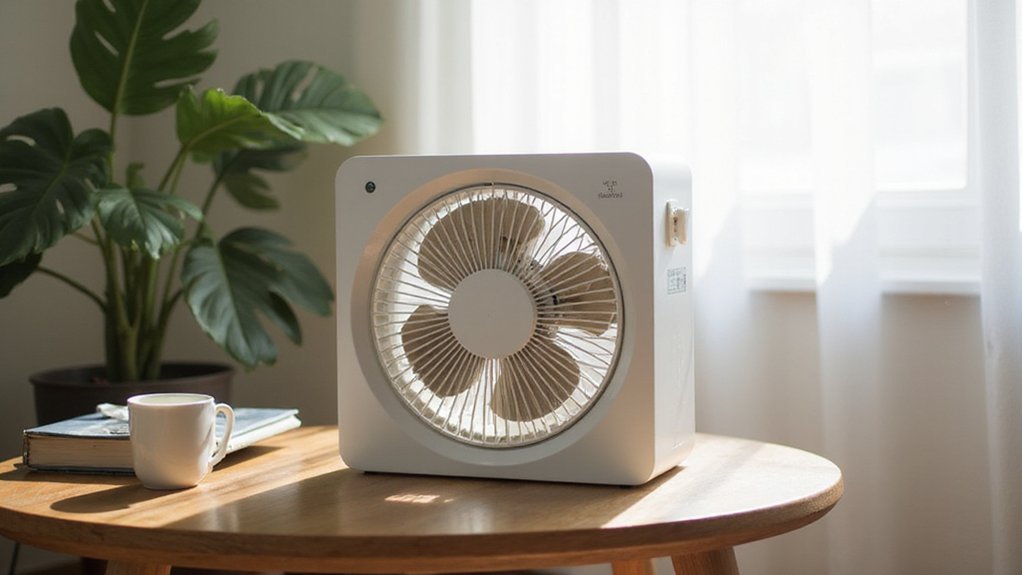
BOX FAN FILTER CLIPS: This air filter clip is specially designed for 20 inch furnace filter. If you have a box fan and furnace filter, so this clip will help you to make an affordable and effective attachment for your home or studio.
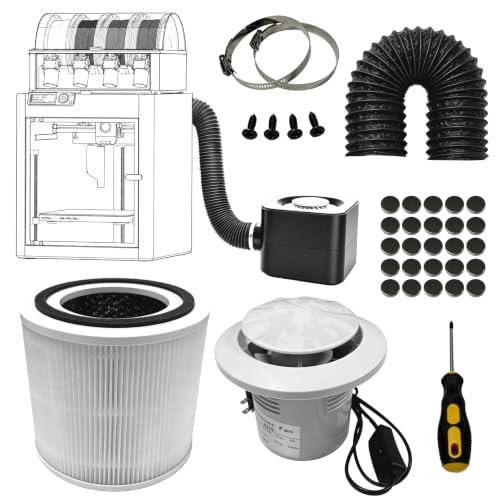
DIY Kit Assembly Required: This is a maker hardware kit that requires self-assembly. The outer housing needs to be 3D printed by the user. Tested STL model files for the shell are provided, and all functional hardware and small accessories are included in the package

MERV 8 Electrostatic Filtration: UBeesize premium air filter material are made from 100% non-woven polyester. Special electrostatic and tackifier agents ensure a greater dust holding capacity and effectively capture dust and pet dander, etc.
DIY Air Purifiers vs. Commercial HEPA: Which Wins?
DIY air purifiers often match or outperform commercial HEPA units in terms of cost-effectiveness and raw performance. You can achieve a comparable clean air delivery rate (CADR) for between $0.06 and $0.83 per unit, whereas commercial models typically range from $0.64 to $6.80 per CADR. This translates to savings of roughly five to ten times on the initial purchase. However, DIY setups tend to run louder and consume more electricity, making them less suitable for quiet spaces like bedrooms. For quiet operation at low fan speeds, a commercial HEPA unit might be preferable. Maintenance for DIY purifiers is generally simple—mainly swapping out filters on a box fan—but filter lifespan can vary significantly. Single-filter designs are the most affordable, while multi-filter arrangements increase costs. For instance, despite having lower single-pass filter efficiency, DIY CR boxes can achieve higher total CADRs that surpass many HEPA purifiers, validating their real-world effectiveness. For very humid conditions, a high-humidity dehumidifier can complement a DIY purifier by reducing moisture that fosters mold growth. Additionally, using a dehumidifier can improve overall comfort by preventing that sticky, clammy feeling in the air. For water damage restoration, selecting the right dehumidifier is critical, as it must efficiently remove moisture to prevent secondary damage and mold proliferation, making restoration-grade dehumidifiers a specialized choice. Ultimately, choosing between DIY and commercial comes down to your priorities: if you want low upfront costs and high performance per dollar, DIY could be the way to go. But if noise and quiet operation matter most, a commercial HEPA unit might serve you better.

Stretchable silicone, wider touching, reducing gap, more stable hold,no rattle: These box fan filter straps are designed with not just one fixed size fitment to turn the box fan air filter into a simple filter Setup.

Stretchable silicone, wider touching, reducing gap, more stable hold,no rattle: These box fan filter straps are designed with not just one fixed size fitment to turn the box fan air filter into a simple filter Setup.

Upgraded material, deeper grip, reducing gap, wider 4-point contact area, more stable hold,no rattle. These box fan filter clips are designed with an improved clip structure to turn the 20" box fan into a simple filter Setup.
What DIY Air Purifiers Can’t Remove
DIY air purifiers can remove particles like smoke, dust, and pollen from the air. However, they cannot handle everything. Standard box-fan filter setups lack chemical filtration, so gaseous pollutants, volatile organic Compounds (VOCs), and odors—such as those from smoke or cooking—can pass through unfiltered because activated carbon is missing from the setup. They also cannot inactivate microbes. While a DIY purifier can trap virus-laden aerosols as particles, it won’t kill or sterilize them. This means you’re reducing airborne virus levels but not disinfecting the air. Additionally, a dirty or saturated filter becomes nearly useless, so regular replacement is essential, especially during heavy smoke periods. Keep in mind, DIY units typically work only in one room and are limited to particle capture, not gas removal or sterilization. Multiple filters can be used to build multi-filter boxes that increase overall air cleaning capacity. Unlike dedicated units that use a refrigerant cycle, a box fan simply moves air without active cooling or condensation management. In contrast, a window air conditioner can provide higher air volume movement through its fan while also cooling the room, though it does not filter gases either. For odor control, a dedicated dehumidifier can help manage moisture and reduce musty smells that standard DIY setups cannot address.
Best DIY Air Purifier Designs for Smoke and Particles
The multi-filter cube, such as the Corsi-Rosenthal box, is the most effective DIY air purifier for smoke and particles. It uses four filters combined with a fan to provide a large surface area for capturing airborne contaminants. EPA tests show that this design achieves a Clean Air Delivery Rate (CADR) of 401 for smoke, making it highly efficient. For regular upkeep, changing the HEPA filter is essential to maintain peak performance over time. For buyers looking to compare performance metrics, a big room humidifier offers a different kind of air quality solution for large spaces. A two-filter, one-fan setup can also outperform single-filter models, reaching a CADR of about 263. However, the cube design is recommended for maximum filtration performance, especially in environments with heavy smoke or fine particles. Its multi-filter configuration offers superior coverage and particle removal compared to simpler or smaller DIY solutions. Choosing between this DIY approach and a dedicated appliance often depends on comparisons of running cost and the specific needs of the space.
Real Costs of Building and Running a DIY Purifier
The upfront cost of building a DIY air purifier can range from under $30 to over $280, depending on your design choices. A simple box-fan setup might cost between $28 and $40, making it an affordable alternative to some retail units—unless you find a retail model priced around $60. However, the initial price isn’t everything. Filter longevity significantly impacts your long-term costs. For example, a cuboid design with four HEPA filters costs about $70 initially but offers longer-lasting filters, which can reduce replacement expenses over time. Conversely, a custom build with MERV 13 filters may cost approximately $80 every six months for replacements. Electricity costs are generally minimal, often under $3 per month. So, while a lower initial investment might seem appealing, consider the ongoing expenses for filter replacements to determine the true cost over time. For those also suffering from dry mouth, a humidifier can provide targeted relief, with reviews highlighting the best humidifier for addressing that specific issue. Similarly, if centipedes are a concern, running a dehumidifier to keep centipedes out can help reduce the moisture that attracts them. For a reliable alternative, retail units often undergo rigorous testing to ensure consistent performance and value.
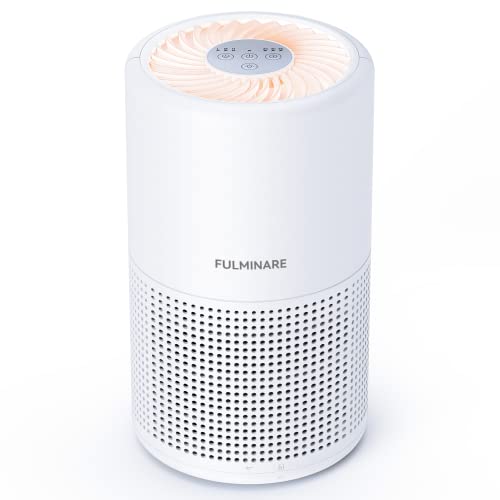
Efficient Particle Filtration: FULMINARE air purifier uses an H13 HEPA filter. Simply turn it on and maintain a clean and peaceful environment and give families health.

Effortless Operation: Simplified control panel with intuitive design makes it easy to operate. No complicated setup—just one tap, and you're on your way to cleaner air, saving time and letting you relax with ease

𝐇𝐢𝐠𝐡𝐞𝐫 𝐀𝐢𝐫 𝐈𝐧𝐭𝐚𝐤𝐞 & 𝐋𝐚𝐫𝐠𝐞𝐫 𝐂𝐨𝐯𝐞𝐫𝐚𝐠𝐞 𝐟𝐨𝐫 𝐏𝐞𝐭 𝐋𝐨𝐯𝐞𝐫𝐬: This air purifier for home pets is designed with a larger front air inlet and wider dual-side air inlet, which can pull air from multiple sides and trap airborne pet hairs and odors more easily. Engineered to tackle the wildfire smoke, floating ash, and heavy smog, this high-performance air purifier creates a safe haven indoors, keeping your indoor air fresh during severe air quality alerts
Are DIY Air Purifiers Loud or Power-Hungry?
DIY air purifiers can vary widely in noise levels, but most are not excessively loud. A box fan running on high can produce around 55 dB, comparable to a loud conversation, which might be noticeable in a quiet room. In contrast, multi-fan setups using computer fans tend to operate near 20 dBA, similar to whispering, and are much less intrusive. For those seeking camping comfort, a quieter portable air conditioner can also be a worthwhile consideration. For removing cat dander, a DIY model may not match the performance of dedicated units.
The type of fan is the key factor in noise differences. Box fans tend to produce a steady, droning sound that can become irritating over time, even if the volume isn’t extremely high. On the other hand, computer or small appliance fans often run more quietly, making them better suited for spaces where silence matters.
Power consumption is rarely a problem with DIY air purifiers. Even a loud box fan typically uses between 6.5 and 15 watts, roughly the same as a small LED bulb. Quieter configurations, often using multiple small fans, tend to draw even less power, so you won’t see a significant increase in your electric bill regardless of noise level. You can choose a setup that balances filtration power and energy use without worrying about high electricity costs.

𝗪𝗛𝗬 𝗖𝗛𝗢𝗢𝗦𝗘 𝗔𝗛𝗔𝗠 𝗩𝗘𝗥𝗜𝗙𝗜𝗗𝗘 𝗔𝗜𝗥 𝗣𝗨𝗥𝗜𝗙𝗜𝗘𝗥𝗦: AHAM (Association of Home Appliance Manufacturers) is an ANSI-accredited organization that sets strict standards for appliance performance. Air purifiers with the AHAM VERIFIDE seal have been independently tested for air cleaning performance, safety, and energy efficiency. When you choose an AHAM certified air purifier, you're choosing a product trusted for reliable and effective indoor air quality improvement

WHY CHOOSE AHAM VERIFIDE AIR PURIFIERS: AHAM (Association of Home Appliance Manufacturers) is an ANSI-accredited organization that sets strict standards for appliance performance. Air purifiers with the AHAM VERIFIDE seal have been independently tested for air cleaning performance and energy efficiency. When you choose an AHAM certified air purifier, you're choosing a product trusted for reliable and effective indoor air quality improvement

Effective Air Circulation Rate: This home air purifier can circulating air in twice per hour in a room measuring 323 ft² (30 m²), ensuring effective purification throughout the space
Design Mistakes That Ruin a DIY Air Purifier
Even if you choose a quiet, low-power fan and seal every joint, some common design mistakes can still sabotage your DIY air purifier’s effectiveness. One of the most critical errors is improper Filter Sealing. Any gap around the filter allows air to bypass the media, sharply decreasing efficiency. To prevent this, tightly seal every seam using tape, weather-stripping, or zip-ties. Remember, even small leaks dominate airflow, especially if you are using filters with high resistance. For whole-home coverage, you should consider a commercial whole-home system that is professionally engineered for consistent performance across multiple rooms.
Another mistake is incorrect Airflow Orientation. Make sure the filter arrows point into the fan or outward from a Corsi-Rosenthal cube. Reversing the direction can create turbulence instead of proper airflow. If you have a multi-panel build, ensure all filters are aligned correctly; mixed orientations will lower particle capture rates.
Filter selection is also vital. Using a single 1-inch thick filter overloads the media and reduces flow rate. Opt for filters with a larger surface area or appropriate thickness to maintain good airflow without overload. Additionally, never use old or unsafe fans; only choose models made from 2012 onward with UL certification.
Lastly, changing filters promptly when they become dirty is essential. A clogged or dirty filter can release trapped particles back into your space, defeating the purifier’s purpose. These mistakes can almost nullify your efforts, so address them carefully to keep your DIY purifier working at its best.