What Is a Space Heater? A Quick Guide
Looking to warm up a chilly room without cranking up your central heating? A space heater might be just what you need. These portable electric devices focus their heat on one area, making them quick, efficient, and easy to move around.
Keep reading to find out which type best suits your space and needs.
What Exactly Is a Space Heater?
A space heater is a portable appliance designed to heat a single room or localized area. It is not meant to warm your entire house but provides supplemental heat where it’s needed most. You often use it to target a chilly spot without increasing your central heating, making it a practical choice for quick, temporary comfort. For those seeking relief from a cough, a humidifier can add moisture to the air, similar to the way some warm mist models operate. For cooling instead, a window air conditioner often serves as a dedicated solution that cools a localized area efficiently. Similarly, portable air conditioners offer a versatile alternative for localized cooling.
Electric space heaters are highly efficient because they convert nearly all of their electricity directly into heat. This means they can provide fast warmth with minimal waste. Many models connect to a standard electrical outlet and typically draw up to 1,500 watts, enough to comfortably warm areas around 150 square feet. This makes them convenient for small to medium-sized rooms.
However, consider noise levels when choosing a model. Fan-forced units can be quite noisy, producing a hum that may be disruptive, especially in quiet settings. Radiant heaters, on the other hand, operate silently by warming objects and people directly rather than the air.
Controlling the warmth is simple since most space heaters come with adjustable thermostats and settings. Their portability allows you to move them easily from room to room, making them ideal for short-term, localized heating needs.
Where a Space Heater Makes the Most Sense
Space heaters are most effective in small, occupied rooms where targeted warmth is needed without heating the entire house. Aim for rooms about 150 square feet or less, following a guideline of roughly 10 watts per square foot. This size is ideal for a chilly home office or a frequently used bonus room. Consider how often you use the space; the more limited the heating schedule—such as evenings in the living room or mornings in the bedroom—the better the savings. Space heaters are also useful where central heating isn’t enough, like in a cold basement or a distant bedroom. Pairing a small, regularly used room with short operating times ensures energy is focused where it’s needed most, avoiding unnecessary heating in unused areas. For plants like peace lilies, maintaining stable humidity levels is crucial, and a space heater can dry the air, so pairing it with a humidifier for peace lily helps offset moisture loss. For precise temperature control in these targeted spaces, consider pairing your space heater with a smart thermostat to optimize performance and energy savings. In bedrooms, using a space heater alongside a bedroom dehumidifier can help balance the dry air and maintain optimal comfort for sleep.

CUSTOMIZABLE HEATING OPTIONS: Choose from three settings to suit your needs - High (1500W), Low (900W), or Fan Only for air circulation without heat.
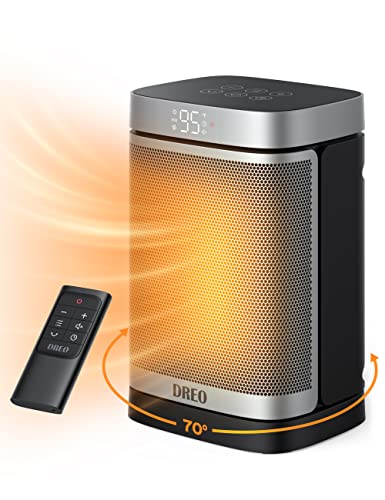
Faster Heat Than Ever: Powered by DREO Hyperamics Technology, Atom One space heater heats up more efficiently with up to 1500W working power, reaching your desired temperature immediately, letting you feel fast, balmy heat straight away. This electric heater is meant to sit by your feet on the floor, near your hands on a desk, or carry around indoors. Add our heaters for indoors use to your cart & experience our amazing heater and customer service

Powerful heat that fits everywhere: DREO space heaters for indoor combines Hyperamics 1500W advanced PTC system with a new heat funnel design to deliver heat within seconds and enhance warm air circulation for up to 200% farther reach than traditional heaters.
5 Common Types of Space Heaters You Should Know
Fan-forced convection heaters use a fan to blow air over a ceramic or metal coil, which heats the air quickly for short-term comfort. These heaters are ideal when you need rapid warmth and can be moved easily between rooms. They typically heat a space within minutes, making them perfect for quick fixes or inconsistent heating needs. Because they rely on a fan, they can be noisy, and their energy use is higher compared to other types. They are best suited for spot heating or small rooms where quick warmth is desired. For prolonged use or larger spaces, consider more energy-efficient options. To stay safe, always confirm the heater is labeled as electric and never rely on it for carbon monoxide risks that only apply to fuel-burning models. Pairing one with a flush mount ceiling fan can help circulate warm air more evenly throughout the room. For use in bathrooms, these heaters must never be placed where they could fall into water, and a specialized moisture control model is often a wiser choice for that high-humidity environment.


Personal Heater: Our heaters for indoor use help keep your personal space at home or in the office toasty warm and cozy so you can stay focused on work and not being cold.

ENERGY EFFICIENT HEAT: Providing 360 all-around warmth, this portable heater is ideal for small to mid-sized rooms. The Low setting does not require as much electricity to operate, so it is more energy efficient and a better option for saving energy.
Convection vs. Radiant: Which Heats a Room Faster?
Radiant heaters heat a room faster than convection heaters by targeting objects and people directly rather than warming the air. While fan-forced convection heaters typically take 20 to 30 minutes to fully warm an entire room, radiant heaters produce immediate warmth—people feel the heat within seconds. Convection relies on moving and heating the air evenly, making it ideal for sustained, whole-room comfort once the air reaches the desired temperature. In contrast, radiant heaters excel in spot-heating situations where quick, direct warmth is needed. For whole-room comfort, convection heaters are better suited after the air reaches the desired temperature. To minimize costs, using a space heater only in occupied rooms can significantly cut your electricity bill. Your choice between the two depends on whether you need rapid personal warmth or long-term, room-wide heat. A dehumidifier for apartment use can also help maintain comfortable humidity levels alongside efficient heating.

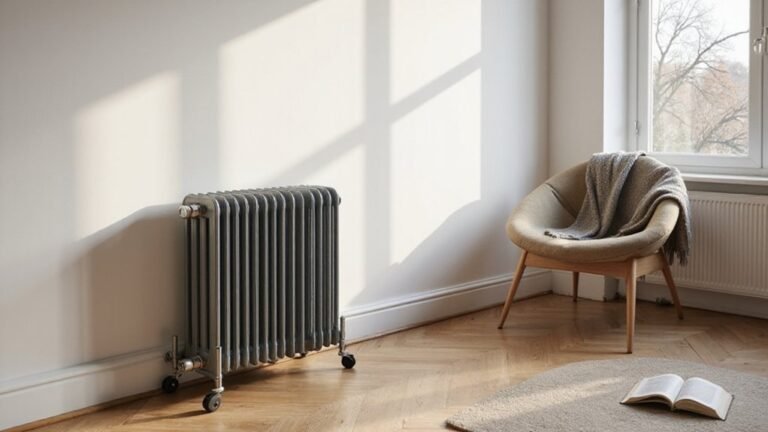
1500W Oil Filled Radiator Heater: Dumos 1500W Oil Filled Radiator Heater provides fast and efficient heating, quickly warming up spaces of 10-15㎡—ideal for bedrooms, offices, and other medium-sized rooms

3 Heat Settings:This 24-inch space heater features 3 adjustable heat modes (High / Medium / Low) with 1500W / 1000W / 500W power options, paired with 3 premium quartz tubes for fast and efficient radiant heating, quickly warming up your room while maintaining low energy consumption.

【Fast and Powerful Heating for Indoor Rooms】This 1500W oil-filled radiator heater delivers rapid and consistent warmth to indoor spaces up to 10-15㎡, ensuring that bedrooms, living rooms, offices, and small apartments are comfortably heated even during the coldest winter days.
How Space Heaters Turn Electricity Into Warmth
The thermal conductivity of the heating element directly affects how quickly heat transfers from the element into your room. Elements with high thermal conductivity, such as metals like copper or aluminum, transmit heat rapidly, providing quicker warming. Conversely, materials with lower thermal conductivity release heat more slowly, which can lead to more gradual, steady warmth. Using a humidifier alongside a space heater can also alleviate dry air that may worsen coughing and throat irritation.
Once heat is generated, the heater distributes it through convection, radiation, or a combination of both. Convection involves heating the air, which then circulates around the room, often accelerated by fans for faster heat spread. Radiation, found in infrared heaters, emits energy that directly warms objects and people in its line of sight, offering immediate localized warmth. Regardless of the method, every watt consumed by your heater is converted into usable heat within your space, making efficiency and design choices important for effective warming. However, unlike space heaters, portable vs window air conditioners involve a comparison of performance and running cost that depends on your specific room layout and cooling needs. For cleaner air during operation, some space heaters also include a HEPA filter to capture airborne particles.
How Big a Room Can 1,500 Watts Heat?
A 1,500-watt heater can effectively heat around 150 square feet. This estimate is based on the rule of thumb of 10 watts per square foot, suitable for a well-insulated, standard room with 8-foot ceilings. If your space has poor insulation, drafts, or higher ceilings, the effective area drops to about 75 to 125 square feet. For larger rooms up to 200 square feet, a 1,500-watt heater may serve better as supplemental heat rather than the main source. Keep in mind that actual heating performance depends heavily on your room’s insulation quality and airflow. For consistent warmth, expecting around 150 square feet is a realistic benchmark. In ideal conditions, a 1500 watt heater can supplement central heat to efficiently add a few degrees.
How Much Does a Space Heater Cost to Run per Day?
Your daily cost to run a space heater depends on its wattage, how many hours you use it, and your local electricity rate. To get an accurate estimate, use the formula: watts multiplied by hours, divided by 1,000, then multiplied by your rate in dollars per kilowatt-hour (kWh). For example, a 1,500-watt heater running 8 hours at an electricity rate of 14 cents per kWh will cost approximately $1.68 per day. In comparison, a 750-watt heater running the same hours would cost about 96 cents daily. Efficiency features like thermostats can reduce costs by preventing the heater from running at full power when you don’t need heat. Proper maintenance, such as cleaning filters and vents, ensures the heater operates efficiently and uses less electricity. Regularly cleaning your fan helps prevent dust buildup that can force the heater to work harder. Cutting back on runtime with programmable timers further lowers your costs. Keep in mind that rates vary by location; in states with higher electricity prices, running a heater for the same period will be more expensive. Adding a unit with high-efficiency dehumidification can help maintain consistent humidity levels, reducing the workload on your heater. Ultimately, your daily cost hinges on three key factors: wattage, hours of use, and electricity rate. For additional savings, insulating your room can help retain heat and reduce the heater’s workload.
Space Heater Safety Features to Look For
To ensure your space heater is safe to use, look for several essential safety features. First, verify that the heater has a safety certification from UL, ETL, or CSA. This certification indicates that the unit meets strict safety standards. Automatic shutoff and tip-over protection are vital, especially if you have children; these features turn off the heater if it overheats or tips over, reducing the risk of fire or burns. Ensure the heater has a three-prong grounded plug and an ALCI (Arc Fault Circuit Interrupter) plug to prevent electrical shocks. Never connect your heater with an extension cord; always plug it directly into a wall outlet. A cool-touch exterior minimizes burn risk, and a built-in thermostat helps prevent continuous, unnecessary operation. Finally, keep the heater at least three feet away from any flammable materials to maintain a safe environment. For optimal placement in a bedroom, consider the distance from furniture to ensure proper air circulation and reduce fire risk. As with allergy relief, using a device with a HEPA filter can also help capture airborne dust and allergens that may be stirred up by the heater.

CUSTOMIZABLE HEATING OPTIONS: Choose from three settings to suit your needs - High (1500W), Low (900W), or Fan Only for air circulation without heat.

2 in 1 heater fan: This ceramic heater offers dual heating modes (1500W/750W) plus a cool air fan, making it ideal for both winter and summer. With automatic thermostat control, it cycles on and off to maintain your preset temperature without any manual adjustment. A practical and thoughtful gift for working from home, or for family, friends, and colleagues during the cold season.

EVEN HEAT DISTRIBUTION: The heater's 45-degree oscillation function ensures even heat distribution across the room, warming a wider area for maximum comfort.
When to Use a Space Heater Instead of Central Heating
Using a space heater is most cost-effective for spot-heating a single occupied room like a bedroom, home office, or a cozy couch zone for short periods—generally four hours or less per day. This approach allows you to avoid paying to warm unoccupied spaces, reducing your daily heating cost from about $3 to $5 down to roughly $1 to $1.50. It works best when your routine keeps you in one area for several hours at a time. Make sure the room is well-insulated and sealed; smaller, insulated spaces retain heat more efficiently, maximizing your heater’s effectiveness. If you regularly move between rooms or need consistent whole-home warmth, central heating remains the better choice. Space heaters are designed for localized use and excel only when you need to heat the area you’re actively occupying.
Match Heater Size to Your Room
To match a heater to your room, measure the floor area in square feet and use the 10-watt-per-square-foot rule. For example, a 1,500-watt heater covers up to 150 square feet, while a 2,000-watt unit heats approximately 200 square feet. If your space has high ceilings, poor insulation, or drafty windows, increase the wattage to compensate, as these conditions reduce heating efficiency.
Placement is key: avoid positioning the heater in a corner where heat can be blocked or dispersed unevenly. Instead, place it centrally or against the coldest wall for optimal distribution. For larger spaces, opt for two smaller heaters rather than one big unit, as spreading heat evenly enhances comfort. To compare wattage to heating capacity, convert watts to BTUs by multiplying by 3.41. For instance, a 1,500-watt heater produces about 5,115 BTUs.
Choose the right type based on room size: compact ceramic or infrared heaters suit spaces under 150 square feet, while fan-forced tower heaters are better for 150 to 300 square feet. Matching wattage, type, and layout carefully ensures efficient heating and prevents energy waste or cold spots.

MULTI-HEATING MODES: 3 desired comfort settings, High Heat (1500 watts), Low Heat (900 watts), and Natural Wind, make this electric space heater perfect for warming up your home or home office area. Adjustable temperature settings help to quickly increase the temperature based on the thermostat control.

Fast & Efficient Heating for Daily Indoor Use:This 1500W space heater delivers fast, steady warmth using advanced PTC ceramic heating technology. Designed as a reliable heater for everyday comfort, it works efficiently in bedrooms, offices, and small living spaces. Ideal as one of the practical heaters for indoor use, it provides consistent heat without complicated features.

EVEN HEAT DISTRIBUTION: The heater's 45-degree oscillation function ensures even heat distribution across the room, warming a wider area for maximum comfort.