Where to Place an Air Purifier in Your Bedroom
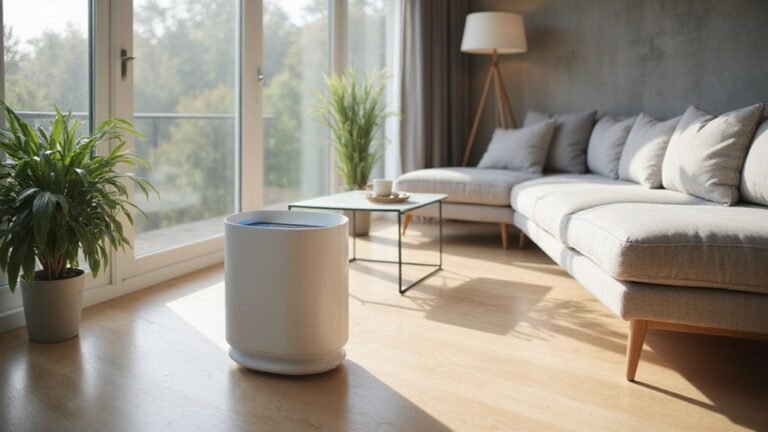
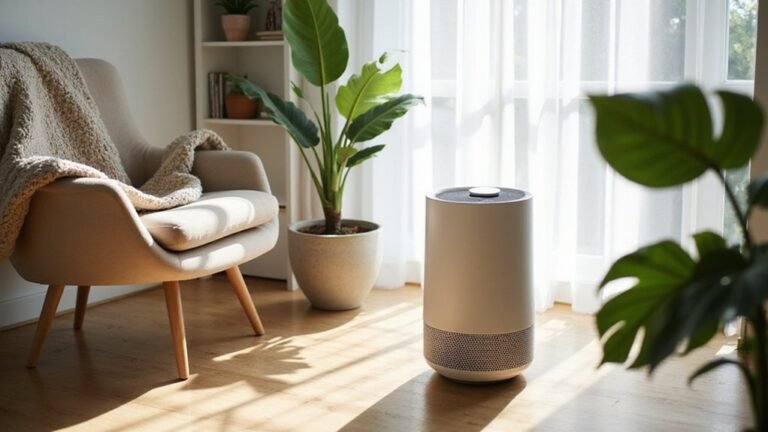
Wondering where to place your air purifier in your bedroom for the best results? The ideal spot is around 3 to 6 feet from your headboard and elevated 3 to 5 feet off the floor, so you breathe cleaner air without blocking airflow.
Proper placement can make a noticeable difference in your sleep quality and air quality. Keep reading to find out the best tips for positioning your purifier.
Place Your Air Purifier 3 to 6 Feet From the Headboard
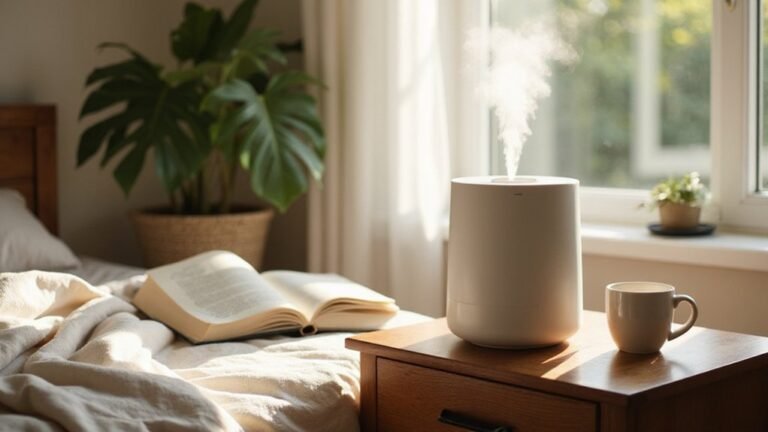
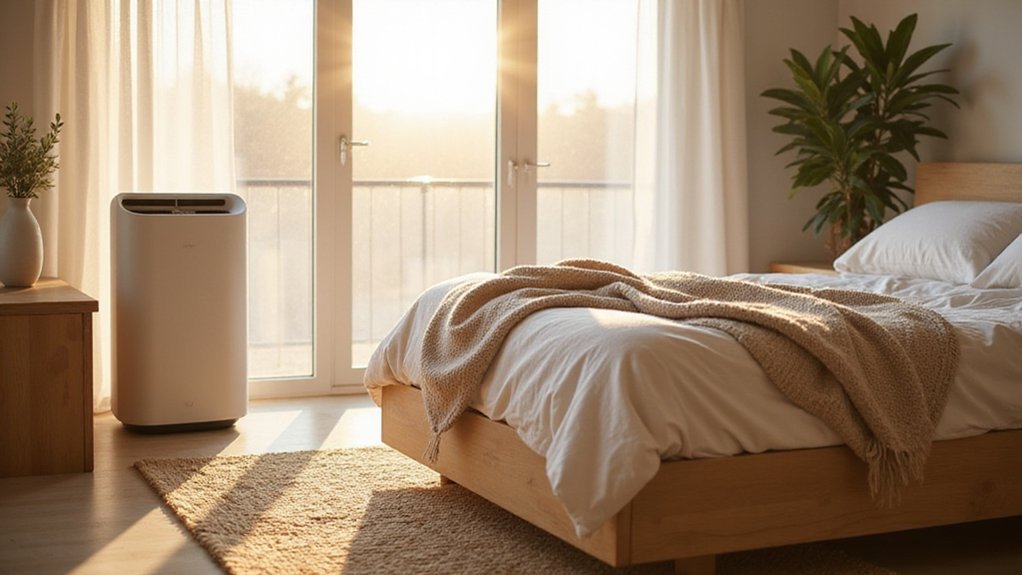
Place your air purifier 3 to 6 feet from the headboard. Position it so the clean air outlet faces your pillow, but avoid directing airflow straight at your face—an angled direction works best. Elevate the unit on a nightstand or dresser about 2 to 3 feet above the floor to ensure it pulls in pollutants at breathing level. Keep at least 12 inches of clearance on all sides to prevent restricted airflow, which can reduce performance. Additionally, close your bedroom door to contain the recirculation of clean air within the room, helping to lock in fresh, purified air all night long. For bedrooms with a ceiling fan, ensure the flush mount fan directs airflow downward to aid circulation without stirring settled dust. For consistent cooling that complements your air purification, consider how window AC units balance airflow and efficiency in similarly sized spaces. Reducing excess moisture with a dehumidifier can also help deter pests like centipedes, as high humidity levels attract them indoors.
Match Your Purifier Size to Your Bedroom for Best Results
To find the right purifier size for your bedroom, measure the room’s floor area by multiplying its length by its width to determine the square footage. For example, a room that is 150 square feet requires a purifier with a Clean Air Delivery Rate (CADR) of about 100 cubic feet per minute (CFM). This level of capacity ensures at least four to five air changes per hour, which effectively maintains air quality. Improved air quality can also reduce allergy symptoms and support better respiratory health.
For bedrooms measuring between 150 and 350 square feet, look for purifiers with a CADR ranging from 100 to 235 CFM, depending on the exact size. Longer or taller rooms need proportionally higher capacity to deliver sufficient air exchanges. Remember to account for ceiling height; higher ceilings require increased purifier capacity because of the additional volume.
Choosing a unit rated for larger rooms and running it at lower fan speeds not only reduces noise but also provides effective cleaning, especially with HEPA filters. For master bedrooms up to about 400 square feet, select a purifier scaled to match this larger volume, ensuring it runs efficiently and quietly. Bigger purifiers with lower speeds tend to produce less noise and consume less energy, making them a good choice for maintaining a comfortable, clean environment. For a similar approach, a bedroom dehumidifier should be sized based on square footage to match the room’s moisture load effectively.
Lift It Off the Floor for Way Better Airflow
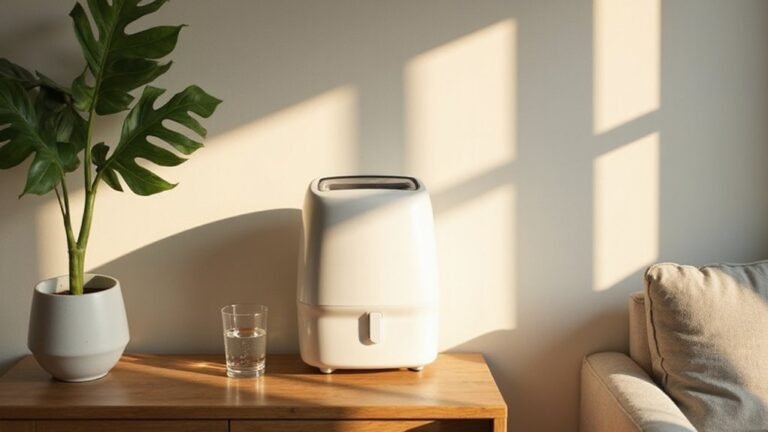
Lifting your air purifier off the floor greatly improves airflow. Elevation places the intake where room air actively moves, avoiding obstructions like carpets and furniture that limit performance at floor level. Raising the unit helps you access circulation zones, pulling dust from eye-level rather than stagnant near-floor air. Keep at least six inches of clearance from walls, and ideally three to five feet of open space around it to prevent re-circulation. This setup also reduces noise, since the purifier won’t vibrate against flooring or rattle through furniture. Placing it on a nightstand or dresser conceals cords and integrates the unit into your decor, transforming it from an eyesore into a functional decor element. Ensuring clear intake paths boosts overnight filtration efficiency, allowing you to breathe easier while maintaining a quiet, stylish space. Just make sure nothing blocks the vents.
The Best Height for Your Bedroom Air Purifier (Breathing Level)
The ideal height for your bedroom air purifier is 3 to 5 feet off the ground. This is the breathing zone—where dust, allergens, and other pollutants tend to circulate around you. Placing the unit on a nightstand or dresser near the head of your bed ensures cleaner air reaches your nose and mouth more quickly. Positioning it at this height also shortens the distance clean air needs to travel, maximizing airflow efficiency. Avoid blowing the purified air directly at your face, as this can disrupt your sleep. Keeping the unit stable on a sturdy surface at this level helps prevent tipping and ensures continuous operation. By maintaining this breathing-level height, you effectively capture contaminant circulation right where you breathe, pulling in polluted air from the active region around your bed and ensuring it is filtered before reaching you. This placement leverages filtration technology to trap airborne particles like pollen and dust mites before they are inhaled. For optimal performance, ensure the air purifier’s intake is not blocked by furniture or curtains, as this can reduce its effectiveness in the same way a humidifier filter requires clear airflow to function efficiently. This placement also aligns with the recommendation to avoid blocking airflow, as keeping the intake unobstructed at this height prevents performance reduction and damage. For a comprehensive approach to improving indoor air quality, consider pairing your purifier with a high-quality ceiling fan to help circulate filtered air throughout the room.
Give Your Purifier at Least 12 Inches of Breathing Room
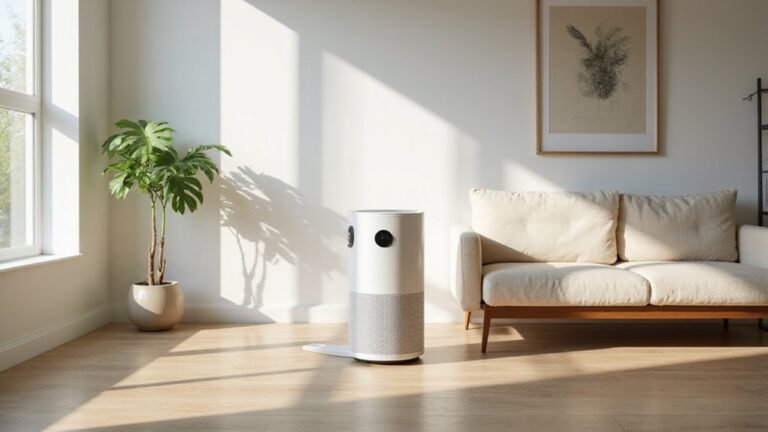
Ensure there is at least 12 inches of clearance around all intake and output vents on your air purifier. This space allows the purifier to effectively pull in and push out air, maintaining optimal airflow. Keep in mind that blocking airflow with furniture or walls can reduce the device’s cleaning efficiency by up to 50%, forcing it to work harder and less effectively. Providing this clearance also supports HVAC compatibility, letting your purifier work harmoniously with the room’s natural air movement. For better airflow and longer interval between filter replacements, aim for 18 to 24 inches of space behind the unit whenever possible. Remember, your purifier needs room to breathe—give it the space it needs to perform well.
Air Purifier Placement in a Corner Bedroom: What to Do
While corner placement isn’t the most effective spot for an air purifier, you can still improve its performance with careful positioning. The main issue is airflow restriction caused by two walls, which traps air near the unit and limits room-wide circulation. To counteract this, pull the purifier away from the corner and position it so it isn’t pressed tightly against the walls. This creates enough space around the unit to allow intake from multiple directions, enhancing its ability to clean the air throughout the room. Unlike a traditional fan that chops air through blades, bladeless ceiling fans rely on air multiplication technology to create a smooth, uninterrupted stream of airflow. Using a best humidifier for dry mouth alongside the purifier can further improve your sleep comfort by adding necessary moisture to the air.
Avoid hiding the purifier behind furniture, as this can reduce its effectiveness by as much as 50 percent. Instead, select a corner with open access to the room, one that isn’t the most hidden or obstructed. Keep curtains, shelves, and bed frames at least 12 inches away from both the intake and outlet of the purifier. If possible, place the unit 3 to 6 feet from your bed’s head to improve the air quality where you sleep. Although a corner position isn’t ideal, making these small adjustments can significantly improve its ability to clean the air effectively.
Never Point Airflow Directly at Your Face
Point the airflow away from your face and pillow. Directing the stream toward your head during sleep can cause dry eyes, throat irritation, and sinus dryness, especially with continuous overnight exposure. Always check the airflow direction before going to sleep. An airflow that creates a draft at pillow height can disrupt your sleep quality and cause discomfort.
Instead, angle the outlet away from your pillow and toward open room space to promote proper room circulation. This setup prevents the purifier from blowing directly at you while still distributing clean air throughout the room. However, remember that while HEPA technology originally blocked radioactive particles in industrial settings, its modern bedroom use still focuses on general particulate filtration rather than targeted disease prevention. Positioning the device off to the side of your head, rather than directly aligned with your sleeping position, keeps the airflow off-axis. Ensure your intake pulls air from a broad part of the room, not just the air beside your face.
Supporting good mixing and coverage of clean air without creating a draft at pillow height is crucial. Prioritize comfort by adjusting the airflow direction before sleep. Proper positioning enhances air circulation while maintaining a restful environment without sacrificing filtration effectiveness.
Put the Air Purifier Near the Bedroom Door for Outdoor Pollutants
Placing your air purifier near the bedroom door creates an effective barrier against outdoor pollutants and allergens. Positioning the unit within 1 to 2 feet of the door ensures optimal airflow and filtration of pollen, pet dander, and other airborne particles coming in from hallways or adjacent rooms. Keeping the door closed maintains a controlled air exchange area by preventing outside air from diluting the cleaned air inside your bedroom. This setup allows the purifier to repeatedly filter the same air, improving overall air quality and protecting your breathing zone from pollutants introduced from other rooms. Additionally, this placement benefits indoor plants, reducing dust on their leaves thanks to cleaner air circulating around them. Just remember to leave enough clearance—about 1 to 2 feet—around the unit so that air can flow freely and the purifier can operate efficiently. Similarly, choosing between black and white ceiling fans for your bedroom will also affect performance and how well the fixture fits your specific space.
The Mistake That Kills Purifier Effectiveness: Blocked Vents
Blocking the vents of your air purifier is one of the fastest ways to diminish its performance. When airflow is obstructed—whether by furniture, walls, or soft items like towels—it prevents the unit from circulating room air through its filters. This means the purifier is just wasting energy, making noise, and not cleaning the air effectively. Keep at least 4 to 12 inches of clearance around both intake and exhaust vents to ensure proper airflow. You can test if your vents are clear by holding a tissue near the exhaust; if it doesn’t flutter steadily, airflow may be blocked. Regularly check and keep those vents free of obstructions to maintain optimal purifier function. Just as a clogged HVAC filter restricts system airflow and forces your furnace or AC to work harder, blocked purifier vents similarly strain the unit and reduce its efficiency. For continuous drainage, some dehumidifier models include a drain hose that automatically removes collected water.
Keep Your Purifier Away From Electronics, Water, and Drafts
Your air purifier should be kept at least 1 to 2 feet away from electronics like TVs, computers, and fans. This distance helps prevent electronic interference that can disrupt smart sensors and skew air-quality readings. Placing the purifier too close can cause the sensors to misinterpret data, reducing its effectiveness. Additionally, heat-generating devices such as electronics can interfere with performance, so aim for a separation of at least 6 feet when possible. For effective maintenance of the unit’s airflow, regularly cleaning the filter with a soft brush and vacuum attachment helps remove surface dust without damaging the media. Choosing a model with a high-quality filter similar to those in top window air conditioners can also ensure better long-term performance and reliability.
Avoid water exposure by steering clear of bathrooms, humidifiers, and sinks. Excess moisture places stress on the unit, shortens its lifespan, and hampers cleaning efficiency. It’s best to place the purifier on a dry, stable surface away from any sources of water. In humid environments, preventing mold growth within the filter requires thorough drying before reinstallation to keep the unit safe and efficient.
Lastly, keep the purifier away from drafts created by fans, heating vents, and HVAC registers. These airflow disruptions push unfiltered air past the purifier more quickly than it can clean, undermining circulation and overall effectiveness. Position your air purifier in a calm zone with at least 1 to 2 feet of clearance on all sides to ensure optimal performance. For long-term value and performance, choosing a model like those in top washable filter reviews simplifies placement by reducing filter replacement waste.