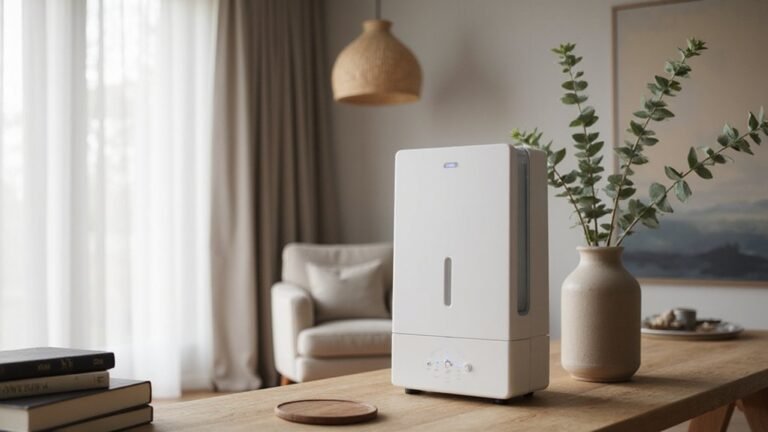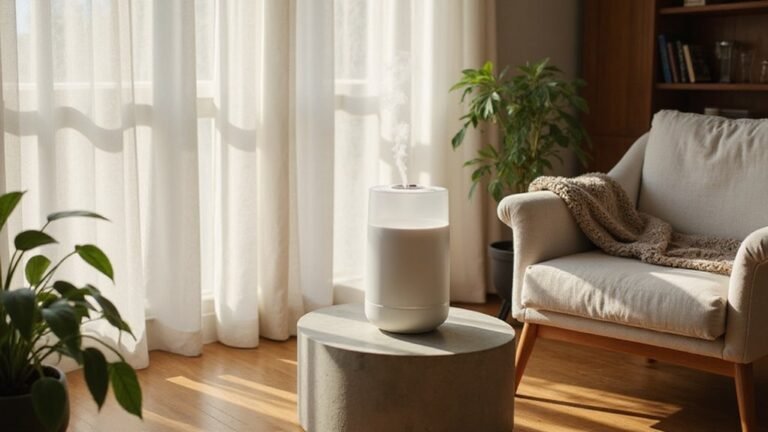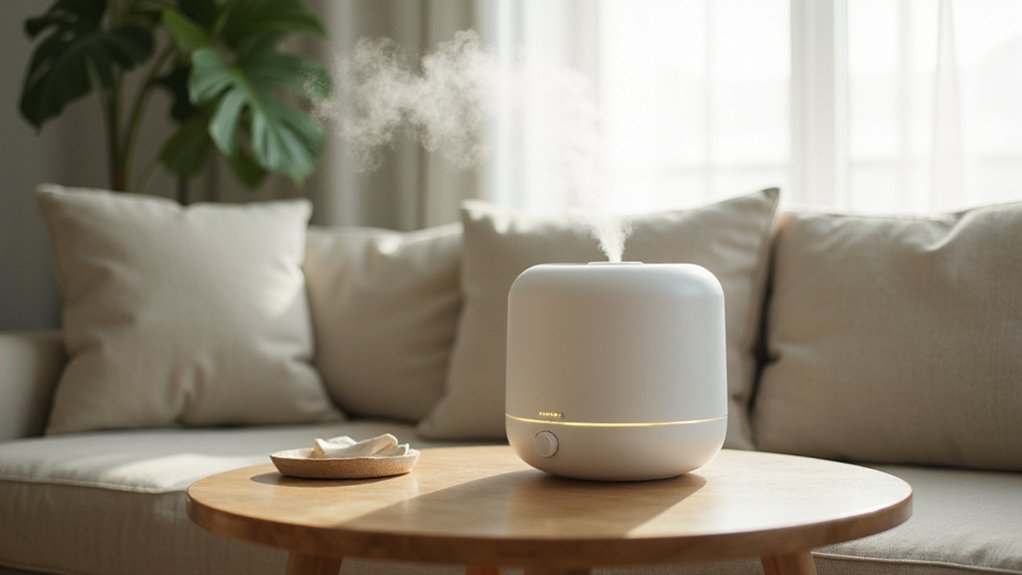
What Is an Ultrasonic Humidifier?
Are you wondering how ultrasonic humidifiers work and if they’re right for your space? These devices use high-frequency vibrations to turn water into a fine, cool mist with no heat involved. They run quietly, use less power, and are generally safe for bedrooms and kids.
Keep reading to learn the simple tips that help keep yours running smoothly.
How Does an Ultrasonic Humidifier Work?
An ultrasonic humidifier works by using a piezoelectric transducer that vibrates at ultrasonic frequencies around 1.7 MHz. These high-frequency vibrations are far above human hearing, creating rapid mechanical motion that agitates the water surface. This agitation causes the water to break apart into microscopic droplets approximately one micron in diameter. The device converts liquid water into a visible mist through ultrasound-induced water column disruption. A similar principle is used in DIY air purifiers that rely on fine water droplets to trap airborne particles. This process doesn’t involve boiling. Instead, cavitation bubbles form and collapse, breaking the water’s surface tension and producing a cool, liquid mist. A small fan then pushes this mist into your room, where the droplets evaporate and increase the humidity. Because there is no heating element involved, ultrasonic humidifiers are highly energy-efficient compared to steam models. The vibrations are also inaudible, making them whisper-quiet and suitable for bedrooms or offices. For comparison, a window air conditioner uses a different mechanism to remove heat and humidity from the air. To prevent mold and buildup in your humidifier, regular cleaning is essential, similar to maintaining a tower fan’s components.

Specifications: Atomizer ceramic disc diameter: 16mm (excluding rubber ring), ring diameter is 20mm, wire length: 7cm.

amplitude, Piezoelectric ceramic materials provides good heat resistance

40khz 35W Ultrasonic Piezoelectric Cleaning Transducer Plate Electric Ceramic Sheet Module Board
What Parts Make Up an Ultrasonic Humidifier?
An ultrasonic humidifier is built around several core components that work together to produce mist. The main parts include a protective shell, a water tank, a piezoelectric transducer, a power supply, and a small fan.
The water tank holds the liquid and supplies it to the transducer. The transducer is a piezoelectric membrane that vibrates at ultrasonic frequencies, atomizing the water into a fine mist without needing heat. A circuit board and power supply generate the high-frequency current necessary for the transducer to function. The small fan then blows this mist outward, creating the visible humidification. For a similar cleaning routine, you can prevent mold by regularly wiping down the fan blades and housing. Additionally, a water-level sensor automatically shuts off the unit when the tank runs dry, preventing damage. For choosing between this and other cooling appliances, portable vs window air conditioners offer distinct trade-offs in performance and running cost for your space. Using a humidifier with consistent output can help soothe cough symptoms effectively.
Regular maintenance involves descaling the transducer with vinegar to remove mineral buildup, which can affect performance. Always unplug the unit before cleaning and ensure the tank is filled before operation to protect the electronics and extend the humidifier’s lifespan.

The diameter of the ceramic disc is 25mm.

The humidifier plate is made of high-quality materials, and the front surface is treated with titanium coating. With excellent aging resistance and corrosion resistance, smooth waveform, excellent conversion efficiency, service life can be greatly extended.

5PCS 16mm Ultrasonic Mist Maker Fogger Ceramics Discs with Wire & Sealing R
Why Is the Mist From an Ultrasonic Humidifier Cool?
The mist from an ultrasonic humidifier is cool because it isn’t created by boiling water. Instead, ultrasonic vibrations use a piezoelectric transducer to mechanically atomize water into tiny micro-droplets. This process generates a fine mist without heating the water, so the vapor remains at room temperature. Unlike steam-based models that produce hot vapor by heating water to boiling point, ultrasonic humidifiers produce a cool mist that does not pose a burn risk. When selecting a humidifier, consider that smart thermostats with Wi-Fi can complement it by precisely controlling your home’s temperature and humidity settings. Additionally, using an ultrasonic humidifier can help alleviate dry skin and respiratory issues, which are key benefits of improving indoor comfort and health. A DIY approach helps you understand how piezoelectric transducers work in this atomization process, similar to the hands-on learning involved in building a smart thermostat.
Since no energy is added as heat during atomization, the mist’s temperature simply matches the water’s original temperature. This mechanical process allows effective humidification without raising the room’s temperature or needing a heating element. The result is a quiet, energy-efficient way to increase humidity while maintaining a safe environment.
What Are the Main Benefits of Using One?
Ultrasonic humidifiers offer several distinct advantages. One of the biggest benefits is their near-silent operation. The cool-mist mechanism produces minimal noise, making them ideal for bedrooms or workspaces where silence is important. You won’t hear any fan rattling or loud motors, just steady, quiet moisture output.
Energy efficiency is another key advantage. Since these units do not heat water, they consume less electricity, allowing you to run them all day without significant power costs. Maintenance is simplified as well—there are no filters to replace. Instead, cleaning and refilling are straightforward tasks. The compact design, featuring a ceramic diaphragm, makes it easy to move the humidifier between different locations, whether on your desk or shelf. This low-maintenance approach parallels the convenience of smart thermostats, which also reduce the need for manual adjustments and ongoing upkeep.
Safety is also enhanced because cool mist units do not get hot surfaces, eliminating the risk of burns. Additionally, increased humidity can help alleviate dry skin, nasal irritation, and static shocks, providing a comfortable environment without added hazards or efforts. For those managing moisture levels in small spaces, understanding the ideal humidity range for enclosed areas is crucial to prevent condensation and mold growth. When comparing options, you may want to investigate whether an ionizer or filter offers better long-term performance for your particular room conditions.

[3-in-1 Humidifier Meets All You Expect] Cool Mist Humidifier+Aromatherapy+Mood Light, purchase for once to satisfy all you expect! Let Homvana H101 be the best companion in your bedroom.

𝙎𝙖𝙮 𝙂𝙤𝙤𝙙𝙗𝙮𝙚 𝙩𝙤 𝘿𝙧𝙮 𝘿𝙖𝙮𝙨: This humidifier large room emits a cool, 5 μm ultrafine mist up to 40 inch high thanks to dual inlets and a wide nozzle. Its 300 ml/hour output effectively combats dryness in rooms up to 500 sq ft, all while protecting furniture from humidity damage.

𝐅𝐨𝐫𝐠𝐞𝐭 𝐚𝐛𝐨𝐮𝐭 𝐜𝐨𝐧𝐬𝐭𝐚𝐧𝐭 𝐫𝐞𝐟𝐢𝐥𝐥𝐬: With a 3L tank and convenient top-fill design, dreo humidifiers for bedroom offer up to 30 hours of long run time humidification in sleep mode, ensuring dry air is no longer an issue for your family, plants, and baby.
What Are the Downsides of Ultrasonic Humidifiers?
You’ll face significant maintenance challenges with ultrasonic humidifiers. Using distilled water helps reduce the amount of dust and mineral deposits, but it does add to your expenses over time. Regular cleaning is essential because leftover cleaning chemicals can become aerosolized and disperse into the air you breathe. You’ll need to scrub the unit frequently to prevent microbial buildup, which can cause mold or bacteria growth if neglected. A dirty filter can visibly show signs of mineral scaling and discoloration, indicating when replacement is necessary. For more severe moisture issues, a dehumidifier for water damage offers a more robust solution for rapid drying. For camping comfort, similar units like portable air conditioners also require regular filter changes to avoid reduced performance.
Additionally, adding essential oils or vapor rubs isn’t safe. These substances can be dispersed into the air, potentially causing irritation or adverse health effects. Without diligent upkeep, these downsides—cost, time, and safety concerns—can quickly outweigh the convenience of ultrasonic humidifiers.

【Compatibility】 The 10 water panel for humidifier is made for Humidifier 500, 500A, 500M. Not suitable for other models
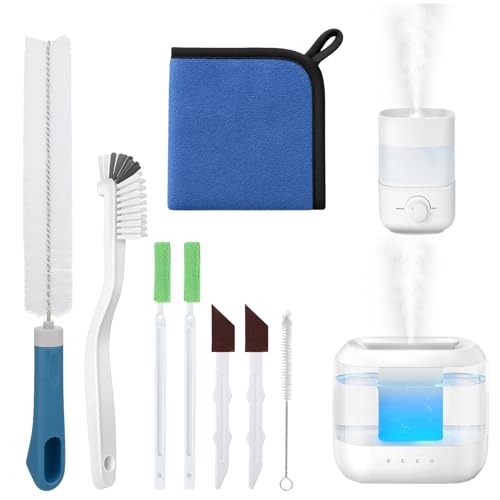
Humidifier Cleaning Solution:Still looking for a cleaning tool that can thoroughly clean your humidifier? Come and try our humidifier cleaning brush set!The nylon brush cleans the stains on the base, the sandpaper brush powerfully removes the severe scale at the bottom, and the long brush can easily reach the air outlet and the interior of the water storage tank, thoroughly cleaning every corner of the humidifier in all aspects, making your humidifier look brand new and more reassuring to use.

Rapid area coverage: quickly humidifies large spaces, making it ideal for various room sizes, humidifier accessories, fragrance disc
How Often Should You Clean an Ultrasonic Humidifier?
Cleaning your ultrasonic humidifier should be done at least every three days if you’re using it regularly. Daily, you need to empty and dry the tank after each use to prevent stagnant water from fostering bacteria and mold growth. A weekly deep-clean is ideal for maintaining optimal performance and hygiene. If you use the humidifier infrequently, a monthly disinfection is sufficient. Hard water or visible film inside the tank indicates a need for more frequent cleaning. Follow these guidelines: rinse the tank daily, perform a thorough cleaning weekly, and disinfect once a month. A vinegar soak for approximately 20 minutes can help loosen mineral deposits and sanitize the tank during deep cleaning. For reliable performance, consider how top portable air conditioners compare in similar maintenance routines. Always run a final thorough clean before storing the unit, and ensure all parts air-dry completely to prevent mold growth. To prevent buildup, scrub the filter component with a soft brush to remove any trapped mineral deposits during the weekly clean. For additional air quality, pairing with a HEPA filter can capture airborne particles that your humidifier might introduce.
Should You Choose an Ultrasonic or Steam Humidifier?
Choosing between ultrasonic and steam humidifiers depends on your priorities for noise level, safety, energy consumption, and water quality. Ultrasonic models produce a cool mist with quiet operation, using only 25 to 50 watts of power. They tend to have sleek, compact designs that blend seamlessly into your decor, and many feature simple controls for easy adjustment. However, ultrasonic humidifiers require distilled water to prevent white dust from mineral deposits settling around your space. For those prioritizing a discreet footprint, these units often feature low profile designs that fit neatly under shelves or in tighter areas. Because they do not use heat, they also eliminate the burn risk associated with hot surfaces from other devices.
Steam humidifiers, however, boil water to produce vapor, which effectively kills germs and bacteria. They use significantly more power—typically between 800 and 1250 watts—and are noisier during operation. Additionally, because they generate hot steam, they pose a burn risk, especially in households with children. Your choice will ultimately hinge on whether you prefer a quieter, cost-effective operation with lower energy use, or the hygienic benefits of sanitized steam despite the higher energy consumption and safety considerations. Ultrasonic models also carry a higher risk of bacteria growth in their mist, making them less suitable for vulnerable groups like infants due to potential health concerns.

𝙁𝙖𝙨𝙩 𝙃𝙪𝙢𝙞𝙙𝙞𝙛𝙞𝙘𝙖𝙩𝙞𝙤𝙣 𝘼𝙡𝙡 𝙉𝙞𝙜𝙝𝙩: Runs for up to 25 hours on low thanks to its SUPER LARGE capacity of 2.5 liters. The soothing moisture helps quickly relief congestion and dry throat.

𝙁𝙖𝙨𝙩 𝙃𝙪𝙢𝙞𝙙𝙞𝙛𝙞𝙘𝙖𝙩𝙞𝙤𝙣 𝘼𝙡𝙡 𝙉𝙞𝙜𝙝𝙩: Runs for up to 25 hours on low thanks to its SUPER LARGE capacity of 2.5 liters. The soothing moisture helps quickly relief congestion and dry throat.

Instant Dry Air Relief: This cool mist humidifier delivers fast relief from dry air with up to 25 hours of runtime and coverage for medium to large rooms up to 250 sq. ft. Powerful mist output with high and low settings make this humidifier ideal for use in the bedroom, nursery, office, and more.
Mistakes to Avoid With an Ultrasonic Humidifier
Avoid using tap water in your ultrasonic humidifier. Tap water contains minerals that can produce white dust and airborne particles, which can settle on surfaces and be inhaled. To prevent this, always use distilled or demineralized water. These types of water have fewer minerals, reducing the buildup of deposits inside the device and safeguarding your air quality and health.
Proper cleaning is crucial for maintaining your humidifier. Empty, dry, and refill the tank daily to inhibit bacteria growth. Deep clean the device every third day by scrubbing away any stubborn mineral deposits and mold that can develop over time. Skipping regular cleaning can lead to unpleasant odors, decreased mist output, and potential health risks from mold or bacteria.
Never add essential oils or harsh disinfectants directly into the ultrasonic humidifier. These substances can damage the ultrasonic diaphragm, which is sensitive to chemicals. Additionally, adding oils or strong cleaners can release harmful airborne chemicals, compromising both the device’s function and your safety.
Keep the relative humidity level below 50 percent. Excess moisture can cause problems like mold growth, condensation, and structural damage. Monitoring humidity with a hygrometer helps ensure you maintain the ideal level, maximizing comfort without risking moisture-related issues.