How Many Watts Does a Space Heater Use?
Many wonder how much energy their space heater consumes, especially when trying to keep costs down. Most models use between 750 and 1,500 watts, with the higher setting often being 1,500 watts for a typical 15-amp outlet.
Understanding these numbers can help you manage your energy bill more effectively. Keep reading to learn more about how your heater’s wattage impacts your energy use and costs.
What’s the Typical Wattage for a Space Heater?
Most space heaters use between 750 and 1,500 watts, which covers the typical range for residential units. The 1,500-watt setting is the most common high power level and is designed to work with standard 15-amp electrical outlets. Personal desktop models tend to be more energy-efficient, often operating at just 200 to 500 watts, making them suitable for small spaces or localized heating. For comparison, window air conditioners operate on similar wattage ranges to efficiently cool a room. Similarly, a bedroom dehumidifier often uses lower wattage to maintain comfort without high energy demands. For those seeking room-wide air circulation, a bedroom ceiling fan can provide quiet comfort at a fraction of the wattage.
Choosing a heater with the appropriate wattage for your room size can save energy. Smaller rooms benefit from lower wattage models, reducing power consumption without sacrificing warmth. Always check the product label for the exact wattage to ensure it matches your heating needs. Keep safety in mind: never plug high-wattage units into extension cords or power strips to prevent electrical overloads.
Spot heating with lower wattage models can significantly cut your energy use. Sticking to the heater’s recommended wattage ensures you avoid tripping breakers or overheating circuits. Overall, this wattage range allows you to stay warm efficiently while protecting your home’s electrical system.

Personal Heater: Our heaters for indoor use help keep your personal space at home or in the office toasty warm and cozy so you can stay focused on work and not being cold.

Powerful heat that fits everywhere: DREO space heaters for indoor combines Hyperamics 1500W advanced PTC system with a new heat funnel design to deliver heat within seconds and enhance warm air circulation for up to 200% farther reach than traditional heaters.
How to Calculate Your Space Heater’s Wattage Cost Per Hour
Once you know your heater’s wattage, you can convert that number into a dollar amount per hour of operation. Start by checking the wattage label on your unit, usually located on the back or bottom. This label shows the wattage in watts, not kilowatts. Divide the wattage by 1,000 to get the kilowatt value; for example, a 1,500-watt heater is 1.5 kW. Next, multiply this number by your local electricity rate per kilowatt-hour, which typically ranges from $0.10 to $0.17. For instance, at $0.13 per kWh, a 1.5 kW heater costs about $0.195 per hour to run. If your rate is $0.16 per kWh, it’s approximately $0.24 per hour. Simply insert your heater’s wattage and your utility rate into this calculation to determine the hourly cost accurately. For example, a heater on a Stage 2 setting draws approximately 1,290 watts, leading to higher operational expenses.

COMPACT DESIGN: Measuring just 5.87"D x 3.15"W x 5.95"H, this heater is ideal for tables, desks, or other small spaces, providing warmth without taking up much room.

COMPACT DESIGN: Measuring just 5.87”D x 3.15”W x 5.95”H, this heater is ideal for tables, desks, or other small spaces, providing warmth without taking up much room.

COMPACT DESIGN: Measuring just 5.9”D x 3.2”W x 6.0”H, this heater is ideal for tables, desks, or other small spaces, providing warmth without taking up much room.
What a 1,500-Watt Space Heater Costs Running All Day
Running a 1,500-watt space heater nonstop for a full day consumes about 36 kWh of electricity. At typical U.S. rates between $0.14 and $0.17 per kWh, this amounts to daily costs of roughly $5.04 to $6.12. Over a month, continuous use can add up to $160 to $220 or more, depending on your local electricity rates. Since the heater converts almost all its power into heat, higher wattage directly leads to higher costs. If you plan to keep it running all day, expect those expenses to accumulate quickly. For instance, at $0.15 per kWh, running it nonstop for 30 days costs around $162. To ensure safety while managing these costs, always follow basic fire safety precautions like keeping the heater away from flammable materials. Check your local rate to see if that’s a cost you’re willing to accept for the warmth. For comparison, portable air conditioners for camping are also rated by wattage to help you manage energy use.
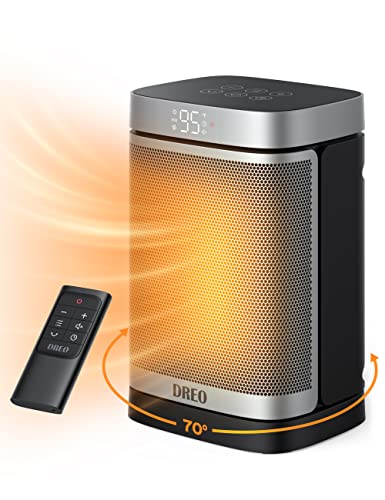
Faster Heat Than Ever: Powered by DREO Hyperamics Technology, Atom One space heater heats up more efficiently with up to 1500W working power, reaching your desired temperature immediately, letting you feel fast, balmy heat straight away. This electric heater is meant to sit by your feet on the floor, near your hands on a desk, or carry around indoors. Add our heaters for indoors use to your cart & experience our amazing heater and customer service

CUSTOMIZABLE HEATING OPTIONS: Choose from three settings to suit your needs - High (1500W), Low (900W), or Fan Only for air circulation without heat.

EVEN HEAT DISTRIBUTION: The heater's 45-degree oscillation function ensures even heat distribution across the room, warming a wider area for maximum comfort.
Check Your Heater’s Real Wattage in 60 Seconds
Using a plug-in watt meter is the quickest way to verify if your heater’s actual wattage matches its label. Plug your heater into the meter, turn it on high, and wait a few moments for the reading to stabilize. The meter will show the real-time watt draw instantly. For an accurate snapshot, let the heater run for a minute or two, then note the displayed watts. This quick test reveals whether the heater is pulling around 1,500 watts or less, confirming the label’s accuracy. Keep in mind that thermostat settings and power cycling affect average power consumption over time. A brief check captures the peak wattage, but running the heater for an hour provides a clearer picture of your actual energy use and costs. You can also use a Kill-A-Watt meter to monitor voltage, current, and kilowatt-hours during the test to calculate precise operational expenses. For a more complete view of indoor air quality, top air cleaners combine humidification to filter airborne particles while maintaining comfortable humidity levels. If you prefer a programmable approach, consider pairing your heater with a smart thermostat to automate temperature control and optimize energy savings. Unlike bladed fans, bladeless fans offer a quieter, safer alternative for circulating warm air without exposed spinning parts.
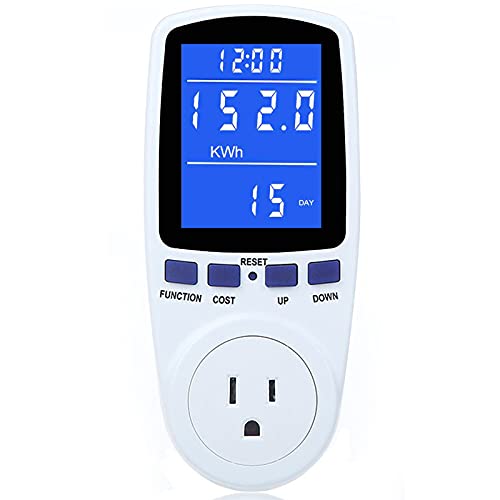
Various Monitoring Parameters: The power meter plug can monitor the power (W), energy (kWh), volts, amps, hertz, power factor, cost, minimum and maximum power (W), cumulative days and time of your appliances. By switching 7 display modes, you can easily know the various parameters while the appliance is working. The home energy monitor can also calculate and display how much power your appliance uses and how much electricity bill it cost in cumulative time

Intuitive Electric Usage Monitoring: Measure power (W), volts, amps, frequency, power factor, max/min power (W), cumulative time, and energy (kWh) with this watt meter; Automatically calculate costs based on set prices and track home energy usage for efficient electricity savings; This watt hour meter makes managing your energy consumption easy

✓ Backlit LCD Display: The watt meter features an upgraded backlit LCD display with a 160° wide viewing angle, providing clear and distinct data readings from any angle, day or night. (Note: To conserve energy, the backlight will automatically turn off after 15 seconds of continuous use.)
How Many Watts Do You Need for Different Room Sizes?
For a typical room with 8-foot ceilings in a moderate climate, about 10 watts per square foot is a good rule of thumb. For example, a 150 square foot room needs around 1,500 watts. This provides enough heat for standard insulation and normal conditions. Adjustments are necessary for rooms that are less insulated or have higher ceilings; drafty spaces might need 25% to 50% more wattage, while well-insulated homes can operate effectively at 5 watts per square foot. For larger rooms over 200 square feet, consider using two smaller heaters instead of a single oversized unit to ensure even heating and reduce fire risks. Always factor in your specific climate, insulation, and ceiling height when determining the precise wattage needed for safe and efficient heating. To alleviate coughing caused by dry air from these heaters, a humidifier for cough can add necessary moisture to the room. Using a dehumidifier in damp areas can also help by reducing humidity levels that attract centipedes.
Does Heater Type Change How Much Power You Actually Use?
Heater type does not change how much power you actually use; wattage determines your consumption. All resistive electric heaters, such as ceramic, oil-filled, or fan heaters, convert electricity to heat at nearly the same rate. For example, a 1,500-watt fan heater and a 1,500-watt oil-filled heater both use approximately 1.5 kilowatt-hours per hour of operation.
What influences the actual energy used in practice is how you operate and how efficiently the heater delivers heat. Infrared or oil-filled models may feel warmer longer, possibly reducing the run time and total energy consumption. However, this difference stems from heat delivery and thermostat cycling rather than a change in the heater’s fundamental power use. For those seeking allergy relief and comfort, a humidifier may provide additional air quality benefits that a heater alone cannot address.
Proper maintenance also plays a role in energy efficiency by preventing power waste from clogged filters or inefficient fan functions. But fundamentally, all resistive heaters use electricity at the same rate, regardless of their type or design. For comparison, a portable air conditioner uses a similar wattage but operates on a different principle to cool a room.
How a 750-Watt Space Heater Compares to 1,500-Watt Models
A 750-watt space heater uses half the power of a 1,500-watt model, drawing about 0.75 kilowatt-hours per hour compared to 1.5 kilowatt-hours for the larger unit. This means running the smaller heater costs you half as much in energy consumption per hour. The 1,500-watt heater delivers significantly more heat, reaching temperatures around 200°F, while the 750-watt version maxes out near 138°F. As a result, the bigger unit warms a 150 to 200 square foot room more quickly, making it suitable for larger spaces. Conversely, the smaller heater is better for heating small rooms of about 75 to 100 square feet. When it comes to safety and electrical limits, the 1,500-watt model approaches the maximum safe limit for a standard 120V outlet, so opting for the 750-watt heater places less demand on your circuit and reduces risk. For example, the 750-watt model uses an open interior for airflow and a nichrome wire coil as its heating element, whereas the 1,500-watt version relies on enclosed ceramic plates. If airborne dust is a concern in your home, pairing a space heater with one of the top-rated air purifiers for dust can help maintain cleaner air while you heat the room. When comparing ongoing expenses, oil heaters often have lower operating costs than ceramic space heaters in larger spaces. Using a smart thermostat can further optimize energy savings by automatically adjusting the heater’s runtime based on your schedule and room temperature.

2 in 1 heater fan: This ceramic heater offers dual heating modes (1500W/750W) plus a cool air fan, making it ideal for both winter and summer. With automatic thermostat control, it cycles on and off to maintain your preset temperature without any manual adjustment. A practical and thoughtful gift for working from home, or for family, friends, and colleagues during the cold season.

2 in 1 heater fan: This ceramic heater provides two heat levels, 1500W or 750W and one cool air fan, you can use it both for winter and summer. Thermostat control of the heater will turn the heater off when it reaches a preset temperature and turn the heater back on when the temperature dips below the thermostat setting

Compact and Portable Design: The portable electric PTC ceramic heater measures just 3.46"D x 4.33"W x 6.22"H, lightweight but powerful. You can easily move it around for use in office desk, bedroom, living room, dorm and other small spaces
What Mistakes Make Your Space Heater Use More Power?
Using your space heater as your primary heat source instead of a supplemental one can significantly increase power consumption. This approach forces the heater to run longer and harder, leading to higher energy bills. Selecting the wrong size also impacts efficiency: a unit that’s too large will cycle on and off frequently, wasting energy, while a too-small heater will run constantly without effectively heating the room. For a more permanent cooling solution in summer, portable AC units offer similar flexibility without requiring window installation.
Running the heater for extended periods is another common mistake. Setting a timer or using a Smart thermostat helps limit overuse and keeps runtime in check. Additionally, heat escapes through drafty windows, open doors, or insufficient insulation, causing the heater to work harder to maintain warmth. Sealing gaps and closing off unoccupied rooms minimizes these losses. For a more efficient approach, consider a DIY reed diffuser to freshen the air naturally instead of relying on forced heat circulation, which can further strain your heater. To reduce fire risk, always maintain at least three feet of clearance between the heater and flammable items like curtains or bedding.
Unsafe conditions like dirty vents or the use of extension cords can impair performance and increase overheating risks. Keep vents clean and plug the heater directly into a grounded outlet with the appropriate wattage capacity. Finally, scheduling an energy audit can identify leaks and inefficiencies, enabling you to address issues proactively. Correcting these mistakes helps your heater run efficiently, using only the power needed to keep your space comfortably warm.
Can a Lower-Wattage Space Heater Really Save You Money?
Lower-wattage heaters can significantly reduce your electricity costs when sized appropriately for your space. For example, a 400W heater consumes about 0.4 kilowatt-hours (kWh) per hour, costing roughly $0.06 at an electricity rate of $0.15 per kWh. In comparison, a 1,500W unit uses about 1.5 kWh per hour, costing around $0.23. That’s a 73% reduction in power consumption and cost per hour. However, the key to saving money lies in matching the heater’s wattage to the size of the space you want to heat. Instead of replacing your whole furnace, zone heating with a lower-wattage heater heats only the immediate area, preventing unnecessary energy waste. Similarly, for moisture control in confined spaces, using a properly sized low-wattage dehumidifier can also reduce electricity costs. Smart thermostats can further optimize your heating schedule and reduce waste by learning your habits and adjusting temperatures automatically, offering additional energy savings over manual controls. For instance, switching from a large, high-wattage heater to a 400W radiator plus a 100W heated throw can cut your monthly bill from about $147 to $97. The savings can pay for the heater in around six weeks. Always choose a heater that’s appropriately sized for your space to maximize efficiency and save money.
When Your Space Heater Uses More Power Than Its Label Says
Your space heater often draws more power than its label states because the wattage listed is a peak rating, not your typical daily power consumption. While a heater’s label might say 1,500 watts, the actual power use can be higher depending on conditions. The thermostat cycles the heater on and off to maintain a set temperature, so it doesn’t run at full power constantly. When you set it in a drafty room or on the highest setting, it stays on longer, which increases total energy use. This discrepancy between peak wattage and average consumption can mislead you about how energy-efficient your heater truly is. To get an accurate measure of how much power you’re using, use a plug-in watt meter or calculate by multiplying the rated amps by your supply voltage. Knowing the real wattage helps prevent surprises on your electric bill and ensures safer, more efficient operation.