Does a Space Heater Save Money?
If you’re wondering whether a space heater can actually save you money, you’re not alone. The short answer is yes, but only if you use it wisely.
For example, running a 1,500W space heater for eight hours might cost around $1.60, and you can cut your energy bills by heating just the room you’re in and lowering your main thermostat.
The key is knowing how to make it work effectively. The details below will help you get the most out of this approach.
Do Space Heaters Actually Save Money?
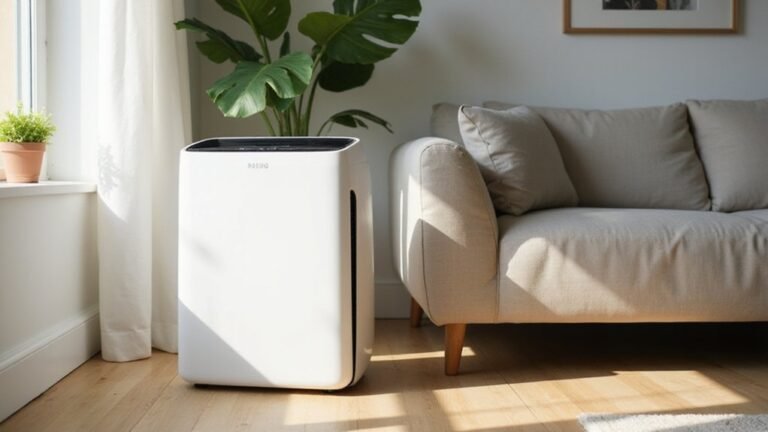
Using a space heater to heat a single small room while lowering your central thermostat by 8°F to 15°F can save money. This approach creates targeted heating zones, allowing you to heat only the space you occupy instead of the entire house. By doing so, you improve overall energy efficiency because you avoid wasting heat in empty or seldom-used rooms. A typical 1,500-watt space heater costs around 20 cents per hour to operate. Running it for 8 hours daily adds up to about $1.60 per day. You offset this expense by reducing your central heating system’s load, but running multiple heaters across several rooms generally eliminates potential savings. The goal is to keep your immediate area comfortably warm while accepting a cooler house overall, focusing your energy on the space that matters most. To maximize savings, a 6–8°F reduction in central heat is recommended, as a smaller drop of only 2°F does not justify the heater’s operating cost. For additional air quality benefits in your heated zone, consider placing a top indoor plant nearby to help filter the air. A window air conditioner can similarly provide targeted cooling in summer to reduce central air costs. To further improve air quality in that heated zone, a HEPA air purifier can effectively remove dust and allergens while you stay warm.
When a Space Heater Cuts Your Energy Bill
Turning down your central thermostat by 6 to 8°F and using a space heater in the room you’re occupying can significantly cut your energy bill. This approach reduces the overall demand for whole-home heating while providing targeted warmth where you need it most. It’s especially effective in small, drafty rooms or during very cold days when your primary fuel—such as heating oil or propane—is expensive. For a more permanent cooling solution during warmer months, consider how portable air conditioners offer similar targeted efficiency. However, if you use a humidifier alongside a space heater, be aware that excess moisture can promote mold growth in the room. For treating croup in a child, a cool mist humidifier is often recommended to help soothe coughing and ease breathing.
Make sure to check for energy rebates from your utility providers, as they sometimes offer discounts on energy-efficient electric heaters. Before purchasing, verify the appliance warranties to ensure your investment is protected. For a typical 1,500-watt heater used for about 8 hours daily, your cost comes to roughly $1.60 per day, making it a cost-effective warming option when paired with a significant thermostat setback.
However, the savings diminish if your central heating system’s temperature is already low. This strategy works best in occupied rooms, where localized heat keeps you comfortable without running up your entire home’s energy costs.
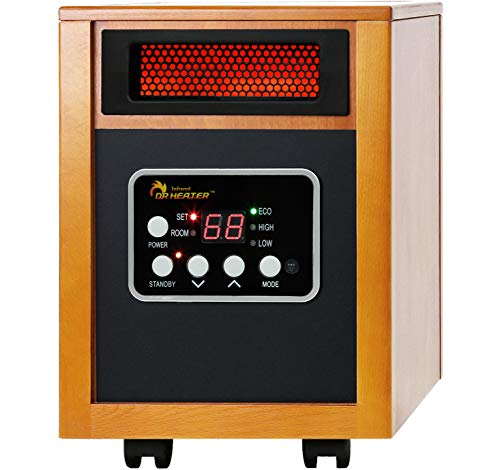
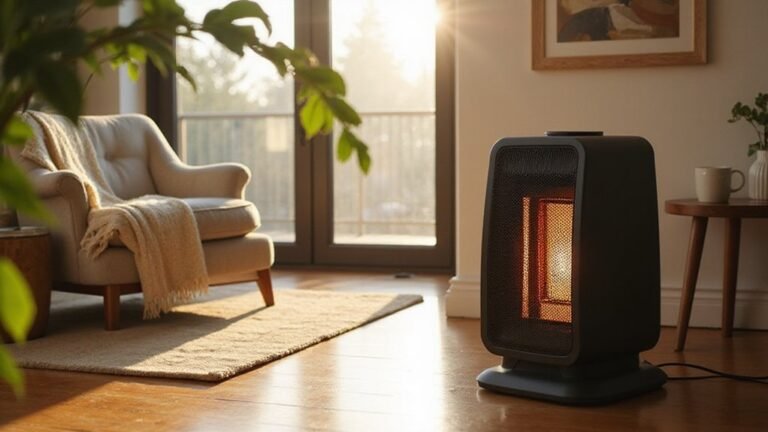
Can heat up a large room with Auto Energy Saving Model With High and Low Feature. Tip-over protection and Overheat protection.Heat Up for a large room - Dual Heating System: Infrared Quartz tube + PTC for 60% more heat than others. Rated around 5200 BTU.

Widespread Warmth: DREO's 120° wide oscillation heating distributes warm air evenly from top to bottom, helping to bring fast heat to every corner of your room more efficiently than regular wall-mounted heaters.

The Ultimate Heating Experience: DREO's upgraded 25" space heaters for indoor use brings 11.5 ft/s fast heat thanks to its new hyperamics thermal design, while the extended impeller doubles the heat range making it the ideal space heater for large rooms and warmer winters.
When Running a Space Heater Costs You More
A space heater stops saving you money the moment you try to use it as a whole-home solution. You can’t match the output of central heating without running multiple units, which significantly boosts your electric bill. If you plan to use it for six or more hours daily, the cost advantage disappears—central heating then becomes more economical. Having several heaters in different rooms just adds up in energy costs, so relying on your main system tends to be more cost-effective. Running a space heater in a large, drafty space or without proper insulation wastes energy, as heat escapes faster than it can warm the area. Improving insulation helps targeted heating work better, but without it, your heater’s running costs increase. Typically, your gas or heat-pump system will provide a better price per BTU than multiple space heaters, so it’s usually smarter to let these systems handle the bulk of your heating needs. Unlike bladeless fans, which use airflow amplification to efficiently circulate air, a space heater relies on direct heat transfer and suffers from significant energy losses in poorly sealed rooms. Window air conditioners use a similar compressor and refrigerant cycle to transfer heat rather than generate it, which can make them more efficient per BTU than resistive space heaters in small zones. For steady fragrance distribution without energy loss, a reed diffuser relies on passive capillary action rather than electricity.
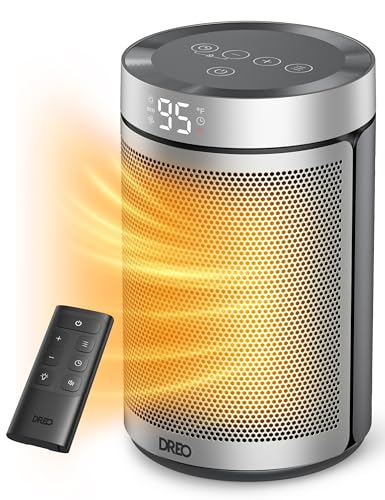
Powerful heat that fits everywhere: DREO space heaters for indoor combines Hyperamics 1500W advanced PTC system with a new heat funnel design to deliver heat within seconds and enhance warm air circulation for up to 200% farther reach than traditional heaters.

2 in 1 heater fan: This ceramic heater offers dual heating modes (1500W/750W) plus a cool air fan, making it ideal for both winter and summer. With automatic thermostat control, it cycles on and off to maintain your preset temperature without any manual adjustment. A practical and thoughtful gift for working from home, or for family, friends, and colleagues during the cold season.

[Efficient & Quiet Heating] This space heater for indoor use is designed with a silent mode and energy efficiency, operating with minimal noise to ensure it doesn’t disturb your rest, making it ideal for the bedroom. It uses PTC ceramic heating elements to quickly warm up within 2 seconds, providing a comfortable and cozy environment.
How to Calculate Your Daily Space Heater Cost
To determine your daily space heater cost, find its wattage label or check the manual—most heaters list their wattage there. Note how many hours you run it each day. Convert the wattage to kilowatts by dividing the number of watts by 1,000. Then, multiply this kilowatt figure by the hours of use to get your daily energy consumption in kilowatt-hours (kWh). Next, multiply the kWh by your electricity rate per kWh, which you can find on your latest utility bill. For instance, a 1,500-watt heater used for 8 hours at an electricity rate of $0.14 per kWh will cost approximately $1.68 daily. To estimate your monthly expense, multiply this daily cost by 30 days. Keep in mind that heater efficiency impacts overall savings compared to central heating, and costs should be recalculated whenever your usage habits or electricity rates change. For similar appliance energy considerations, review the ultrasonic humidifier’s wattage to calculate its operating cost. Just as with heaters, using a DIY humidifier filter can influence the energy efficiency of your appliance. Using distilled water options can also help prevent mineral buildup that reduces long-term efficiency.

Personal Heater: Our heaters for indoor use help keep your personal space at home or in the office toasty warm and cozy so you can stay focused on work and not being cold.

Powerful heat that fits everywhere: DREO space heaters for indoor combines Hyperamics 1500W advanced PTC system with a new heat funnel design to deliver heat within seconds and enhance warm air circulation for up to 200% farther reach than traditional heaters.

ETL-Certified Safety: Made of V0 flame-retardant materials with multiple safety features including built-in smart tip-over protection, overheat protection, 12-hour timer, 24-hour automatic power off without interaction, V0 flame retardant 2-prong plug, and sturdy 6ft long flat power cord. Safe and worry-free all-day use. Safety Reminder: Please do not use with an extension cord. Only plug directly into the wall outlet.
Which Space Heater Type Saves the Most Money?
Infrared heaters are the most money-saving option for personal spot heating. They warm you directly instead of the entire room, providing immediate heat and reducing runtime. This targeted heating minimizes electricity use and helps lower your energy bills. Placement matters—aim the heater at yourself to maximize efficiency and avoid wasting energy heating furniture or walls. For example, the Dr. Heater Portable Infrared, which operates at full 1500 watts in eco mode, costs about 18 cents per hour and effectively heats large areas up to 575 square feet.
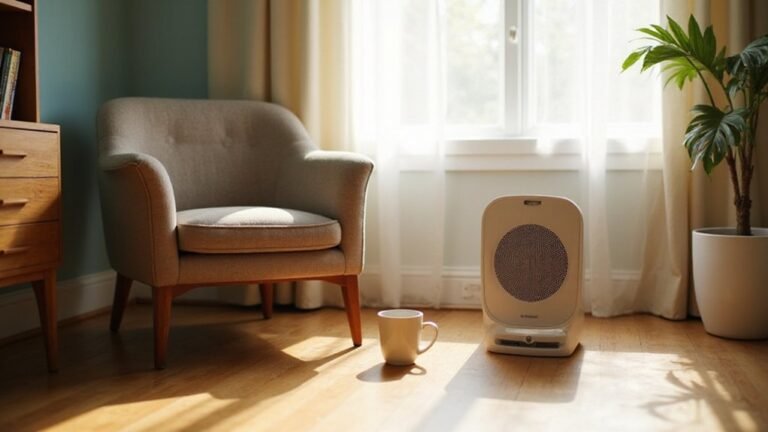
For heating larger or longer-lasting room needs, oil-filled radiators tend to be more cost-effective. Their heat retention allows them to cycle less, maintaining comfort while consuming less power over time. Ceramic heaters strike a middle ground, warming small spaces quickly without the energy costs of larger units.

CUSTOMIZABLE HEATING OPTIONS: Choose from three settings to suit your needs - High (1500W), Low (900W), or Fan Only for air circulation without heat.

【FAST HEATING INFRARED HEATER】With latest technology, high-quality quartz heating elements and radiation wave heating ways, space heater with infrared is far more efficient than a regular gas or patio heater. SONBION heater can make you warm quickly in cold winter.

EVEN HEAT DISTRIBUTION: The heater's 45-degree oscillation function ensures even heat distribution across the room, warming a wider area for maximum comfort.
3 Thermostat Features That Actually Save Money
Finally, remote control via Wi-Fi lets you adjust your thermostat from anywhere. This prevents forgotten setpoints from running unattended all day and allows quick changes if your schedule shifts unexpectedly. For example, ceramic space heaters provide rapid, localized warmth that can complement a smart thermostat’s zone-based heating strategy. When combined, these three features maximize efficiency without sacrificing the comfort you want. For similar energy savings, consider pairing your smart thermostat with a high-quality air purifier featuring a replaceable filter to maintain clean indoor air efficiently.

【Do a Simple Check】Please scan the QR code to do a check if vine thermostat is compatible with your home before purchase. A common wire (C-wire) is required for all vine thermostat

FAST AND EFFICIENT HEATING – This 1500W PTC ceramic space heater is designed to heat up your space quickly and evenly. Ideal space heaters for indoor use and large room settings, it delivers far-reaching heat to ensure comfort during chilly days.
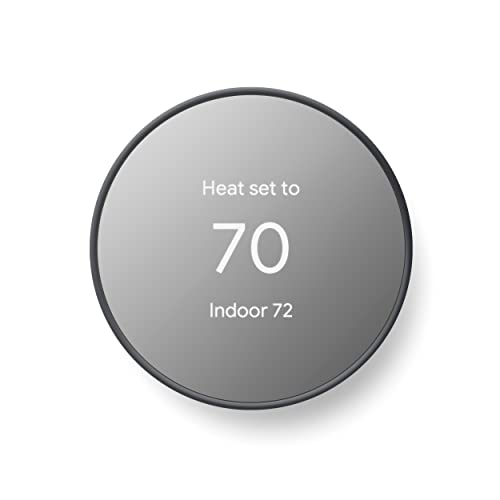
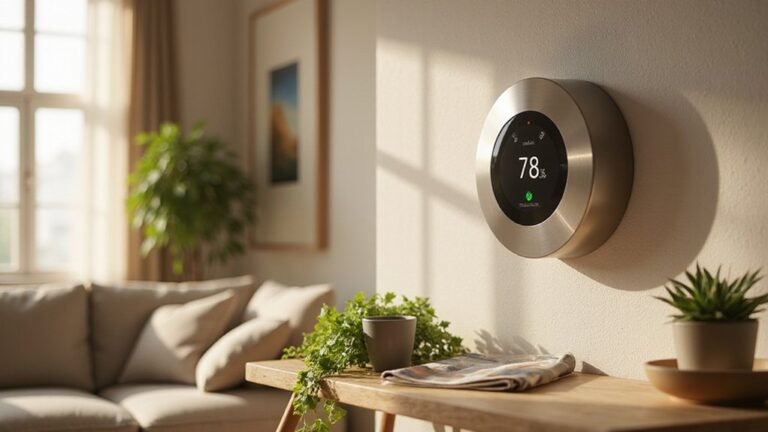
ENERGY STAR certified smart thermostat for home that helps you save energy and stay comfortable.Connectivity : Wi-Fi - 802.11b/g/n 2.4 GHz, 802.11a/n 5 GHz Wi-Fi., Wireless interconnect : Bluetooth Low Energy Please refer to the product description section below for all applicable legal disclaimers.Product note: You can also check your system’s compatibility before purchasing a Nest thermostat with our online Nest Compatibility Checker on the Google Nest support page
Lower Your Thermostat to Unlock Real Savings
Lower your thermostat to save money when using a space heater. The goal is to reduce your entire home’s heating demand so the space heater’s cost is offset by lowered central heating bills. Lowering your thermostat by 6–8°F can lead to noticeable savings. If you’re warming just one or two occupied rooms, dropping it by 8–15°F is even more effective. The Department of Energy suggests that setting back your thermostat by 7–10°F for about eight hours daily can reduce your heating costs by up to 10 percent per year. However, your savings depend heavily on your home’s insulation—poor insulation can diminish the benefits. A dehumidifier works by removing excess moisture from the air, which can also improve heating efficiency by making the space feel warmer at a lower temperature. For comparison, reviewing top air conditioners for casement windows shows how targeted cooling can similarly reduce central AC usage.
To make this work financially, add up the costs: the energy used by your space heater plus the reduction in your central heating bill. This sum should be less than what you normally pay for heating without the extra device. This strategy tends to be most effective in all-electric homes. If your home heats with gas, the potential savings are smaller, so avoid warming multiple rooms with space heaters at the same time.
4 Room Tweaks That Boost Space Heater Savings
Small adjustments in the room itself can significantly boost your space heater savings. Start by sealing rooms and blocking drafts — close off unused rooms and seal gaps around windows and doors with foam tape or draft stoppers to prevent heat from escaping. Hang thermal curtains overnight to trap warmth, and open them during sunny days to let in free solar heat. Placing rugs over cold floors improves comfort and reduces the need for the heater to run constantly. Keep furniture at least six inches away from the heater to maintain good airflow, and run the ceiling fan in winter mode to circulate warm air effectively. These tweaks help your space heater operate more efficiently, lowering your energy bills even further. For optimal moisture control, consider using a bedroom dehumidifier to reduce humidity that can make the air feel colder. Additionally, changing your filter regularly ensures your heating system maintains efficient airflow and performance. A smart thermostat can further optimize energy use by automatically adjusting room temperatures based on your daily comfort and health patterns.