Cost of Space Heater vs Central Heat: A Comparison
Wondering whether a space heater or central heating will save you more money? The upfront costs vary widely, with central systems often costing thousands and portable heaters only a few hundred dollars.
Your actual savings depend on how often and how much you heat, as well as your utility rates and insulation.
Keep reading to find out which option makes sense for your needs.
Upfront Cost: Space Heater vs. Central Heat
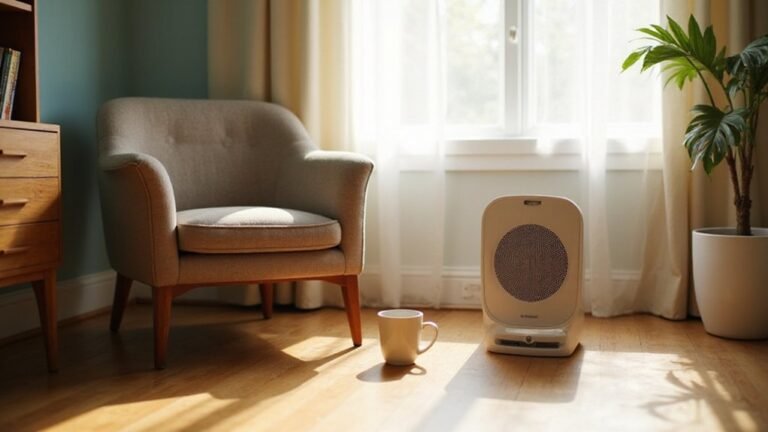
The upfront cost for space heaters is significantly lower than that of central heating. You can expect to pay between $20 and $300 for a portable unit that you can set up yourself without installation fees. In contrast, installing a central heating system usually costs $3,000 to $12,000, covering equipment, permits, and contractor labor. That creates a 20- to 100-fold price difference before you even turn the unit on.
This low initial investment also means immediate energy efficiency because you’re heating just the room you’re in, not your entire house. Maintenance is minimal, often limited to wiping down the grill and occasionally inspecting the cord. Central systems, however, require annual tune-ups and duct inspections, which add ongoing costs beyond the hefty initial expense. For basements, a space heater also offers portability to target specific damp or cold spots, similar to how a basement dehumidifier can be moved to the area with the most moisture. For improved winter air quality, pairing a space heater with a portable unit featuring a HEPA filter helps capture dust and allergens stirred up by the warm airflow. Many space heaters now include digital thermostats and remote controls, offering convenient temperature management similar to a window air conditioner’s settings.
When a Space Heater Is Cheaper Than Central Heat
A space heater is cheaper than central heat only if you heat a small, single room for about four hours or less each day. This approach saves money by heating just the space you use, rather than the entire house. To maximize savings, pair the space heater with a central thermostat set 8 to 15 degrees Fahrenheit lower. Doing so prevents energy waste from heating unoccupied areas. Keep in mind that electric space heaters draw power from the grid, which can be carbon-intensive. Using a heater briefly and targeting specific spots like a desk or couch helps reduce your environmental impact. However, if you need to heat multiple rooms or plan to use heat all day, central heating becomes more cost-effective. Adding a dehumidifier to that small room can also help by reducing humidity that attracts insects like centipedes. For a similar trade-off in cooling, portable air conditioners are less efficient than window units. For those suffering from a dry cough, using a humidifier in that same small room can provide similar targeted cough relief by adding moisture to the air.
The Real Monthly Cost of a Space Heater
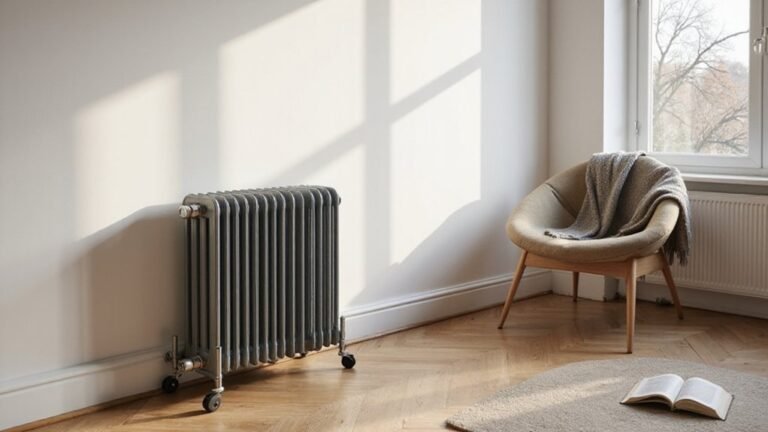
Your monthly cost for running a space heater depends mainly on its wattage, how many hours you use it each day, and your local electricity rate, so expenses can vary widely—from about $18 to $90. For example, a heater rated at 1,500 watts used for moderate periods might cost around $36 to $51 per month. Doubling your daily usage will roughly double that expense. A smaller 750-watt model costs approximately $18 monthly with similar usage, while a 2,000-watt heater could exceed $48. Remember that thermal efficiency matters—these heaters convert nearly all electricity into heat, but if your room leaks warm air, your bills could be higher. Noise levels differ as well; fan-forced heaters tend to hum louder while oil-filled radiators operate more quietly, though both cost similar amounts to run. Since electricity rates vary by location, check your local kWh price before assuming a heater will be inexpensive. Using shorter periods of heat rather than continuous operation can help reduce your energy costs. Additionally, infrared heaters are about 40% more efficient than oil radiators, making them a smarter choice for targeted spot heating despite similar running costs. To keep your heater running optimally, regularly cleaning its internal filter can prevent mold and buildup that reduces efficiency. For similar maintenance, you should also periodically check the fan blades for dust accumulation to ensure unobstructed airflow. For those considering a more permanent solution, smart thermostat integration can optimize your overall heating schedule and reduce waste.
What Central Heat Costs You Each Month
Your monthly central heat costs typically range between $150 and $300 during the coldest months. However, these costs can vary widely based on your heating system, home insulation, and local utility rates. Natural gas furnaces generally cost about $30 to $60 per month, making them the cheapest option for heating. Electric resistance heating tends to be more expensive, with monthly bills often between $130 and $180.
Your home’s energy efficiency significantly influences these costs. Better insulation and a smaller square footage reduce heat loss, thus decreasing your monthly expenses. Using a humidifier for cough can also help maintain comfortable humidity levels that make heated air feel warmer, potentially lowering thermostat usage. Proper moisture control from a bedroom dehumidifier can also improve heating efficiency by reducing the energy needed to warm humid air. Noise levels are also a consideration; central systems operate quietly but continuously, which might be a factor if you prefer a quieter home environment. Ultimately, the severity of winter, your thermostat habits, and local utility rates shape your actual monthly heating bill. Using a smart thermostat can further lower these costs by optimizing your heating schedule and reducing wasted energy.
How Gas vs. Electric Heat Changes the Decision
Switching from gas to electric heat can dramatically increase your heating costs due to the difference in fuel prices and system efficiencies. Natural gas typically costs less per unit of heat than electric resistance heating, making gas more economical for operating expenses. On average, electric resistance heating can be over four times more expensive per MMBtu delivered. However, regional utility rates play a significant role; in areas where electricity is cheap or gas is expensive, switching may not lead to higher costs. For instance, choosing an air purifier for cigarette smoke often requires a HEPA filter to effectively capture airborne particles. For those already using a dehumidifier, the collected water can be repurposed for non-potable tasks like watering plants, as noted in drink dehumidifier water guidance. Additionally, a dehumidifier enhances bedroom comfort and health by reducing humidity that can cause mold and respiratory irritation.
Heat pumps change the typical cost picture because they do not generate heat directly. Instead, they transfer heat and operate at efficiencies of 250 to 350 percent. This high efficiency can narrow or eliminate the cost advantage of gas in certain regions. To accurately compare costs, you need to multiply the fuel price by the system’s efficiency. The ultimate decision depends heavily on your local utility rates and what you pay for energy in your area.
How to Calculate Your Personal Savings: A Step-by-Step Example
To determine if a space heater can actually save you money, compare its operating costs to the savings from lowering your central heat. Start by turning down your thermostat by about 8°F. This adjustment can save you roughly 8 to 15 percent on your heating bill. For example, if you spend $200 monthly on central heating, this could translate to $16 to $30 in savings each month. Selecting a unit with the right BTU rating ensures efficient heating for your room size. Space heaters generally draw 1,500 watts of power, so be aware this affects your overall electricity usage. Next, run your 1,500-watt heater for 8 hours a day. This amounts to approximately $1.60 daily or about $48 monthly in electricity costs. If your space heater’s monthly operating expense exceeds your central heating savings, using it actually costs you more money. To ensure you avoid potential hazards, always follow key safety precautions such as keeping the heater away from flammable materials.