Do Space Heaters Use a Lot of Electricity?
Wondering if space heaters eat up a lot of your electricity? The short answer is yes—they can be quite power-hungry.
A typical 1,500-watt unit can cost about 24 cents an hour to run, which adds up quickly with daily use. Keep reading to learn how you can run a space heater more efficiently and save on your energy bill.
How Much Does a Space Heater Cost Per Hour?
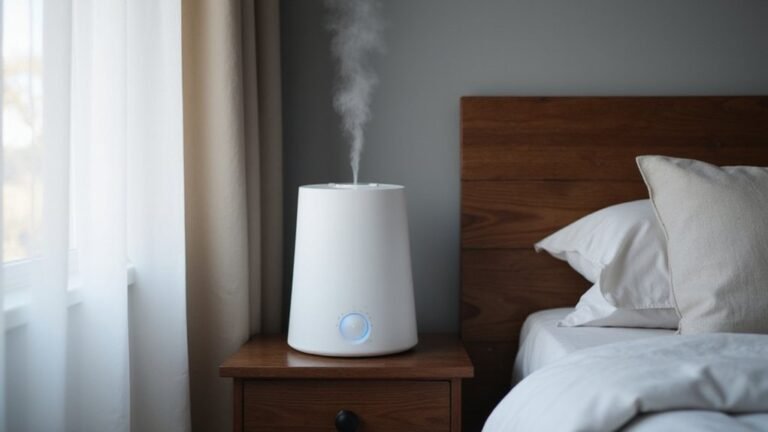
The cost per hour to run a space heater largely depends on its wattage and your local electricity rate. To quickly calculate it, use the formula: wattage divided by 1,000, then multiplied by your rate per kilowatt-hour. For example, a 1,500-watt heater at 16 cents per kWh costs about 24 cents per hour. If you lower the wattage to 750 watts, the cost drops to roughly 12 cents per hour, halving the expense. A 1,000-watt heater at the same rate runs around 16 cents per hour, while a 2,000-watt unit costs about 32 cents. Your local electricity rate has a major influence; at 9 cents per kWh, the same 1,500-watt heater costs only 14 cents per hour, whereas at 40 cents per kWh, it jumps to 60 cents. Always check both the wattage of your heater and your rate per kilowatt-hour before plugging in to determine the exact operating cost. For comparison, a window air conditioner also has similar wattage-based costs depending on its cooling output. Additionally, choosing a bedroom humidifier can help maintain comfort without adding to your heating bill, as it adds moisture to the air and may make a room feel warmer at lower temperatures. When selecting a heating or cooling solution, look for models designed for small windows to ensure a proper fit and efficient operation.
What 1,500 Watts Looks Like on Your Bill
Running a 1,500-watt space heater for one hour adds about 1.5 kilowatt-hours (kWh) to your energy bill. At the average U.S. electricity rate of $0.16 per kWh, this costs roughly 24 cents per hour. If you run the heater for eight hours each day, you’ll spend around $1.92 daily or approximately $58 per month. In states like California where rates can reach $0.27 per kWh, running the heater at the same pace would cost closer to $98 per month. For those concerned about indoor air quality while heating, some models also incorporate HEPA filtration to capture airborne particles. For vehicle owners seeking a similar cooling solution, the energy draw on a car’s electrical system differs significantly from stationary units, as reviewed in portable car AC comparisons.
To put this into perspective, a 1,500-watt heater consumes as much electricity as fifteen 100-watt bulbs operating simultaneously. The actual cost depends largely on how long you run the heater and your local energy rates. While the hourly cost may seem modest, frequent or extended use can significantly impact your electricity bill over time. For comparison, basement dehumidifiers often run at similar wattage and can likewise add substantial costs if used continuously.
Can a Space Heater Really Lower Your Heating Bill?
A space heater can lower your heating bill only if you use it to replace central heat, not supplement it. To do this effectively, turn down your central thermostat by about 8°F while heating the room you occupy. This approach is most beneficial in homes with costly fuels like oil or propane. Space heaters operate at nearly 100% energy efficiency, converting almost all power into heat, but their maximum output of around 1,500 watts limits them to small areas. Running a space heater alongside your regular heating system without lowering the central thermostat will increase your overall energy costs. For cost savings, match the heater’s use to your climate: in colder regions, targeted heating can offset expensive whole-home systems, while in milder climates, the savings are minimal. Remember, savings come from deliberately replacing, not just supplementing, your central heating. However, the financial payoff scales with how much you reduce your central thermostat, and an 8°F reduction can yield roughly $566 in yearly savings, which easily justifies running multiple space heaters. For a more pleasant atmosphere during targeted heating, you can pair your space heater with top aromatic oils in a diffuser to enhance the room’s comfort. Choosing a model with strong airflow performance ensures even heat distribution across the space. To avoid mold growth from the increased humidity in a sealed room, use a dehumidifier for mold prevention alongside the heater.
Quick Ways to Cut Your Space Heater’s Electricity Use
To cut your space heater’s electricity use quickly, use it only where and when needed. Installing a timer can turn the heater off automatically, preventing unnecessary runtime. Focus on heating occupied rooms and avoid keeping the heater on all day, since shorter periods significantly reduce energy consumption. Set the temperature between 68°F and 70°F, as each degree above 70°F can increase your energy costs by 3% to 5%. Instead of raising the thermostat, consider adding extra clothing to stay warm without increasing your heater’s workload. For better overall room air circulation, consider using a flush mount ceiling fan on low speed to gently push warm air down from the ceiling. To further protect your home, always keep the heater on a stable, non-flammable surface to prevent tipping and fire hazards. If your room feels humid, running a dehumidifier can remove excess moisture from the air, making the space feel warmer and reducing your heater’s runtime without sacrificing comfort.
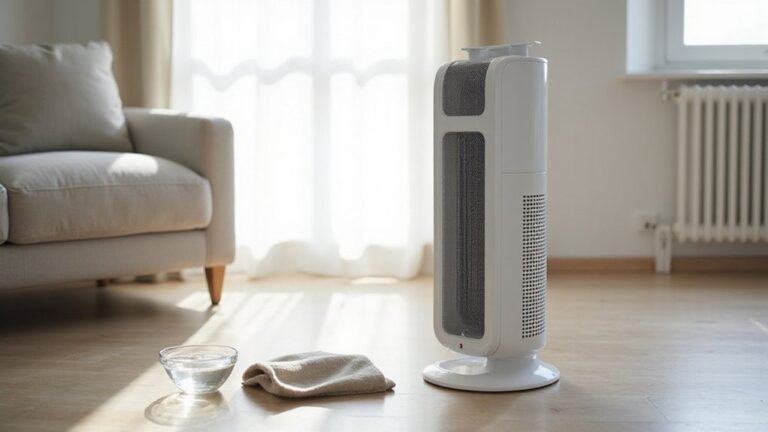
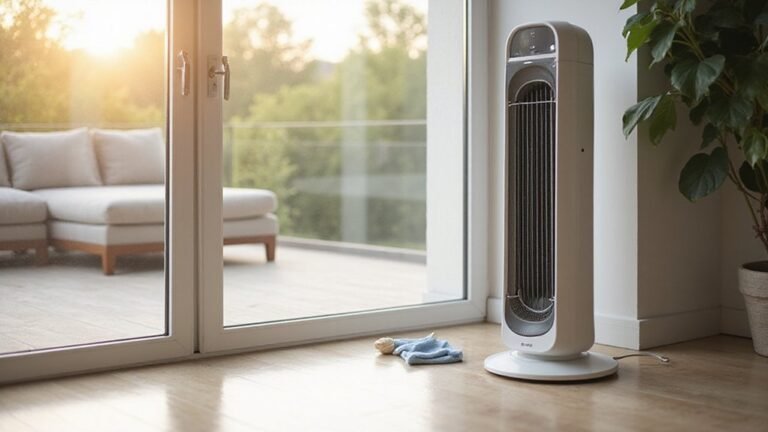
Maximize efficiency by placing the heater properly. Position it away from drafts near windows and doors to minimize heat loss. Center the heater in the room for even warmth distribution. Keep at least three feet of clearance from furniture or curtains to prevent obstructions and ensure safety. Close doors and seal gaps to trap warm air inside. Use smart controls or built-in thermostats to maintain a steady temperature, reducing energy waste from continuous full-power operation.
When Is a Space Heater Worth the Extra Cost?
A space heater is worth the extra cost when you are heating a small, occupied room rather than the entire house. You can see significant savings when warming only a specific space like a bedroom or office for a few hours, especially if your central heating system is designed to heat larger areas or if it runs even when the room is empty. By targeting your heat this way, you avoid paying to heat unoccupied spaces, promoting energy conservation. While space heaters provide targeted warmth, portable air conditioners offer comparable localized cooling for efficient comfort in specific rooms. For enhanced performance, keep your space heater’s air intake clear of dust, similar to maintaining proper airflow on a dehumidifier. Additionally, pairing your heater with a model that features an integrated air purifier can improve indoor air quality while you warm the space.
However, safety precautions are essential. Never leave the heater unattended or run it while sleeping. Make sure it is placed on a flat, stable surface away from furniture, curtains, or other combustible materials. When your main heating system is inefficient or oversized for the space, a space heater becomes a cost-effective choice. Short-term use during cold spells or while working from home makes investing in a space heater particularly worthwhile. Keep in mind, it is meant to supplement your central heating, not replace it entirely.
How to Run a Space Heater Without Breaking the Bank
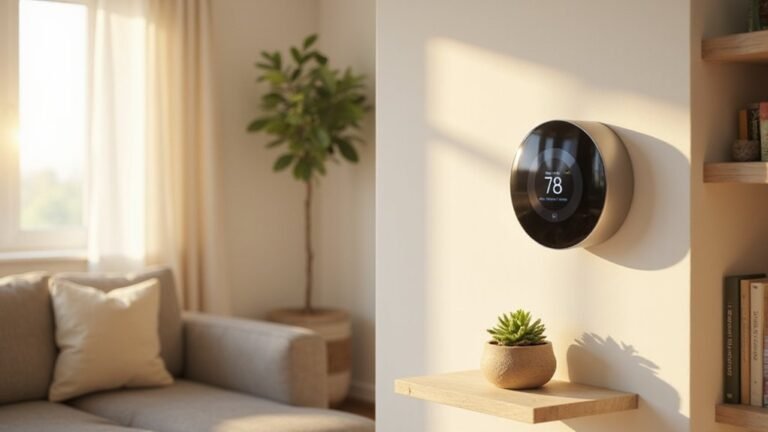
Choosing a lower-wattage space heater—around 600 or 750 watts instead of the typical 1,500 watts—can significantly cut your energy costs. A 600-watt heater uses about 40% less power, reducing your hourly expenses and overall energy consumption. Pairing this with a smart thermostat allows the heater to turn off automatically when you’re not in the room, preventing unnecessary energy waste. Keep in mind that running the heater for just 8 hours a day on a 1,500-watt model can cost around 12 kWh daily, so limiting runtime and heating only occupied spaces can help keep your bill manageable without sacrificing comfort. Using a dehumidifier instead can also help by reducing indoor humidity, which discourages centipedes and other pests while lowering the need for heating. For first-time buyers, focusing on operating cost per hour can make it easier to compare models and budget for winter electricity bills. Additionally, similar to how reed diffusers require proper ventilation to prevent overwhelming scents and potential indoor air issues, a space heater should always be used in a well-ventilated area to avoid any buildup of stale air or combustion byproducts.