Are Space Heaters Safe?
Using a space heater can keep your home cozy, but safety is key.
Proper use greatly reduces fire and shock risks, helping you stay warm without worry.
By knowing the right safety practices, you can enjoy the benefits of a space heater while keeping your home safe.
Read on to learn what you need to know to use one confidently.
What Makes a Space Heater a Fire and Shock Risk?
Space heaters draw significant power—typically around 1,500 watts, which equates to about 12.5 amps. Plugging these units into extension cords or power strips can overload the circuit, increasing the risk of overheating and failure. Underrated cords often cannot handle this load, causing the insulation inside the wiring to overheat and deteriorate. This damage exposes the conductive metal, creating a shock hazard and a potential ignition source for fire. Always inspect the unit for any signs of damage to the plug or cord before each use. Proper electrical grounding is essential; without it, stray currents can cause electrical shocks. To minimize risks, always plug your space heater directly into a wall outlet. Damaged plugs or cracked cords only worsen the dangers, making failures and fires far more likely. Avoid using improper connections or cheap extension cords, as your safety depends on secure, correctly rated electrical connections. Choosing a heater with quality and performance features can reduce risks by ensuring reliable operation. For comparison, window air conditioners also require careful electrical planning to avoid overloading circuits, much like space heaters do.
The Top Space Heater Fire Hazards to Avoid
Plugging your space heater into an extension cord or power strip is a major fire hazard. Overloading these cords can cause them to overheat and ignite. Always connect your heater directly into a wall outlet to reduce this risk. Additionally, avoid using damaged units—replace any with cracked plugs or frayed cords immediately. For optimal airflow management, you might consider safer alternatives like an air circulator which operates without the fire risks of high-heat devices. Proper maintenance and correct power source are essential for safe operation. Unlike space heaters, HEPA air purifiers use mechanical filtration to trap airborne particles without generating dangerous heat. Keep your heater at least three feet away from anything flammable, such as bedding, curtains, or clothing, to prevent accidental ignition from close contact.
Where to Place Your Space Heater for Maximum Safety
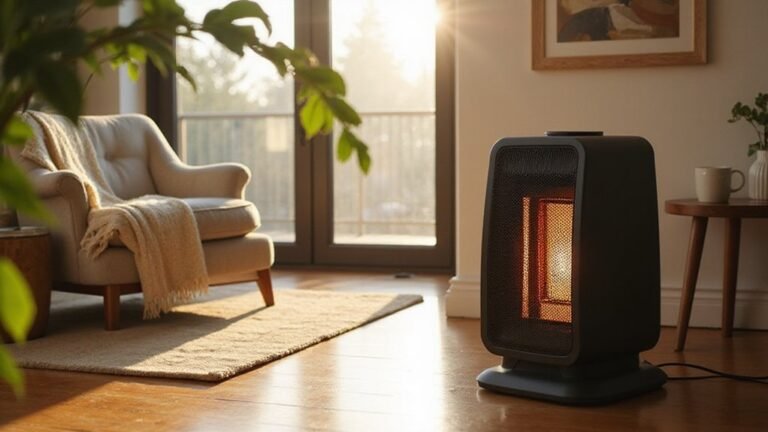
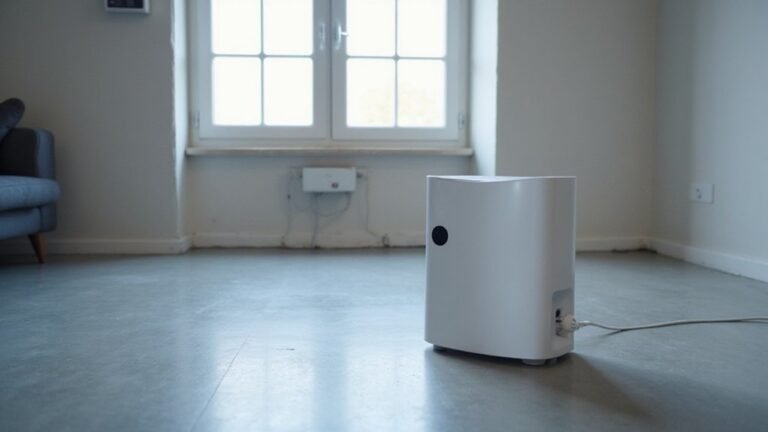
Place your space heater on a solid, flat surface like a hard floor—not on furniture or carpet. This ensures stability and prevents tip-overs. If you need to use it on carpet, always set it on a heat-resistant mat, but only if the manufacturer approves.
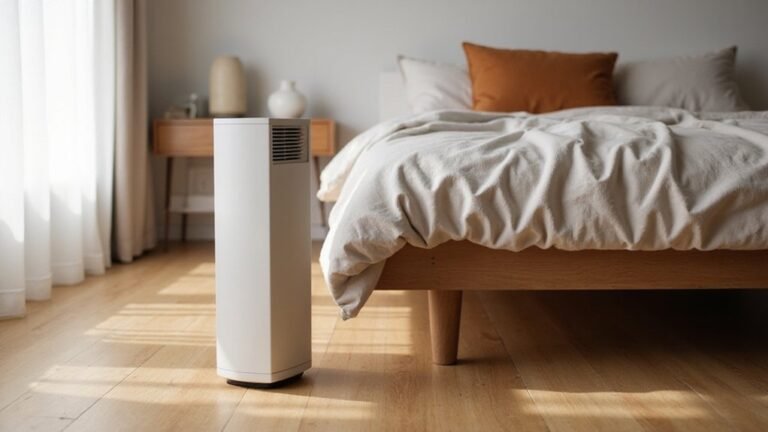
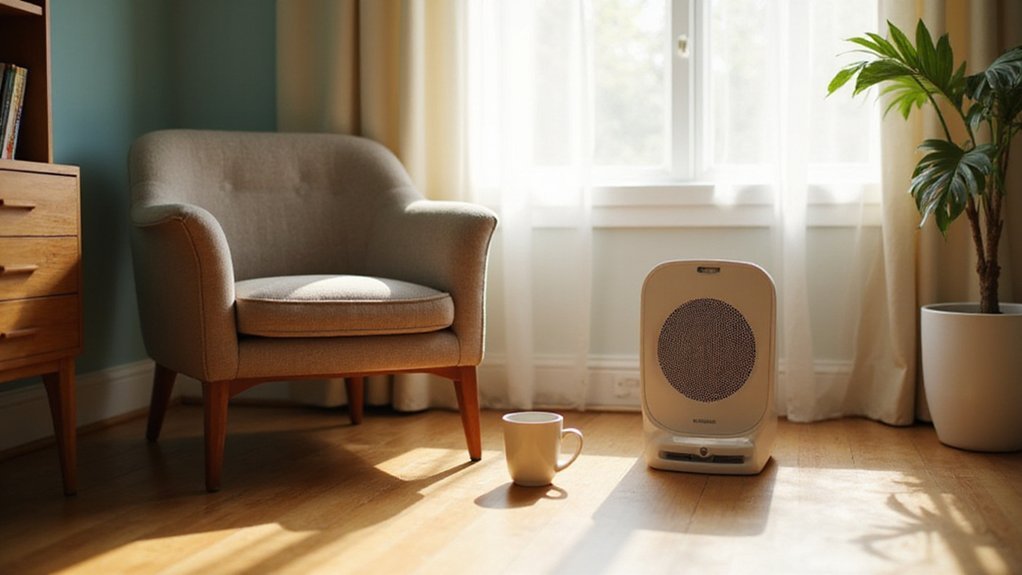
Maintain at least 3 feet of clearance on all sides from anything flammable, including curtains, bedding, papers, and furniture. The safety zone must extend in every direction, not just in front. Keep the heater away from high-traffic areas, such as doorways or hallways, where accidental bumps could cause accidents. Avoid placing it in wet areas like bathrooms or kitchens unless it’s designed specifically for such environments. Keep at least 12 inches of space between the heater and the walls, and do not block the vents. For extra safety, keep children and pets outside the 3-foot kid-free zone to prevent accidental contact. For optimal air quality, consider using a bedroom dehumidifier to manage humidity levels in the same space. Electric space heaters should never be used in unventilated rooms to prevent carbon monoxide risks from gas or combustion models. When managing dry air during heater use, adding a humidifier can help soothe irritated airways and reduce laryngitis symptoms.
Why Plugging a Space Heater Into the Wrong Outlet Risks Fire
Plugging your space heater directly into a wall outlet is the safest choice, avoiding extension cords or power strips. These accessories often cannot handle the 1,500-watt load your heater requires, which can cause connectors to overheat. The condition of your outlet is equally important; poor wiring or worn contacts increase resistance, turning electrical current into heat at the connection point. Regularly inspect outlets for looseness, warmth, or discoloration—any of these signs suggests the outlet could be a fire hazard. A worn or damaged receptacle may ignite gradually, especially if it’s on a shared circuit already close to its 15-amp limit. Relying solely on a tripped breaker isn’t enough, as overheated wiring can smolder before the breaker responds. If your plug fits loosely, replace the outlet or get an electrician to do it before using your heater. A secure, dedicated outlet significantly reduces the risk of electrical fires. Even with a proper outlet, keep the heater away from combustible materials like curtains or bedding to prevent accidental ignition. Just as controlling humidity can keep pests away, using a dehumidifier to reduce moisture also helps prevent centipedes.
How Tip-Over and Overheat Protections Prevent Accidents
Tip-over and overheat protections are crucial safety features in modern space heaters. Tip-over protection activates instantly if your heater tilts beyond a set angle, usually by using a gravity switch. This mechanism cuts power immediately, preventing the heating element from coming into contact with furniture or carpet, which significantly reduces fire risk. Overheat protection, on the other hand, monitors internal temperature and shuts the heater off if it climbs too high, typically around 120 to 150°F above normal operating levels. This prevents internal damage caused by blocked airflow or malfunctioning components, reducing the chances of burns or fires. For those prioritizing bedroom safety, selecting a heater with reliable tip-over protection is as important as choosing a well-reviewed ceiling fan for quality and performance.
While these safety features don’t directly improve air quality or energy efficiency, they enable you to operate your heater with confidence. They help avoid wasted energy on units that overheat and minimize the risk of a tipped-over fire. However, they aren’t substitutes for proper placement and supervision. Always keep combustible materials clear of the heater and verify that it resets properly after a safety trip. For instance, an infrared heater’s tip-over safety relies on a physical button that is released when the unit is lifted or tipped, breaking the circuit.
Can an Electric Space Heater Cause Carbon Monoxide Poisoning?
Electric space heaters cannot cause carbon monoxide poisoning. CO is a product of combustion, which occurs when fuels like gas, oil, or wood burn. Since electric heaters run solely on electricity, they produce no emissions or combustion byproducts. Whether your heater is ceramic, infrared, or oil-filled, it generates heat without releasing carbon monoxide. This makes them safe from such poisoning risks, even during extended periods of use. For those seeking a portable cooling solution during warmer months, a USB fan is an excellent alternative for personal airflow. For those with a cough, using a best humidifier for cough can provide additional relief by adding moisture to the air.
How to Detect Carbon Monoxide From Fuel-Burning Heaters
Carbon monoxide cannot be detected with your senses because it has no odor, color, or taste. To stay safe, you need CO alarms placed near sleeping areas and on every level of your home. Test these alarms monthly and replace their batteries according to the manufacturer’s schedule. They are your primary warning system, detecting dangerous levels of CO before they cause harm.
Additionally, monitor your heater for signs of improper combustion. Look for yellow or orange flames instead of the healthy blue ones. Soot buildup around the unit or frequent pilot-light outages also indicate potential problems. Ensure proper ventilation by checking that flues and chimneys are clear—absence of an upward draft or excess condensation on windows suggests blockages. If your CO alarm sounds or you experience symptoms like headache, dizziness, or nausea, evacuate immediately. Turn off the heater if it’s safe to do so, call emergency services, and seek medical attention. Do not re-enter until a technician inspects and repairs the unit. Following a cleaning and inspection routine can also help prevent soot and mold buildup that may interfere with safe heater operation. For a safer and more efficient alternative, consider a heat pump window unit that provides both heating and cooling without producing carbon monoxide.
When Should You Never Leave a Space Heater Unattended?
Never leave a space heater unattended, especially when you’re stepping out of the room, going to sleep, or leaving it in a vacant or child-accessible space. If you leave the room, even briefly, turn the heater off. You cannot respond to signals like tipping or overheating if you’re not there. Going to sleep with the heater on eliminates your ability to react quickly to a fire, so always shut it down before bed. Even short naps count as leaving the heater unattended.
Prioritize child safety and pet protection by keeping them at least three feet away from the heater. Never operate the heater where children can reach the controls or where pets might knock it over. Leaving a running heater in a vacant room is risky because no one is present to catch a fire early. Always unplug the unit when you’re done using it, rather than relying solely on automatic shutoff features.
Check Your Space Heater’s Power Cord, Plug, and Safety Label
Start by inspecting your heater’s power cord and plug. Ensure the cord is thick, intact, and free of frays or cuts. A damaged cord can increase the risk of overheating or electrical shorts, so stop using it immediately if damage is visible. Keep the cord fully uncoiled; running it under rugs or furniture traps heat and can cause overheating. Insert the plug directly into a snug wall outlet—avoid extension cords or power strips, which can overload or cause electrical faults. If the plug feels hot, loose, or shows signs of discoloration, unplug the heater and contact a professional for inspection. Overloading cords or strips can cause overheating and ignite fires.
Next, examine the safety label on the heater. Look for markings indicating voltage, wattage, and certification seals like UL or ETL. These show that the heater meets specific electrical safety standards and that its demands are compatible with your home’s wiring. A grounding prong on the plug signifies the need for a three-wire outlet—do not bypass this requirement. Ensuring these safety labels are correct is vital; it confirms the heater is suitable for your circuit and reduces fire risk. Always verify that the grounding prong is intact and engaged before powering on the unit. For a similar portable cooling option, some campers rely on portable air conditioners to maintain comfort in small spaces. For extra protection against airborne particles while heating, consider pairing your space heater with a filtered air solution to maintain clean indoor air quality. To avoid moisture buildup while heating, you can also integrate a dehumidifier with drain hose to help regulate humidity levels.
Which Safety Features Make a Space Heater Less Risky?
Automatic shutoff features like overheat and tip-over protection are essential safety components in a space heater. These functions instantly cut power when the unit detects excessive temperatures or if it tips over, significantly reducing fire hazards even if you’re not in the room. Both features are crucial and should not be considered optional extras. Similar to how an essential oil diffuser relies on ultrasonic technology to safely disperse mist without heat, a space heater’s safety depends on mechanical shutoffs rather than risky continuous operation.
Always look for models certified by independent agencies such as UL, ETL, or CSA. These third-party tests confirm that the heater meets established safety standards before it reaches your home, helping you avoid poorly constructed units.
A built-in thermostat is also important because it helps cycle power and prevents the heater from running at full capacity constantly, avoiding overheating and saving energy. For additional safety, choose heaters with a cool-touch exterior to protect children and pets from burns. Pairing these features with ALCI or GFCI outlets provides shock resistance. Lastly, check the safety label to ensure it clearly lists all shutoff functions; if any are missing, that’s a red flag. Vague promises should never override proven safety features.