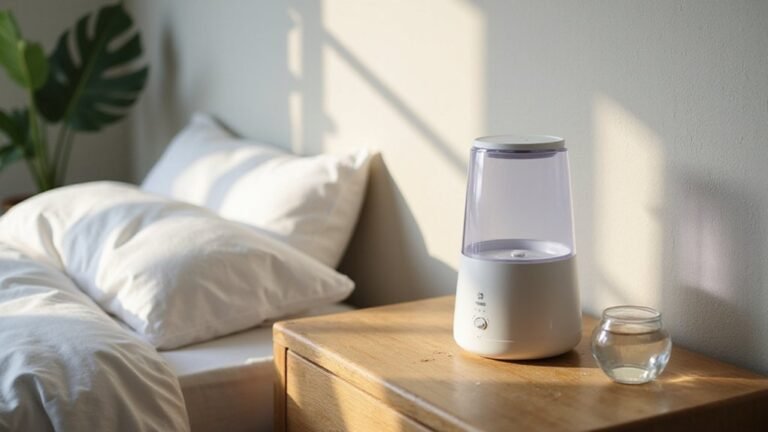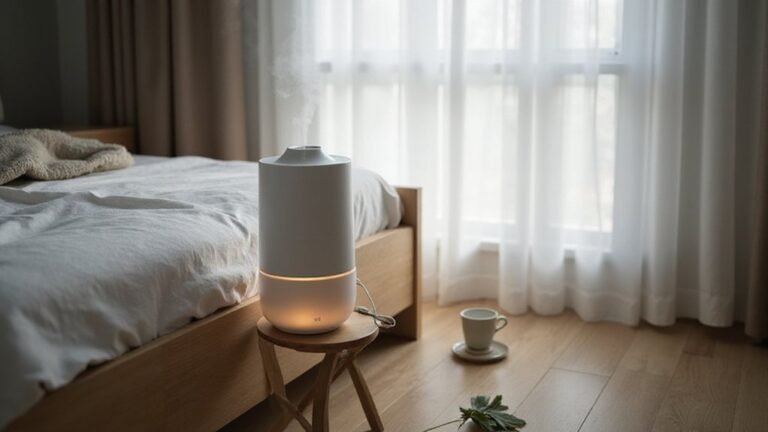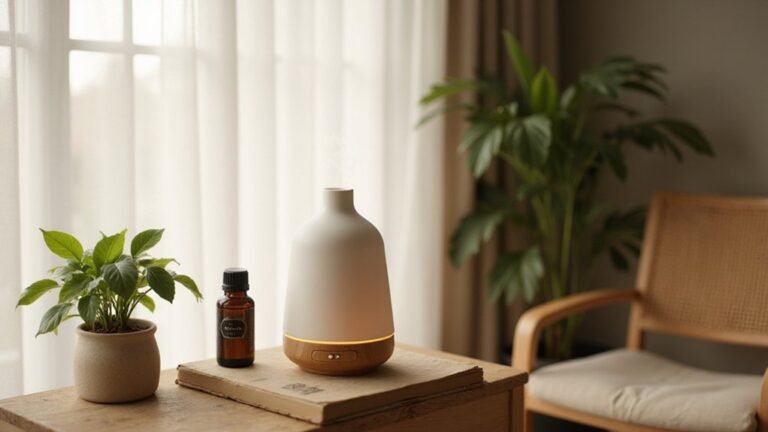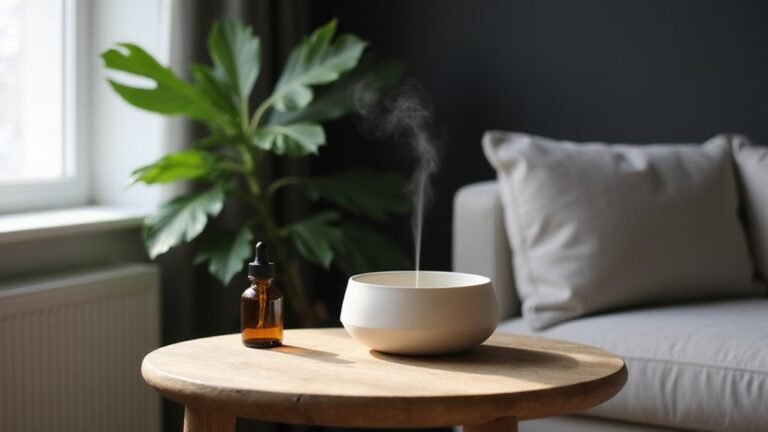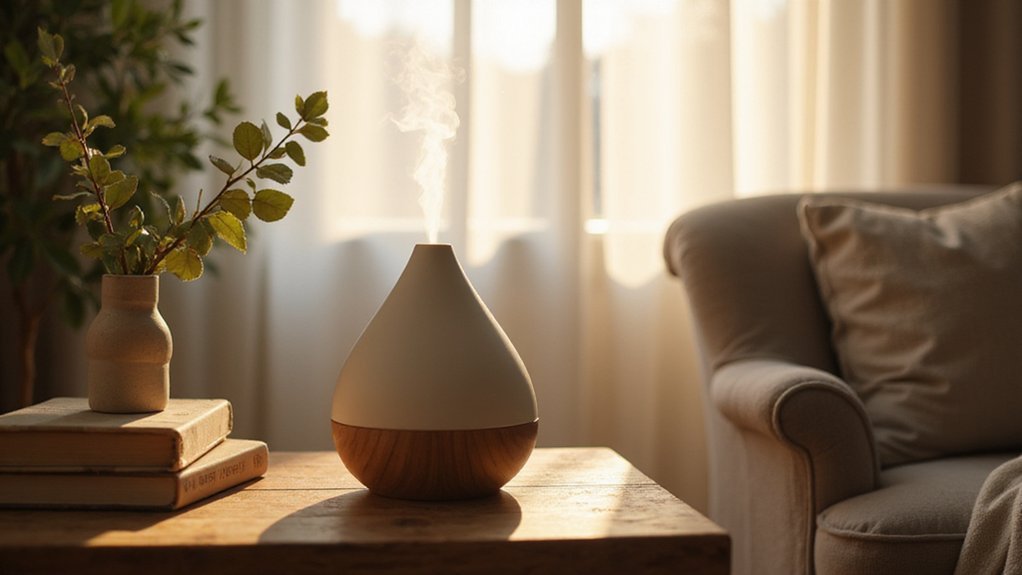
What Is an Essential Oil Diffuser?
Are you curious about how to fill your space with soothing scents without overwhelming your senses? An essential oil diffuser can do just that by transforming concentrated plant oils into a gentle, aromatic mist.
It’s a simple tool that helps promote relaxation, boost your mood, or mask unwanted odors. Keep reading to learn how to choose and use one effectively.
How Does an Essential Oil Diffuser Work?
Different essential oil diffusers use various methods to disperse fragrance into the air. Ultrasonic diffusers create a fine, cool mist by vibrating a ceramic disc at high frequency, breaking water and oil into tiny particles as small as 0.1 to 5 microns. This process avoids heat, preserving the oil’s integrity, and operates quietly, making it suitable for bedrooms or offices. Nebulizing diffusers pump pressurized air to atomize pure oil directly into a dry mist, keeping the oil unheated for maximum purity, though they tend to be louder. Evaporative diffusers blow a fan across an oil-soaked pad, releasing scent quickly but with variable noise depending on the fan strength. There are also reed diffusers, which rely solely on room temperature for evaporation. Heat-based diffusers use warming elements to evaporate the oil into vapor, which is faster but can degrade the oil’s quality due to heat exposure. All methods spread fragrances through vapor, mist, or evaporation, providing options depending on your preference for purity, noise level, and speed. For optimal performance, you should ensure proper placement away from obstacles to allow for even airflow. When selecting a model, consider that some systems integrate with smart home automation to schedule diffusion cycles. To prevent mineral buildup and mold, you should regularly clean the internal components using a gentle solution as recommended for humidifier filters.

Truly Waterless Design — Fill the container with fragrance oil (min. recommended for best performance), plug in, and enjoy. No water, no mess.

5-IN-1 AROMATHERAPY DEVICE: This ultrasonic essential oil diffuser is an amazing multi-functional aromatherapy device unlike any other you've ever used. It features a large and easy to clean 500ml water tank, 7 LED light colors, multiple mist nebulizer modes and remote control, as well as a safety auto-switch that prevents it from overheating in case it runs out of water.

Cost-Effective Essential Oil Use - Uses far less oil than waterless diffusers. Any essential oil can be used in our air diffuser while waterless models quickly use up entire oil bottles in just a few days. Enjoy long-lasting fragrance at only 1/5 the oil cost, helping you cut down on daily expenses.
What Exactly Is an Essential Oil Diffuser?
An essential oil diffuser is a device that transforms concentrated plant oils into a fine, breathable mist or vapor infused with aroma. Its main purpose is to disperse tiny oil particles into the air, allowing you to inhale their scent without direct skin contact. This creates a fragrant environment and enhances your space with the benefits of aromatherapy. Unlike humidifiers, diffusers focus solely on scent distribution rather than adding significant moisture to the air. They provide an effective way to customize your atmosphere for relaxation, stress relief, or a calming, spa-like setting by evenly dispersing the aroma throughout a room. This method of scent distribution offers a different kind of environmental control compared to central heating systems. Unlike window air conditioners, diffusers are not primarily designed to cool or regulate temperature but instead focus on scent-based ambiance. The process typically relies on ultrasonic vibrations to break the oil into micro-particles, which are then carried by a gentle mist into the surrounding air for efficient and consistent dispersal.
What Are the 4 Main Types of Essential Oil Diffusers?
There are four main types of essential oil diffusers: nebulizing, ultrasonic, evaporative, and heat. Nebulizing diffusers are the most intense, using pressurized air to disperse pure essential oils in a straightforward mist. They don’t require water or heat, delivering a strong and pure aromatherapy experience, making them ideal if you want maximum scent intensity. Unlike some appliances that serve multiple purposes, a nebulizing diffuser will not filter out airborne particles or reduce humidity, so for those functions you would need a dedicated air purifier or dehumidifier. For those interested in a hands-on alternative, you can even build your own air quality monitor at home to track particulate levels. Ultrasonic diffusers combine water with essential oils, vibrating at high frequency to create a cool mist. They are affordable, easy to maintain, and also add humidity to the air, making them a good choice if you prefer a gentle, humidifying aroma. A dehumidifier, on the other hand, actively removes moisture to help keep centipedes out of your home. Evaporative diffusers rely on airflow or natural evaporation from pads or reeds, producing a more selective aroma that is lighter and longer-lasting. Heat diffusers warm the oil, which can enhance the scent but may alter the oil’s properties due to heat exposure. Your choice depends on your scent preference, the space size, and whether you want humidification or maximum potency.
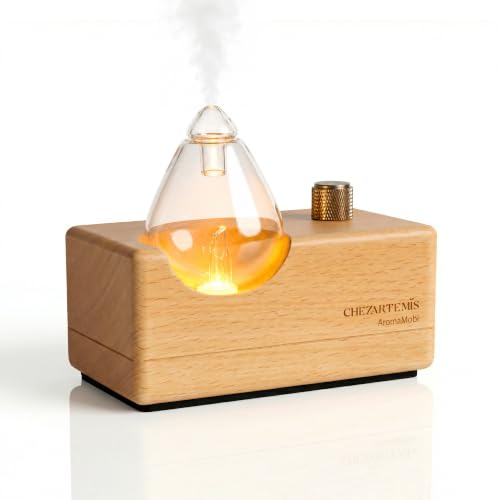
PURE SCENT WITHOUT WATER - Our cold-air nebulizing technology atomizes pure essential oils into a fine, water-free mist. This helps preserve the natural characteristics of the oils while minimizing any increase in indoor humidity. Compatible with any essential oil or fragrance oil.

[Waterless Nebulizing Technology]Experience pure, powerful fragrance with advanced waterless nebulizing technology. This waterless diffuser transforms pure essential oils into a fine mist without water or heat, helping preserve their natural aroma while delivering a rich, long-lasting scent experience.

Unrivaled Diffusing Technology. This waterless diffuser transforms essential oils into a cloud of ultra-fine mist nanoparticles without heat or water, delivering the long-lasting, pure fragrance throughout the room instantly and quietly
What Do People Use Essential Oil Diffusers For?
People use essential oil diffusers for more than just freshening up a room—they’re widely used for relaxation, sleep support, and mood boosting. After a stressful day, diffusing calming scents like lavender or chamomile creates a soothing environment that helps reduce tension. To improve sleep, combining bergamot or sandalwood before bed can make drifting off easier. During the day, energizing oils such as citrus or peppermint help uplift your mood and sharpen focus, making your workspace more productive. Diffusers also effectively mask unwanted odors from cooking or pets without relying on synthetic sprays. These practices enhance mental wellbeing and contribute to a fresher living space. To maximize benefits, follow safety tips like using the correct water-to-oil ratio and cleaning your diffuser regularly to prevent mold and irritation. A diffuser can also help humidify dry air, providing additional comfort and health benefits for your respiratory system.

LAVENDER ESSENTIAL OIL – Features a soft, floral lavender aroma for use in diffusers, DIY projects, home fragrance, and personal care formulations.

Aromatherapy Oils for Diffuser - Try our dream aromatherapy diffuser oils blend with lavender oil chamomile oil clary sage oil and ylang ylang essential oils for diffusers for home and travel use

Where Should You Place an Essential Oil Diffuser for Best Results?
Placing your essential oil diffuser in a central spot—such as a table or shelf near the middle of the room—is ideal for even scent distribution. Position it on a sturdy, flat surface about 60 to 100 centimeters off the ground, like a side table or shelf. This height allows the mist to expand fully without being too close to the floor or ceiling, ensuring a more balanced aroma dispersion.
Avoid placing the diffuser near open windows, fans, or air conditioning vents. Strong drafts can push the scent away too quickly and reduce its effectiveness. Instead, choose an area with gentle air circulation to help carry the fragrance smoothly throughout the space. Keep the diffuser at least one meter away from your bed or workspace to prevent direct mist exposure, and avoid placing it near electronics or books to avoid moisture damage.
In larger rooms, position the diffuser near main seating areas to promote a more uniform scent experience. Proper placement enhances both the fragrance’s reach and your overall experience.

Compact Aroma Hub: This 3.54" x 5.91" essential oil diffuser fits seamlessly into any space - home or office. Its 100ml capacity delivers lasting fragrance, transforming your environment with just a press. SALUBRITO's minimalist scent diffuser complements any decor.

【Fireplace Shape & Flame Light】-Using a minimalist & small footprint & upscale fireplace design, and with the ambient flame lighting so that the mist is like a real flame, the whole humidifier is like a burning fireplace.It is not only a diffuser, can also be an ornament or night light. Suitable for bedroom, office, home, yoga, gaming, etc.It provides your life with a premium feeling and enhances the quality of life.

For your convenience, a Type-C cable is stored inside the water tank. Please note that a power adapter is not included. Use a standard 5V/≥1A (or higher) USB power adapter to ensure proper performance. Always place the unit on a hard, flat, stable surface, such as a tabletop or countertop. Do not place any objects underneath the unit, as they may block the air intake vents.
Do Essential Oil Diffusers Actually Work for Relaxation?
Yes, essential oil diffusers can promote relaxation, but their effects are generally mild and situational. You might notice some mood improvement and stress relief after using oils like lavender or bergamot, especially if you’re receptive to aromatherapy. However, it’s important to understand that diffusers don’t cure anxiety or medical conditions—they create an atmosphere that can help you feel calmer.
Some of the benefits come from psychological effects, like expectations or routine, which contribute to relaxation—these are known as placebo effects. Still, clinical research indicates that diffusion can help reduce stress levels and improve sleep quality, especially in environments with high stress. For those seeking to maximize these calming benefits, pairing a diffuser with an air purifier can further improve indoor air quality and reduce airborne irritants that might interfere with relaxation. The extent of these benefits depends on factors like the type of oil, how long you diffuse it, and your individual response. To maintain a clean, effective diffuser and prevent mold, it is recommended to regularly clean it using vinegar and water to remove mineral buildup and bacteria. Think of a diffuser as a tool to set a soothing tone rather than a medical remedy; it’s a supportive addition for relaxation but not a substitute for professional care when needed. For consistent airflow during aromatherapy sessions, a USB fan can help disperse the scent more evenly throughout the room.
How to Clean an Essential Oil Diffuser
Unplug your diffuser and empty any remaining water to start cleaning. Wipe the reservoir with a soft cloth after each use to prevent oil buildup and residue. For a deeper clean, fill the reservoir halfway with water, add one teaspoon of distilled white vinegar, and run a short cycle of about five minutes. Afterward, empty the vinegar solution and thoroughly wipe the inside. While vinegar works well for cleaning, air purifiers use filters to physically trap particles rather than relying on cleaning solutions. For crawl spaces, a dehumidifier is more effective at removing moisture than a diffuser’s cleaning routine.
Use a cotton swab dipped in rubbing alcohol to clean the ultrasonic chip and any tight corners that are hard to reach. This step helps remove oil and mineral deposits. Avoid submerging the base in water, as it can damage electrical components. Also, steer clear of abrasive cleaners that might scratch or damage your diffuser. Limiting vinegar to small amounts during the cleaning cycle prevents a strong household odor.
For regular maintenance, use distilled water instead of tap water. This reduces mineral buildup that can clog the device over time. Dry all parts completely before reassembling to prevent mold or damage. Performing a weekly vinegar cleaning is a simple way to keep your diffuser running efficiently and smelling fresh.

Top selling essential oils set: We create our essential oils using rigorously tested ingredients. Top blends, make pampering a luxurious experience with our set of 6 10ml oils. Perfect for blending to make candle making scents, making DIY soap scents or a unique aromatherapy experience. Join 170,000+ customers who love our essential oils for diy crafts, aromatherapy and candle making!

PREMIUM AIR FRESHENER: An elegantly designed wall plug in with fluted, glass refill jars and your favorite fragrances inspired by the garden.

Essential Oil Blends: Introduce the long-lasting, pleasant, and relaxing aroma to your home with our Well-being aromatherapy diffuser oils set! Happy, Calm Mind, Air Freshening, Relax, Immunity, and Sweet Dreams inclued for your well-being and happy life