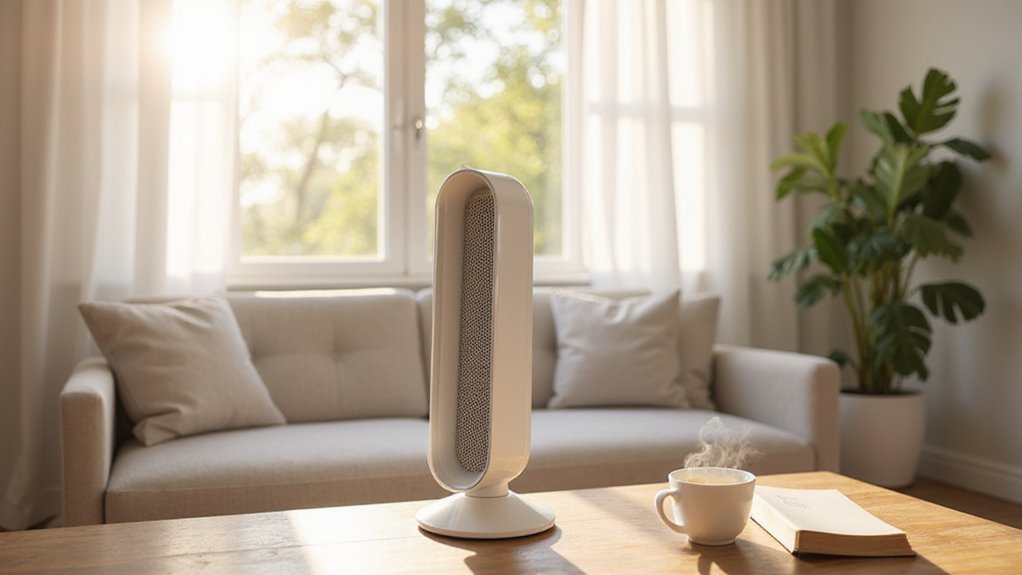
Air Circulator vs Fan: Which Is Better?
Feeling torn between choosing an air circulator or a fan? You’re not alone—both serve different purposes and suit different needs.
A fan offers a direct, personal breeze for quick relief.
While an air circulator helps evenly distribute air across the whole room, eliminating hot and cold spots.
Your decision depends on whether you want spot cooling or full-room comfort.
Keep reading to discover which one is better for your space.
Air Circulator vs Fan: What’s the Core Difference?
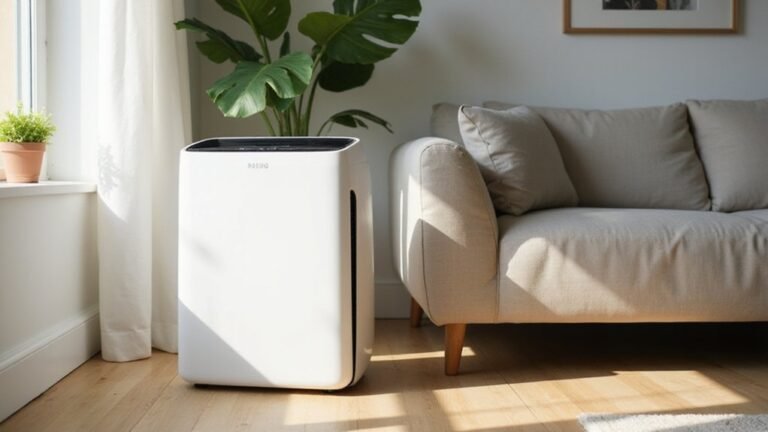
An air circulator differs from a traditional fan primarily in how it moves air within a space. It continuously circulates air throughout the entire room, creating a gentle, looped flow. This ongoing movement not only cools the room more evenly but also reduces stagnant zones and promotes better air mixing. Unlike a typical fan, which directs a focused stream of air toward you, the circulator distributes air broadly, enhancing overall air quality. To further enhance the space, some models can be paired with an essential oil diffuser to incorporate top aromatic oils for a more pleasant environment. For those dealing with excess moisture, an air circulator can also help reduce dampness by improving air mixing, which supports the effectiveness of a bedroom dehumidifier. For homeowners seeking precise temperature management, pairing an air circulator with a smart thermostat can further optimize energy efficiency and comfort.
Because of this design, an air circulator often operates more quietly. It doesn’t rely on high-speed blades to push a powerful blast of air. Instead, its motor works efficiently at lower speeds, producing a steady, low-level hum. On the other hand, traditional fans generate a more noticeable whooshing sound—especially at higher settings—due to their direct, forceful airflow. This trade-off means you get a more consistent and quieter airflow with an air circulator, compared to the localized, sometimes louder, blast of a fan.
Air Circulator vs Fan: Which Gives You a Stronger Direct Breeze?
A traditional fan provides a stronger, more direct breeze compared to an air circulator. Its design focuses airflow into a single, concentrated stream, making it feel more powerful at close range. This targeted airflow delivers immediate relief and personal cooling where you need it most. In contrast, an air circulator’s airflow disperses throughout the room, creating a gentle, widespread breeze that’s less intense and less focused. While circulators excel at evenly mixing airflow in a space, they don’t produce that sharp, direct punch a fan offers. Additionally, fans often operate more quietly when aimed directly at you, enhancing comfort without added noise. If your priority is a forceful, direct breeze, a traditional fan is the better choice. However, for cooling a whole room, a window air conditioner often provides superior temperature reduction compared to either option.
Air Circulator vs Fan: When Whole-Room Airflow Wins
An air circulator is more effective than a traditional fan when you want whole-room airflow. While fans excel at direct personal cooling, air circulators create consistent comfort by evenly mixing hot and cold layers from floor to ceiling. This circulation eliminates hot spots and cold drafts, making your entire space feel balanced. Because they constantly move air throughout the room, they reduce stagnation and freshen the environment, especially in larger areas. A well-designed circulator forms a room-wide loop that reaches even the farthest corners and wall edges. When paired with your HVAC system, this continuous airflow allows you to feel cooler without lowering the thermostat constantly. For those struggling with dry air, pairing an air circulator with a best humidifier can further improve overall comfort by maintaining balanced humidity levels. Modern air circulators also blend seamlessly into your decor, and their durable construction ensures long-term, reliable performance. For uniform, room-wide comfort, an air circulator clearly outperforms traditional fans. For those without a window, best windowless air conditioners offer an alternative cooling solution that doesn’t rely on traditional fan designs. Even so, any device that moves air should be kept clear of flammable materials and used with proper safety precautions to prevent overheating or fire hazards, especially when running for extended periods.
Air Circulator vs Fan: How Their Airflow Patterns Compare
An air circulator creates a room-wide vortex that continuously loops the air, unlike a traditional fan that directs a focused stream in one direction. This vortex pattern entrains surrounding air, bouncing currents off walls and furniture to blend warm and cool layers evenly throughout the space. As a result, the entire room feels more uniformly comfortable, deleting cold or hot spots that a standard fan might leave untouched. In contrast, a typical fan blows a concentrated breeze directly on you, providing spot cooling but often neglecting other areas. Fans are easier to reposition for local comfort and tend to be quieter at lower speeds. However, those seeking consistent airflow across a large area might prefer an air circulator despite its usually higher noise levels at maximum settings. For optimal indoor air quality, some air circulators also incorporate HEPA filtration to capture airborne particles. For spaces with high ceilings or open layouts, a pedestal fan often provides better direct cooling without relying on room geometry. Maintenance stays similar in complexity—both need periodic blade cleaning—but an air circulator relies more on the room’s shape rather than aiming adjustments. For those who prioritize a compact cooling solution without the need for installation, looking into portable air conditioners without hoses might offer a different approach to achieving uniform room comfort.
Air Circulator vs Fan: Which Boosts Your HVAC Performance?
Air circulators are more effective than standard fans when it comes to boosting your HVAC performance. They are designed to gently mix air throughout the entire room, helping to eliminate hot and cold spots. This even distribution ensures your thermostat readings are more accurate, which means your system doesn’t work harder than necessary. As a result, you can reduce the runtime of your air conditioner or furnace, saving energy and lowering utility bills. Regular maintenance, such as cleaning the blades monthly, helps keep airflow consistent. Unlike bulky fans, circulators often feature sleek, aesthetic designs that blend into any room decor. While fans create a direct breeze for immediate comfort, they don’t promote whole-room air circulation. This leaves your HVAC system to compensate for uneven air, making it work harder. For broader support of your heating and cooling efforts, investing in a good air circulator is a smart way to improve comfort and efficiency. Using a humidifier alongside a circulator can also soothe a dry throat caused by low indoor humidity levels. Circulators typically use around 30 to 50 Watts, making them more energy-efficient than many standard fan models. For proper installation, consider correct placement near a window or central area to optimize airflow mixing. Unlike air cleaners, circulators do not trap particles, so they prioritize air movement over filtration for HVAC support.
Air Circulator vs Fan: Energy Use and Wattage Compared
When comparing the energy use of an air circulator and a fan, both typically draw between 10 and 50 watts, making their wattage quite similar. A modern DC motor circulator can consume up to 40% less power than older models, but low-wattage fans as little as 3 to 10 watts are also available. Your choice between the two will have minimal impact on your monthly electricity bill, costing only a few cents per day. For those suffering from dry mouth, using a best humidifier in the room can further alleviate discomfort by adding moisture to the air.
Color options and noise levels often matter more for comfort than wattage. Modern DC motor models tend to be quieter, offering a more peaceful environment. Additionally, you can select from various colors to match your decor. Regardless of your choice, both options use significantly less energy—about 90% less—compared to running an air conditioner for local cooling.
Air Circulator vs Fan: When to Buy Which for Your Space
If you want to cool a large room or open-plan area, an air circulator is the better choice. It effectively reduces hot spots and evenly distributes air throughout the space, making it ideal for whole-room comfort and supporting your HVAC system. Air circulators tend to operate at lower noise levels, which is especially beneficial in bedrooms and offices. Additionally, they often come in a variety of colors to match your decor. For those also needing humidity control, consider models that function as an air purifier with dehumidifier for improved air quality. When placing an air circulator, ensure it stays away from open flames or other heat sources to avoid safety risks that could arise from prolonged exposure.
In contrast, a traditional fan is best suited for personal cooling at your desk or sofa. It provides a concentrated, stronger breeze directed exactly where you need it. For small bedrooms or single-user spaces, a fan’s focused airflow is usually sufficient. Keep in mind that fans with simpler designs are portable and easy to position, making them ideal when local breeze and mobility are more important than evenly circulating air across a large area.
Air Circulator vs Fan: Can One Work Better Year-Round?
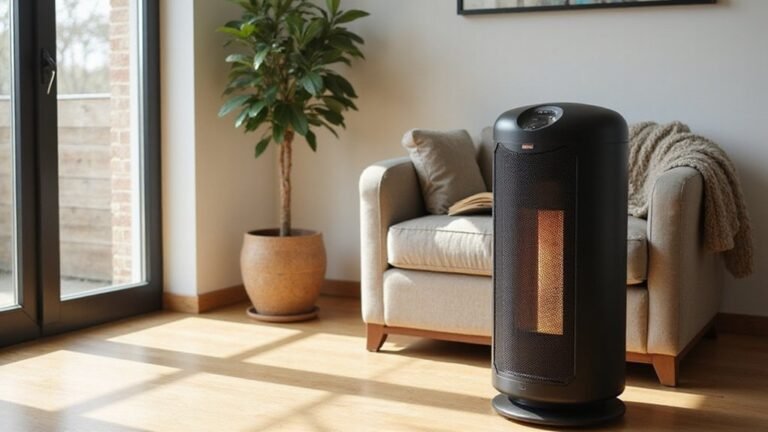
An air circulator is more versatile throughout the year than a traditional fan. Unlike a fan that mainly provides a cooling breeze during hot months, an air circulator continuously moves air in the room, making it useful in winter, spring, summer, and fall. In winter, you can direct it at a heater to help mix warm air and reduce temperature layering near the ceiling. This improves overall comfort and energy efficiency, much like how an oil heater retains heat for steady warmth without constant cycling. During summer, the circulator distributes cool air evenly, helping your air conditioning work more effectively and eliminating hot spots. It also produces lower noise levels and can be placed unobtrusively in a corner or on a shelf. In transitional seasons like spring and fall, it maintains airflow without creating a direct breeze, preventing stale air buildup. Additionally, by reducing overall humidity, an air circulator can also help deter pests like centipedes, similar to how best dehumidifiers keep them out of your home. To further maintain clean air quality, you can use a fan cleaning routine to prevent mold and dust accumulation on the unit itself. Overall, for year-round comfort and efficiency, the air circulator outperforms a traditional fan.
Air Circulator vs Fan: The Bottom Line for Your Room and Budget
For larger rooms, an air circulator is usually the better choice because it can move air across the entire space. Unlike a typical fan, which mainly cools the immediate area, a circulator pushes air farther and more evenly, helping to eliminate hot and cold spots. This makes it a good partner for your HVAC system, enhancing overall comfort without needing to increase cooling or heating. For those with cat allergies, pairing an air circulator with a HEPA filter can effectively reduce airborne pet dander while improving room airflow.
Fans, on the other hand, are ideal for quick, personal breezes and smaller spaces like desks or bedrooms. They are generally less expensive upfront and are quieter for close-range use. When choosing between the two, consider color options and noise levels—fans tend to be simpler and quieter, while circulators often have a sleek look but may operate louder to push air through larger areas.
Budget also plays a role. If you want budget-friendly personal cooling, a fan is the way to go. But if you prefer whole-room comfort and are willing to invest more, a circulator provides consistent airflow across larger spaces. Your decision depends on whether you prioritize targeted, personal cooling or wider room circulation.