Types of Space Heaters Explained
Worried about staying warm in different spaces? Choosing the right type of space heater can make all the difference, whether you need quick bursts of heat or steady, long-lasting warmth.
There are several options, each suited to different needs and room sizes. Keep reading to find out which heater best fits your situation.
How Convection Space Heaters Warm a Whole Room
Convection heaters warm a whole room by gradually heating the air through natural circulation. They heat air over a hot metal coil or ceramic plate, which causes the air to rise as it absorbs heat. Cooler air then moves in to replace it, creating a continuous cycle of air movement. This steady flow of warm air mixes with cooler air, resulting in even heat distribution throughout the space. Thanks to fans, some models accelerate this process, making the room feel warmer in just a few minutes. Programmable thermostats allow you to set and maintain a consistent temperature. Because convection heaters rely on airflow, they are ideal for bedrooms, living rooms, and offices, delivering quiet, comfortable heat without direct blasts of hot air. Additionally, typical convection models range from 500 to 2,500 watts, making them suitable for whole-room heating of spaces from 50 to 250 square feet. For comparison, the best window air conditioners reviewed in our knowledge base similarly rely on efficient airflow to cool a room effectively. Understanding the principle of natural air circulation is key to appreciating how these heaters maintain consistent warmth without forced drafts. Choosing a model with a programmable thermostat offers energy-saving benefits similar to those found in premium smart home devices.
When to Choose a Radiant Heater for Fast Spot Heat
Radiant heaters are the best choice when you need warmth within seconds. They transfer infrared energy directly to your body and nearby surfaces, bypassing the slower process of heating the air. You can feel comfortable in just 15 to 30 seconds along the beam path, making them ideal for quick spot heating. This focused heat is perfect for drafty bathrooms, patios, or outdoor areas where convection heating takes too long or is less effective. For a bedroom, a comparable approach to controlling moisture involves selecting a unit with a humidistat and timer to precisely manage humidity levels automatically. Radiant heaters target only your occupied zone, which boosts energy efficiency by avoiding wasteful heating of empty air. They work well in high-ceiling rooms, open-plan spaces, or windy outdoor environments where conventional convection heaters struggle to keep up. Models like HEATSCOPE SPOT reach full output in under 20 seconds, providing fast, localized warmth without needing to heat the entire room. Keep in mind that radiant heat is most effective for people and surfaces rather than large, unoccupied volumes.
Why Ceramic Heaters Are a Top Home Choice
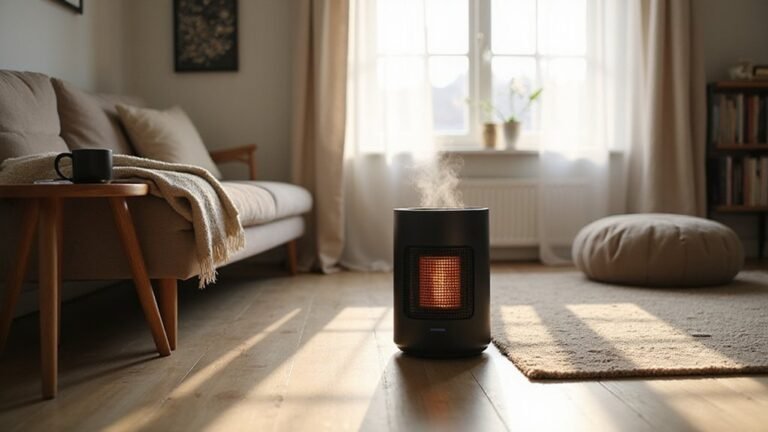
Ceramic heaters heat up within seconds thanks to PTC ceramic elements that self-regulate. These elements increase their resistance as they warm, reducing power output and preventing overheating. This fast warm-up makes them ideal for quick comfort in any room. They also maintain consistent temperatures without sudden fluctuations, providing steady warmth and energy efficiency. For those who prefer a combined cooling and heating solution, a ceiling fan with a light can offer complementary airflow to help distribute warmth more evenly. For allergy sufferers, choosing a model with replaceable filters can help capture dust and other particles from the air.
You’ll notice they operate quietly, making them suitable for bedrooms, offices, or shared spaces. Plus, they are compact and portable, so you can plug them in wherever you need supplemental heat. Many models include a smart thermostat that automatically adjusts the output to keep your room at your preferred temperature, leading to better comfort and lower energy bills. Because they do not have open flames or exposed heating wires, ceramic heaters are safe and suitable for households with children or pets. Cool-touch surfaces, overheat protection, and auto shut-off features add extra safety, giving you peace of mind while enjoying warm, comfortable spaces. For those who also suffer from airborne irritants, pairing this heater with a top air purifier for allergies can significantly improve indoor air quality.
Fan-Forced vs. Ceramic vs. Oil-Filled: Which Convection Heater Wins?
Fan-forced heaters are the fastest to heat a room, producing immediate warmth by blowing hot air directly into the space. They typically heat up within seconds to a minute, making them ideal if you need quick results. However, they tend to be noisier because of the fan noise, which can be distracting in quiet environments. To ensure safe operation, always place the heater on a level, non-flammable surface and keep it at least three feet away from anything that can burn, as serious fire risks arise from improper placement. For those also seeking quiet sleep environments, a CPAP with humidifier can offer comparable silent comfort during rest. Regularly removing dust buildup from the unit’s intake grill is also essential to keep the fan blade balanced and prevent overheating.
Ceramic heaters heat in about 1 to 3 minutes, offering a middle ground between speed and noise. They use ceramic elements that warm quickly, and adjustable fan speeds help control the temperature and noise levels. While they are quieter than fan-forced models, they still produce some noticeable noise, especially at higher settings.
Oil-filled heaters take the longest—often 30 minutes to an hour—to reach their full output. They work by heating oil inside the unit, which then radiates heat slowly and steadily. Once heated, they retain warmth even after turning off, so they are more energy-efficient for sustained use. They operate silently because they don’t rely on fans, making them suitable for quiet settings, though they are less effective for immediate heating needs.
Oil-Filled Radiators: Quiet Steady Heat Without a Fan
Oil-filled radiators provide quiet, steady heat because they operate without fans, relying on a sealed oil reservoir and natural convection to warm your room. You’ll hear minimal noise—just occasional clicks from the thermostat. The high thermal inertia of the oil ensures excellent heat retention, allowing the radiator to continue emitting warmth for about 1.5 to 2.5 hours after turning it off. This stored heat creates a gradual, consistent temperature, making it ideal for bedrooms or offices where silence and comfort are priorities. While they don’t provide instant spot heating, the benefit is calm, long-lasting warmth that maintains a stable room temperature without disruptive noise. These fully enclosed appliances are designed to operate independently, featuring fitted thermostats and modern smart controls for precise temperature regulation. To maximize efficiency, ensure proper placement near a window to allow venting of any residual heat, similar to positioning a portable air conditioner.
How Infrared Heaters Deliver Direct Warmth
Infrared heaters deliver warmth directly to you and nearby surfaces without warming the entire air volume of a room. They use electromagnetic radiation to transfer heat straight to your skin, furniture, and walls, which then re-radiate heat to warm the air indirectly. This method provides near-instant comfort because the energy travels at the speed of light, hitting your body first. Since only essential surfaces are heated, infrared heaters are highly efficient and prevent energy waste on areas like the ceiling air. Different radiant surface types—such as quartz lamps, metal panels, or gas-fired tubes—emit specific wave frequencies that reflectors focus into targeted zones. For those prioritizing air purification alongside warmth, many modern units integrate filtration systems to improve overall indoor air quality. This targeted approach also helps reduce airborne allergens, offering comfort for allergy sufferers by trapping particles that would otherwise circulate. This focused delivery ensures stable, comfortable warmth exactly where you need it, without relying on convection currents or fans to distribute heat. These heaters convert over 95% of electrical input into usable heat, making them exceptionally efficient for targeted applications. Similar to dehumidifiers designed for enclosed spaces, some infrared heater models are built specifically for crawl spaces to manage moisture and comfort in tandem.
Gas and Propane Heaters for Large or Industrial Spaces
Gas and propane heaters are the primary choice for large or industrial spaces where electric options cannot provide enough heat. They typically deliver between 30,000 and 1.5 million BTUs, making them suitable for warehouses, factories, garages, and greenhouses. Your selection between natural gas and propane depends on your facility’s existing fuel infrastructure and supply. High-efficiency models, especially condensing types, reach up to 97% thermal efficiency, which can significantly reduce operating costs. Forced-air and power-vented designs offer quick heat distribution, ideal for large areas. Separated-combustion units pull air from outside, increasing safety in environments filled with dust or fumes. Portable propane heaters are excellent for temporary heating needs on work sites. Gas heaters are well-suited for extreme cold conditions, providing the high temperature rise necessary for comfort and productivity. To complement heating, using a diffuser with top aromatic oils can help maintain a pleasant atmosphere in these large spaces. Using a dehumidifier can further protect these spaces from moisture-loving pests like silverfish. Maintaining optimal humidity levels with that device also prevents rust on metal equipment and structural components.
Check Room Size, Wattage, and Safety Certifications
To choose the right space heater, start by measuring your room’s square footage. For rooms with standard ceiling heights, estimating 10 watts per square foot provides a good baseline. For example, a 150 square foot room requires about 1,500 watts of power. If your ceilings are higher or if your home isn’t well insulated, you’ll need to increase the wattage estimate to compensate for heat loss. Keep in mind that most household heaters are rated at a maximum of 1,500 watts, which aligns with the capacity of a standard 15-amp circuit. Proper placement is also essential—position the heater near the center of the room to promote even heat distribution and avoid cold spots. For those who prefer convenient temperature control, consider a model with remote control capabilities similar to the top portable air conditioners reviewed online. For camping comfort, choosing a model with portable design can make setup and storage easier in a camper. Just as a basement dehumidifier must handle continuous drainage for effective moisture removal, a space heater should be sized to run efficiently without overloading the circuit. Always check the safety certifications on the unit. Look for labels from recognized testing organizations such as UL (Underwriters Laboratories), ETL, or CSA. These certifications ensure the heater meets established safety standards. Avoid using uncertified heaters, as they pose a higher risk of safety issues in residential settings. Proper sizing, power considerations, and safety compliance are key to safe and effective heating.
Burn Risk, Tip-Over Safety, and Other Hazards
To reduce the risk of burns and tip-over hazards, keep space heaters at least three feet away from flammable items like curtains, bedding, and furniture. Children and pets are particularly vulnerable to skin burns, so ensure they stay away from the heater. A tip-over switch automatically shuts the unit off if it’s knocked over, but do not solely rely on it—place the heater on a solid, flat surface and avoid high-traffic areas. Always turn off the heater when leaving the room to prevent accidents.
For fire safety, plug space heaters directly into a wall outlet; avoid using extension cords, which can overheat and cause fires. Check that the heater has safety certifications such as UL or ETL, indicating it has undergone tested protection measures. Regular maintenance involves inspecting cords for damage and keeping the heater clean. Never refuel fuel-burning heaters while they are hot to prevent fires, and be aware of carbon monoxide risks if using combustion-based units. Following these precautions significantly reduces the hazards associated with space heaters.
Best Heater for Small, Medium, and Large Rooms
For small rooms, a compact ceramic or mica-panel heater is ideal. These units typically operate at less than 1,000 watts, providing quick, localized heat without wasting energy. They are perfect for bedrooms or offices where you just need to warm up a small space efficiently. Their slim, space-saving profiles also blend seamlessly into your room’s decor, making them an unobtrusive heating solution. The QQTXH21 model, for example, offers rapid warm-up in about three seconds for these tight areas.