Does an Air Purifier Help Allergies?
Wondering if an air purifier can really help with allergy symptoms? The answer is yes, especially if it has a true HEPA filter that can trap over 50% of airborne triggers like pollen, pet dander, and mold spores.
Keep in mind, though, it won’t eliminate dust mites already settled in your carpets and bedding.
To get the best allergy relief, regular cleaning and humidity control are also key.
Keep reading to learn how to optimize your setup for allergy relief.
Do Air Purifiers Really Help Allergies? What Research Says
Air purifiers can improve indoor air quality and reduce certain airborne allergens, but they won’t eliminate all allergy triggers. HEPA filters, in particular, can cut bedroom PM2.5 levels by over 50%, which is a measurable improvement. They also reduce specific allergens like dust mite particles found in air and bed samples. However, significant symptom relief is less guaranteed. Some studies show you might need less medication, but your personal symptom scores may see little change. The effectiveness depends on factors like the device size, how consistently you use it, and where you place it in the room. When comparing an air purifier to other cooling solutions, a window air conditioner can also help filter outdoor allergens while providing cool comfort. For a more direct approach to managing dry air, you can also build your own humidifier as a simple DIY project that may complement allergy relief. Expect to use the purifier for several months before noticing a gradual benefit. It’s a helpful tool for partial relief but not a complete solution for allergies. To safely use an air purifier around other high-power devices, never plug it into a power strip and instead always connect it directly into a wall outlet to avoid electrical hazards or fire risks.
Which Allergens an Air Purifier Actually Helps: and Which It Won’t
Air purifiers with HEPA filters are effective against airborne pollen, pet dander, and mold spores. However, they won’t significantly reduce dust mites because these allergens settle quickly onto surfaces instead of remaining suspended in the air. For pet dander, studies show a reduction of airborne cat allergen by up to 76 percent and dog allergen by 89 percent. Despite this, cleaning upholstery and bedding remains essential. Pollen levels may decrease slightly if windows stay closed, but the reduction is limited. Mold spores can be filtered from the air, but mold growing on surfaces requires moisture control for proper removal. Many purifiers include activated carbon filters to help eliminate odors and industrial pollutants like smoke and soot. Still, when it comes to dust mites, air purifiers are not effective—research indicates they don’t substantially lower these allergens because dust mites do not stay airborne long enough to be captured. To maintain safety while running a purifier for extended periods, always follow the manufacturer’s guidance on heater placement and electrical load to prevent fire risks. For those seeking a supplementary approach, top space heater picks combine efficient heating with filtration features to improve overall indoor air quality. For buyers looking for the best options, reviews of top HEPA purifiers can help compare quality and performance.
How to Choose an Air Purifier for Allergy Relief
Choosing an air purifier for allergy relief starts with the filtration type. True HEPA filters are essential because they capture 99.97% of airborne particles as small as 0.3 microns, including pollen, pet dander, and mold spores. In the debate between HEPA and charcoal filters, prioritize HEPA filters for allergen removal since charcoal filters primarily handle odors and won’t trap allergens effectively. Next, evaluate the clean air delivery rate (CADR) and ensure it provides at least 4 to 6 air changes per hour for your room size. Higher CADR ratings mean more effective filtration in shorter periods. Using an air quality monitor helps you track real-time particle levels, so you can confirm your purifier is working optimally. For rooms with ceilings higher than 8 feet, increase the required CADR by approximately 20% to maintain proper cleaning effectiveness. Noise levels also matter because continuous operation is needed; look for models that stay below 45 decibels at your target CADR to keep noise manageable. For best results, ensure the unit is placed away from walls and obstructions, similar to portable air conditioner setup tips that emphasize proper airflow. Additionally, understanding how air purifier technology works helps you recognize that filters must be sealed properly to prevent particle bypass. Finally, consider filter replacement costs—HEPA filters typically need replacing every 6 to 12 months, while carbon filters usually last about 3 months—so include ongoing expenses in your decision.
Best Room Placement for Allergy Relief
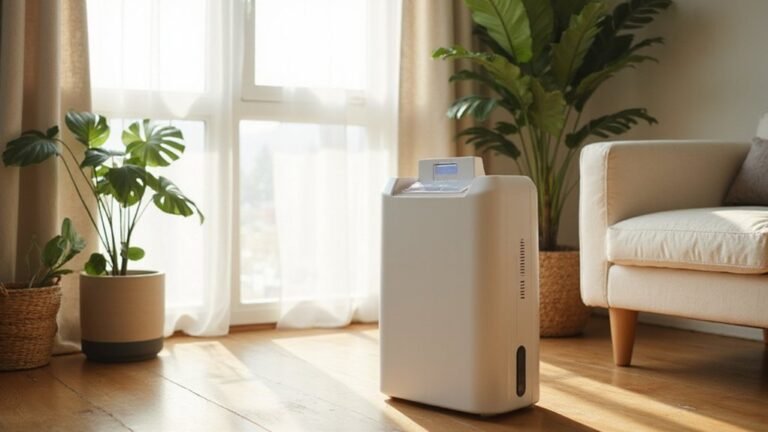
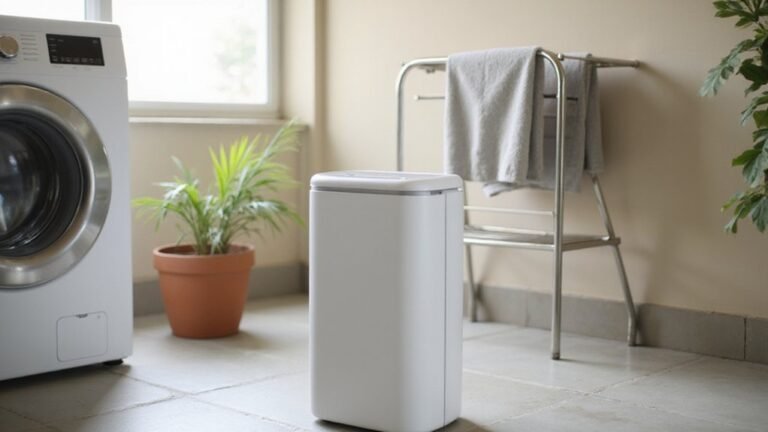
To maximize allergy relief, place your air purifier near your main seating area, such as your couch or recliner, rather than in isolated corners. A central position enhances circulation and ensures cleaner air reaches your breathing zone more effectively. Position the intake side toward known allergen sources like pet beds, dust-prone spots, or areas with visible triggers. If you have open windows, place the purifier between the window and your resting area to intercept incoming pollen and airborne particles before they reach you. Always follow your unit’s manual to maintain the recommended clearance space to ensure optimal performance. For additional moisture-related allergen control, consider using a bedroom dehumidifier alongside your purifier for comprehensive relief. Aim for a clean air rate of 4.8 times per hour to match the purifier size to your room for effective allergy relief. Using a dehumidifier to maintain low indoor humidity can also help deter silverfish, which thrive in damp environments. For centipedes, which are also attracted to moisture, a dehumidifier is considered the best preventive measure.
Why an Air Purifier for Allergies Isn’t Enough
An air purifier alone isn’t enough to fully manage allergies because it only addresses airborne allergens, not those settled on surfaces. Dust mites, pet dander, and pollen often cling to carpets, bedding, and furniture, which means deep cleaning is essential to remove these hidden sources. Without reducing allergen buildup on surfaces, your symptoms are likely to persist.
Relying solely on an air purifier won’t eliminate allergen reservoirs. Incorporate regular cleaning routines, such as vacuuming with a HEPA filter, washing bedding weekly, and wiping down furniture. Controlling indoor humidity—ideally between 30 and 50 percent—can also inhibit dust mite and mold growth, further reducing allergens.
Use air quality monitors to track particle levels, but don’t assume that a purifier alone will resolve all issues. Some community programs offer free home assessments to help identify overlooked allergen sources. Avoid ozone-generating purifiers, as they can worsen allergy symptoms, and opt for HEPA models that effectively trap small particles. Regular filter changes are crucial; neglected units lose efficiency and won’t provide meaningful relief. For a comprehensive approach, consider that top window air conditioners can also filter indoor air while cooling, offering additional relief from pollen and other outdoor allergens.
Addressing both airborne and settled allergens through comprehensive cleaning, humidity control, and proper equipment maintenance is key to achieving real allergy improvement.