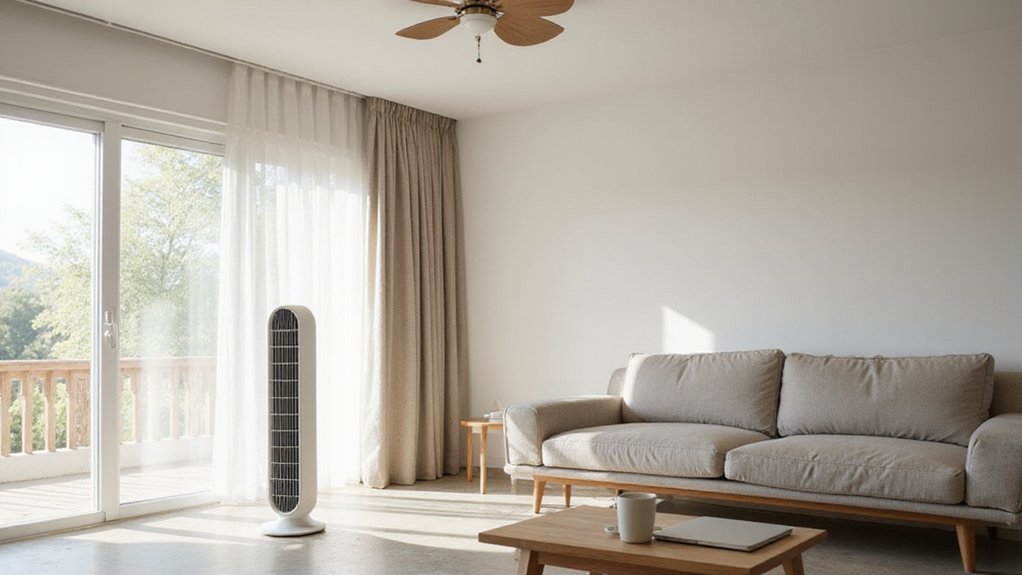
Tower Fan vs Ceiling Fan: Which Is Best?
Struggling to decide between a tower fan and a ceiling fan for your space? Your choice depends mainly on room size and your need for flexibility.
A ceiling fan offers steady airflow for large, fixed areas.
While a tower fan provides portable, focused cooling for smaller spaces.
Keep reading to find out which option best fits your specific needs.
The One Key Difference Between Fan Types
The main difference lies in their placement and mobility. A ceiling fan is permanently installed and hardwired into your electrical system, making it a fixed fixture overhead. In contrast, a tower fan is a portable, freestanding unit that you can unplug and move to different rooms in seconds. Its compact size—often under a square foot—makes repositioning quick and easy, allowing you to direct airflow exactly where you need it. For example, tower fans are ideal for smaller rooms due to their compact and flexible design, while ceiling fans suit larger spaces with high ceilings. However, if you need powerful cooling in a window, a window air conditioner offers far more effective temperature reduction than either fan type.
Decorative style also differs significantly; a ceiling fan becomes a built-in part of your room’s design, while a tower fan blends into the layout and can be tucked out of sight when not in use. Noise levels vary too: tower fans tend to operate quietly at low speeds, making them unobtrusive, whereas ceiling fans can produce more hum, especially on higher settings. For flexibility and ease of move, a tower fan provides unmatched convenience.
Tower Fan vs. Ceiling Fan: Airflow in Big vs. Small Rooms
Ceiling fans are better suited for big rooms because their broad, 360-degree airflow pattern can circulate air across up to approximately 400 square feet with a standard 52-inch model. This overhead coverage ensures the entire space benefits from consistent cooling, which is especially effective in large, high-ceiling areas where the broad airflow disperses widely. For bedrooms with excess moisture, using a bedroom dehumidifier can further enhance comfort by reducing humidity alongside the fan’s airflow. Additionally, using a humidifier can help soothe dry coughs caused by low humidity, making the moist air beneficial for respiratory comfort in larger rooms.
In contrast, tower fans typically have a more concentrated, directional airflow that spreads across about 200 square feet, even with oscillation. This makes them less suitable for large open areas, as they cannot effectively cool the entire room. Instead, tower fans excel in smaller spaces, providing targeted, focused cooling at your desk or bedside without overwhelming the room with airflow. For users who want automatic moisture removal, models with a drain hose ensure continuous operation without manual emptying.
Ultimately, your choice depends on your room size. Large rooms demand the wide, consistent circulation that ceiling fans deliver, while small rooms benefit from the direct, targeted airflow of tower fans. The airflow pattern is the key factor guiding the best match for your space.
Installation: Tower Fan vs. Ceiling Fan-Which Is Easier?
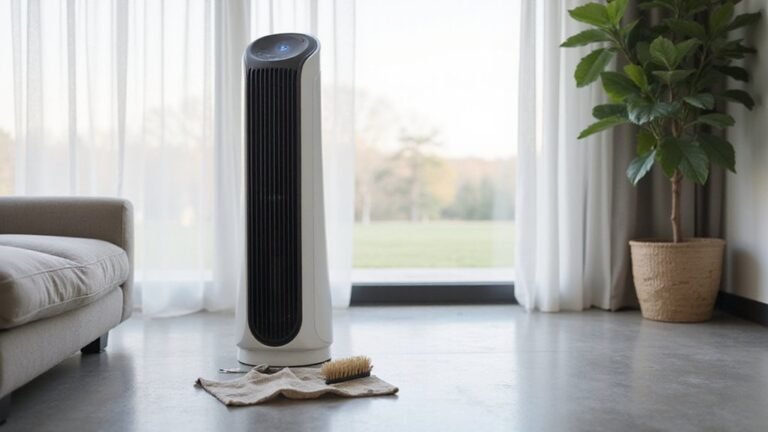
Tower fans are much easier to install than ceiling fans. You simply unbox the unit, snap the base together, and plug it into a standard wall outlet for immediate use. No wiring, no ladder, and no professional help are needed. Ceiling fans, on the other hand, require a more involved mounting process. You must secure a fan-rated electrical box to a ceiling joist, handle electrical connections, and often use a ladder with basic tools. This installation can take up to two hours, especially if your ceiling is tall or sloped. Maintenance is straightforward for tower fans, needing only a quick wipe-down, while ceiling fans require blade cleaning and occasional tightening of parts. Aesthetically, tower fans offer a sleek, modern look that easily blends into any room, whereas ceiling fans are fixed fixtures that influence your room’s style. Tower fans also operate more quietly than many ceiling fans, providing consistent comfort without disruptive noise. However, tower fans primarily provide targeted cooling rather than whole-room air circulation. For safe and effective upkeep, you can disassemble the tower fan to clean interior components and maintain its performance. Regular cleaning is essential to prevent dust and allergen buildup, and using a vinegar solution helps break down mineral deposits and inhibit mold growth on internal surfaces.

𝗖𝗼𝗺𝗳𝗼𝗿𝘁 𝗪𝗶𝘁𝗵𝗼𝘂𝘁 𝗖𝗼𝗺𝗽𝗿𝗼𝗺𝗶𝘀𝗲: With an efficient DC motor and VortexAir Technology, this fan produces high-performance airflow and a strong, focused breeze for consistent comfort.

𝗢𝗻𝗲 𝗙𝗮𝗻 𝗳𝗼𝗿 𝗔𝗹𝗹 𝗬𝗼𝘂𝗿 𝗡𝗲𝗲𝗱𝘀: From a gentle breeze to a powerful wind, it adapts to your everyday needs with up to 28 ft/s airflow and a wide oscillation angle to deliver fast, whole-room cooling

COMPACT DESIGN: Measuring just 6.3 x 11.1 x 10.9 inches (LxWxH) with three 7-inch blades, this fan occupies minimal space on floors or tables, perfect for various room types such as bedrooms, living rooms, home offices, and kitchens. Enhance airflow and keep cool wherever you are
Portability: Tower Fan vs. Ceiling Fan for Renters
A renter would choose a tower fan over a ceiling fan primarily because of its portability. Tower fans are lightweight, typically under 10 pounds, and designed with built-in carry handles and a slim profile that makes moving them from room to room simple. You can unplug a tower fan, carry it to a different space, and store it in a closet when not in use or during cooler months, without needing special tools or professional installation. Notably, many tower fans are not only portable but also highly stable, with models like the Omni Breeze offering a widest base and a 17.5° tip-over angle for reliable safety. Furthermore, using a dehumidifier alongside a tower fan can help reduce humidity levels that attract unwanted pests like booklice. A dehumidifier is also an effective tool for managing household pests, as the best models on the market work to keep centipedes out by eliminating the moisture they require to survive. Using an advantages humidifier can also improve comfort by adding moisture to dry air during winter months.
In contrast, ceiling fans are fixed fixtures permanently attached to the ceiling. Moving one requires disassembly, ceiling mounting, or even landlord approval, which isn’t practical for someone renting a space. Tower fans also take up less visual space, fitting neatly beside furniture and maintaining your room’s aesthetic without overwhelming it. Plus, they operate quietly, making them suitable for bedrooms or shared apartments where noise level matters. Overall, their portability and ease of use make tower fans the clear choice for renters who want flexible cooling options.

𝐏𝐨𝐰𝐞𝐫𝐟𝐮𝐥 𝐀𝐢𝐫𝐟𝐥𝐨𝐰 𝐰𝐢𝐭𝐡 𝐮𝐩𝐠𝐫𝐚𝐝𝐞𝐝 𝐃𝐂 𝐦𝐨𝐭𝐨𝐫: Thanks to DREO's upgraded brushless DC motor combined, the tower fan achieves faster spin to deliver stronger airflow, with airflow speeds reaching up to 28ft/s and projecting up to 34ft.

𝐏𝐨𝐰𝐞𝐫𝐟𝐮𝐥 𝐀𝐢𝐫𝐟𝐥𝐨𝐰 𝐰𝐢𝐭𝐡 𝐮𝐩𝐠𝐫𝐚𝐝𝐞𝐝 𝐃𝐂 𝐦𝐨𝐭𝐨𝐫: Thanks to DREO's upgraded brushless DC motor combined, the tower fan achieves faster spin to deliver stronger airflow, with airflow speeds reaching up to 28ft/s and projecting up to 34ft.

𝗖𝗼𝗺𝗳𝗼𝗿𝘁 𝗪𝗶𝘁𝗵𝗼𝘂𝘁 𝗖𝗼𝗺𝗽𝗿𝗼𝗺𝗶𝘀𝗲: With an efficient DC motor and VortexAir Technology, this fan produces high-performance airflow and a strong, focused breeze for consistent comfort
Tower Fan vs. Ceiling Fan: Energy Use Compared
Ceiling fans generally use less electricity than tower fans for whole-room cooling, making them more energy-efficient overall. A typical ceiling fan consumes about 30 to 75 watts, which translates to roughly $0.01 to $0.03 per hour of operation. In contrast, tower fans tend to use between 45 and 100 watts, costing around $0.0085 per hour. The most energy-efficient option is a BLDC ceiling fan, which can run on just 28 to 35 watts, reducing your electricity usage significantly.
For cooling an entire room, ceiling fans are more effective per square foot, providing better airflow coverage. Tower fans, however, excel at spot cooling, targeting individual areas or desks more directly. To keep both types operating efficiently, regular DIY maintenance like cleaning blades or grilles is essential. Noise levels also differ: tower fans often hum louder at high speeds, while ceiling fans tend to stay quieter, making them preferable for noise-sensitive environments. Your choice between the two will depend on whether you need to cool the entire room efficiently or just a specific spot.

Ideal for Bedrooms, Where Design Meets Safety: This 19-inch enclosed ceiling fan is more than a cooling device—it's a sleek white accent for bedrooms, studies, or closets. Its bladeless, enclosed design eliminates exposed blade risks, making it a safe choice for homes with kids or pets. Enjoy pure, worry-free comfort in any small space

42-Inch Indoor Outdoor Ceiling Fan with Light: This Depuley Outdoor Ceiling Fan with Light is perfect for both indoor and outdoor spaces. Its 42-inch propeller design ensure wide coverage and quiet operation, ideal for your living room, bedroom, patio, garage, or open spaces. With a dimmable LED light, black ceiling fan enhances your room's lighting and comfort all year long

🌳【Zero-VOC Hydrophobic Finish Solid Wood Blade】Crafted from FSC-certified walnut, each of the 3 blades undergoes a 19-step hand-finishing process, achieving a surface roughness of Ra≤0.8μm. Precision-engineered 15° blade angle for optimal airflow and wide coverage, inspired by advanced propeller technology. Combining traditional craftsmanship with modern efficiency, this fan is a standout choice for farmhouse and rustic-themed spaces.
Which Fan Is Best for Your Bedroom? Tower Fan vs. Ceiling Fan
A tower fan is generally the better choice if you need a portable, space-efficient cooling option for your bedroom. It’s ideal for small to medium rooms measuring 120 to 200 square feet and can be easily moved around or stored away when not in use. Tower fans operate quietly, often at 21 to 28 decibels on the low setting, making them suitable for sleeping without disturbing your rest. Many models come with remote controls and sleep modes for added convenience. However, their airflow tends to be diffused, which might not effectively cool larger spaces. Additionally, their sleek, minimalist designs can add some clutter to your floor and they require regular maintenance, such as filter cleaning, to keep operating efficiently. For a smart upgrade, you can follow step-by-step installation guidelines to mount a compatible thermostat nearby for better temperature regulation. On a related note, using a tower fan in a bedroom can also help reduce stagnant air that contributes to mold growth. For those concerned about airborne particles, some tower fans now incorporate replaceable filters to improve indoor air quality.
A ceiling fan offers a cleaner floor space and whole-room air circulation if your bedroom has enough ceiling height and wiring. It can produce noise levels comparable to tower fans, generally between 22 to 24 decibels with DC motors, but might generate vibration noise if not installed properly. If you prefer a permanent fixture with an unobstructed floor, a ceiling fan is a strong option. Your decision should be based on whether you value portability and easy setup or prefer a permanent, space-saving installation.
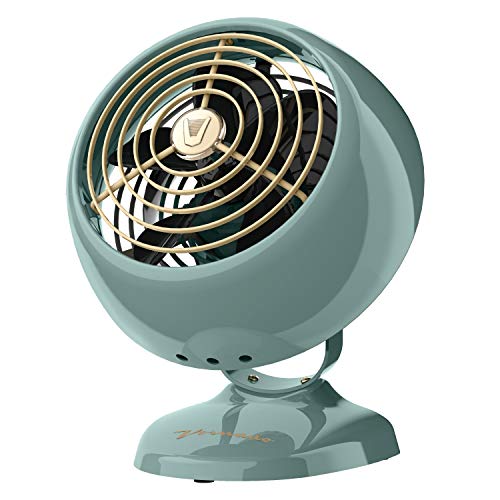
COMPACT DESIGN — This mini desk fan delivers powerful personal cooling with Vornado' s signature air circulation technology. Perfect for bedrooms, offices, or dorm rooms, this small fan provides targeted airflow exactly where you need it most.

[12W Powerful DC Motor] Efficient DC motor delivers powerful cool winds to your living space. Up to 2000 RPM and 23 ft/s wind speed will cool you off instantly. Get your desired wind speed with ease - 8 speeds for your choice!
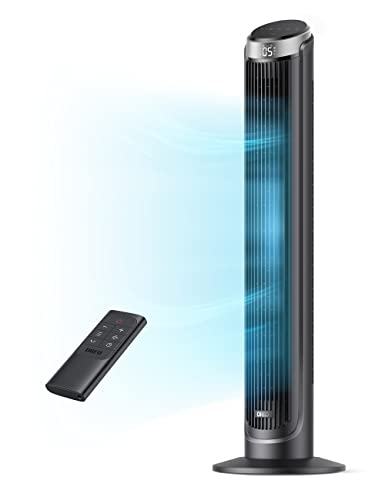
𝐐𝐮𝐢𝐞𝐭 & 𝐆𝐞𝐧𝐭𝐥𝐞 𝐁𝐫𝐞𝐞𝐳𝐞: Powered by TurboSilent technology, this floor fan for bedroom delivers cooling breezes while bringing noise down to 28dB, ideal for a quiet night sleep without loud fan noises. Built-in timer can be set from 1 to 12 hours so you don't have to worry about turning off the fan during hot summer nights.
Using Both: Ceiling Fan + Tower Fan Together
Adding a tower fan to complement your ceiling fan creates an effective two-fan system that enhances airflow throughout the room. While your ceiling fan provides broad, overall circulation, it may leave some areas feeling stagnant or stuffy. A tower fan can target these dead zones, delivering focused airflow near your bed, sofa, or desk. This setup promotes better ventilation without lowering the room’s temperature, as both fans work together to distribute conditioned air more evenly. For those interested in air quality, a similar DIY approach can use materials like a simple filter to capture dust and allergens from the air. High-efficiency particulate air filters, often found in premium purifiers, can also be integrated into this setup to capture airborne allergens like cat dander, further improving indoor air quality. Understanding how these devices work is key, as air purifiers rely on fans to draw in and filter air through the system.
When choosing a tower fan, consider its design to match your room’s decor. Sleek models often blend seamlessly with modern fixtures and won’t clutter tight spaces. Noise levels are also important—tower fans generally operate quieter at lower speeds, making them suitable for bedrooms or quiet environments. Placing the tower fan near the foot of your bed or next to a seating area provides direct comfort, while the ceiling fan continues to circulate air broadly. This combination offers comprehensive coverage and personal cooling without complicated installation.

𝙋𝙤𝙬𝙚𝙧𝙛𝙪𝙡 𝙒𝙝𝙤𝙡𝙚-𝙍𝙤𝙤𝙢 𝘼𝙞𝙧 𝘾𝙞𝙧𝙘𝙪𝙡𝙖𝙩𝙞𝙤𝙣: Powered by a DC motor, this fan delivers up to 22ft/s of wind speed and 1024CFM of airflow to quickly circulate air throughout bedrooms, living rooms, or offices for even cooling

𝘼𝘾 𝙈𝙤𝙩𝙤𝙧 𝙛𝙤𝙧 𝙋𝙤𝙬𝙚𝙧𝙛𝙪𝙡 𝘼𝙞𝙧𝙛𝙡𝙤𝙬: VORTEXAIR TECHNOLOGY delivers airflow up to 1472 CFM and fan speeds up to 25 ft/s

𝐅𝐚𝐬𝐭𝐞𝐫, 𝐈𝐧𝐬𝐭𝐚𝐧𝐭 𝐑𝐞𝐥𝐢𝐞𝐟:Powered by a new 1580RPM DC motor, this tower fan reaches up to 28 ft/s speed with 1473 CFM airflow. Refreshing living rooms, bedrooms, and home offices the moment you turn it on.