Do Air Purifiers Actually Work?
Wondering if air purifiers really work? The answer depends on what you’re trying to address.
They do a good job at removing airborne particles like dust, pollen, pet dander, and smoke, especially if you choose a model with a HEPA filter.
However, they won’t eliminate gases, odors, or surface dust without additional filters.
Getting the most out of your purifier means choosing the right size, placement, and maintaining it regularly.
Keep reading to find out how to make yours work best for you.
What Air Purifiers Can (And Can’T) Remove From Your Air
Air purifiers primarily remove particles, not gases or odors. HEPA filters are highly effective at capturing airborne pollen, dust, pet dander, and mold spores. They also trap fine smoke particles and some bacteria or virus-laden aerosols, which helps reduce PM2.5 levels in the air. However, HEPA filters do not remove volatile organic compounds, gases, odors, or radon—these require specialized carbon or activated charcoal filters. Ionizers, on the other hand, do not eliminate pollutants directly; they charge particles so they stick to surfaces instead of being filtered out. For those also concerned with cooling, a window air conditioner can provide both temperature control and limited filtration. Keep in mind that an air purifier only cleans the air that passes through it, so contaminants settled on furniture or surfaces won’t be affected unless manually cleaned. Regular filter maintenance is crucial for ensuring your purifier functions effectively over time. When comparing performance and cost, Ionic vs HEPA systems differ significantly in their ability to remove airborne particles versus relying on surface deposition.

Why Choose the AirHub Air Purifier? AHAM VERIFIED Performance: Certified by the Association of Home Appliance Manufacturers (AHAM), this air purifier has been independently tested to rigorous industry standards for dust, smoke, and pollen removal. With verified CADR ratings, it delivers 4.8 ACH in a 209 ft² room, covers up to 1,092 ft² with 1 ACH. Designed to help improve indoor air quality, it is a trusted, reliable, and professional air purifier for home.

MOOKA B-D02L AIR PURIFIER FOR LARGE ROOM: With the high-efficiency filtration system, the air purifier covers an area up to 1076 ft². 6 air changes per hour in 215 ft², 1 air changes per hour in 1076 ft². Modern design fits in any space from small to large rooms, bedrooms, living rooms, offices, nurseries, kitchens and basements. Perfect for pet owners, babies, children, the elderly, or anyone wanting to improve the air quality

𝐖𝐇𝐘 𝐂𝐇𝐎𝐎𝐒𝐄 𝐀𝐇𝐀𝐌 𝐕𝐄𝐑𝐈𝐅𝐈𝐃𝐄 𝐀𝐈𝐑 𝐏𝐔𝐑𝐈𝐅𝐈𝐄𝐑𝐒: AHAM (Association of Home Appliance Manufacturers) is an ANSI-accredited organization that sets strict standards for appliance performance. Air purifiers with the AHAM VERIFIDE seal have been independently tested for air cleaning performance and energy efficiency. When you choose an AHAM certified air purifier, you're choosing a product trusted for reliable and effective indoor air quality improvement
What Health Problems Do Air Purifiers Actually Help With?
Air purifiers help most with airborne particles that trigger allergies and respiratory issues. They are effective at reducing indoor allergens like pollen, dust, and pet dander, which can decrease symptoms such as runny noses and itchy eyes. If you suffer from asthma, HEPA filters can lower fine particulate matter that may cause coughing and congestion, providing some relief. Additionally, reducing exposure to smoke, dust, and mold can lead to noticeable breathing improvements. Keep in mind, they won’t remove larger allergens that settle on surfaces or prevent serious health events like heart attacks or strokes. Their primary benefit lies in filtering the air you breathe directly, making them most useful for allergy, asthma, and pollution-related symptoms. For persistent coughs, adding a humidifier can complement an air purifier by maintaining optimal moisture levels that soothe irritated airways. In particularly humid bedrooms, a dehumidifier can further enhance air quality by controlling excess moisture that promotes mold and dust mites. To keep your purifier running efficiently, regularly cleaning its exterior and filter with a soft brush can prevent clogs from dust buildup.
What Research Shows About Air Purifiers and Wildfire Smoke
Research shows that air purifiers can significantly improve indoor air quality during wildfire smoke events. HEPA purifiers can reduce indoor PM2.5 levels by 50 to 80 percent under real-world conditions, with a CDC review reporting an average of 56 percent. This makes HEPA filtration a reliable choice for particle removal. Among the models assessed, top picks for quality consistently outperform others in sustained particle capture efficiency. DIY box-fan filters using MERV 13 can also be effective, but they require regular filter replacement; otherwise, their efficiency drops dramatically. Keep in mind that particle filtration alone does not address smoke gases or odors. For those, activated carbon units are necessary. Public health authorities recommend indoor air cleaning during smoke episodes, but they emphasize it is only one part of a comprehensive strategy to reduce smoke exposure. For best results, regular filter replacement is crucial to maintain high efficiency.
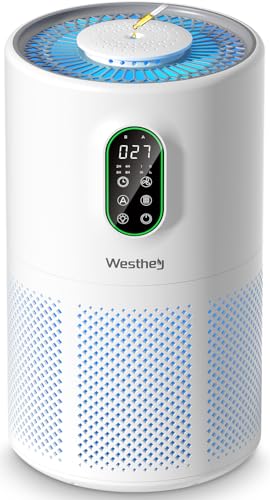
WESTHEY AP02 AIR PURIFIER FOR HOME: The air purifiers feature a 360°surround air intake design with a high-efficiency filtration system that covers an area up to 1,650 sq ft, achieving 6 air changes per hour in 275 sq ft. This system dramatically improves air circulation efficiency by capturing pollutants from all corners of the room. It is suitable for various spaces including bedrooms, living rooms, dormitories, offices, pet homes, basements, kitchens, and smoking areas.
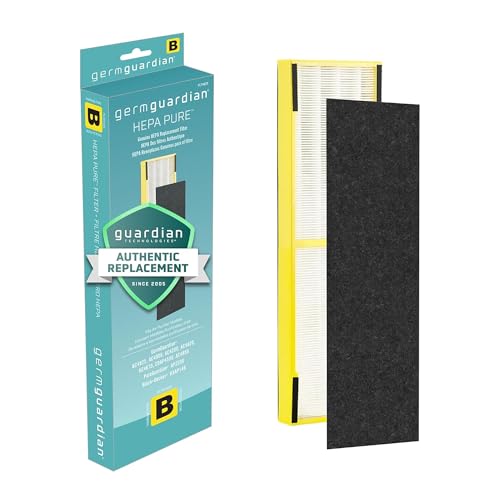
Genuine HEPA PURE Air Filter: Experience the power of authentic HEPA PURE air filtration with this GermGuardian filter replacement engineered to efficiently capture 99.97% of particles as small as 0.1 microns, including dust, pollen, and pet dander

HEPA Filter for Smoke, Dust & Pet Dander: Filters 99.97% of airborne particles down to 0.3µm, including ash, PM2.5, wildfire smoke, dust, and pollen. Designed to help reduce common household particles for a fresher-feeling home.
Why Air Purifier Size and CADR Matter More Than You Think
Choosing the right air purifier size is crucial because a mismatch can reduce its effectiveness and shorten filter lifespan. To determine the proper size, start by measuring your room’s volume—multiply the length, width, and height in feet. For a 300-square-foot room with 8-foot ceilings, the volume is 2,400 cubic feet. Then, choose a purifier with a Clean Air Delivery Rate (CADR) of at least 200. This ensures the air is refreshed several times an hour, typically around 1.5 to 2 air changes per hour, which is ideal for smoke and allergens. For proper installation, ensure the device is connected to a constant power source to maintain consistent performance. Similarly, using a dehumidifier for centipedes can help reduce moisture that attracts these pests. HEPA filters work by forcing air through a fine mesh that traps particles as small as 0.3 microns with high efficiency.
If your purifier’s CADR is too low for your room’s volume, it will struggle to clean the air efficiently, leading to longer circulation of pollutants. On the other hand, oversizing the purifier can make it quieter and more responsive but may lead to unnecessary energy use and cost. Properly matching the CADR to your room size helps maximize performance, extends filter life, and ensures you achieve ideal air quality. Remember also to factor in placement—aim for central locations away from walls or obstructions for optimal circulation.
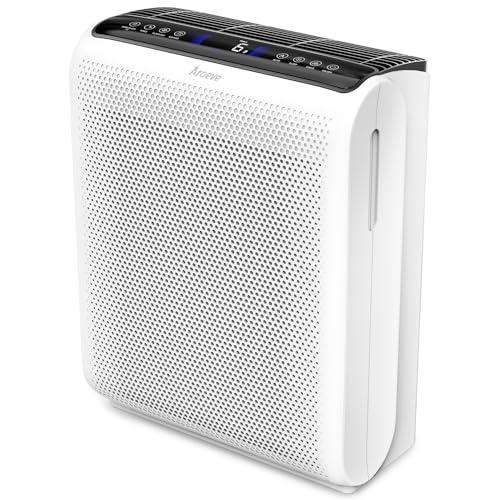
Impressed Purification: The AROEVE MK07 air purifier has a high CADR of 176 CFM / 300 m³/h, equipped with a large intake for efficient removal of tiny particles and pollutants. It covers spaces up to 1504 ft², ensuring your home is consistently filled with fresh air

WHY CHOOSE AHAM VERIFIDE AIR PURIFIERS: AHAM (Association of Home Appliance Manufacturers) is an ANSI-accredited organization that sets strict standards for appliance performance. Air purifiers with the AHAM VERIFIDE seal have been independently tested for air cleaning performance and energy efficiency. When you choose an AHAM certified air purifier, you're choosing a product trusted for reliable and effective indoor air quality improvement

High-Efficiency HEPA Air Purifier for Home – Removes dust, pet hair, smoke, and odors, ensuring cleaner, fresher air in large spaces up to 1,076 sq. ft. Perfect for allergy sufferers and pet owners.
Where Air Purifiers Don’t Help (and Why That’s Okay)
While air purifiers are effective at capturing airborne particles, they don’t address all indoor air issues—and that’s okay. They won’t remove surface debris like dust that has settled on furniture or carpets; regular vacuuming and damp dusting are necessary for that. Standard HEPA units also lack strong gas filtration capabilities, so odors from cooking or chemical vapors often persist unless your unit contains sufficiently activated carbon. For spaces where gases are a concern, a humidifier vs air purifier comparison can help determine which device better fits your needs. An air purifier works best in one room and doesn’t clean the entire home simultaneously. Understanding its limitations is easier if you first build your own sensor to measure what it actually captures. For plants like peace lilies that thrive on moisture, a dedicated device may be needed to maintain optimal humidity levels. It also doesn’t bring in fresh outdoor air, so if your home suffers from poor ventilation, stuffiness can still be a problem. Additionally, it’s not a substitute for controlling pollution sources—smoking indoors or burning candles can overwhelm its filtering ability. Despite these limits, air purifiers still significantly reduce airborne particles, making them a useful part of a broader, practical approach to improving indoor air quality.
How to Get the Best Results From Your Air Purifier
To get the best results from your air purifier, run it continuously at a low fan speed. This approach maintains steady air filtration without heavy energy use, especially overnight in bedrooms where you breathe most. Keep the purifier in one place; moving it around can reduce its effectiveness. Position it smartly by keeping it at least 6 to 12 inches away from walls, furniture, and curtains to ensure unobstructed airflow. Aim for the purifier to clean the air 4.8 times per hour in the designated space for optimal performance. During operation, close doors and windows to prevent clean air from escaping. You may also consider pairing the purifier with a ceiling fan with a light to improve air circulation without introducing new pollutants.
Regular maintenance is crucial. Clean or replace filters on schedule because loaded filters quickly lose efficiency. To reduce the purifier’s workload, vacuum nearby surfaces frequently and avoid using candles, incense, or aerosol sprays, which introduce more pollutants. Following these practices helps your air purifier work efficiently, providing cleaner air without unnecessary strain.