Does a Dehumidifier Help With Mold?
If you’re dealing with mold or worried about it growing in your home, you might wonder whether a dehumidifier can help. While it can reduce moisture in the air, it won’t eliminate mold that’s already on surfaces.
Using one effectively involves controlling humidity levels to prevent mold from settling in. Keep reading to learn how a dehumidifier fits into a plan for mold prevention and removal.
Can a Dehumidifier Actually Fix a Mold Problem?
A dehumidifier cannot fix an existing mold problem on its own. While it helps control moisture levels in the air, it doesn’t eliminate the mold already present on surfaces such as walls, grout, or carpets. Moisture removal alone won’t kill mold spores or remove the visible growth; you need to physically clean those surfaces with chemicals or scrubbing tools. Air purifiers also won’t solve the problem because they only capture airborne spores and don’t affect mold colonies on surfaces. Think of your dehumidifier as a tool to prevent future mold growth by keeping humidity low, but not as a method to remove current contamination. To effectively address mold, you must first clean the affected areas thoroughly, then use the dehumidifier to maintain low humidity and prevent recurrence. Even so, dehumidifiers aid in drying out building materials such as drywall, which removes the water source needed for mold to thrive. This process works by drawing moisture from the air through capillary action in the wicks, similar to how reed diffusers operate. For best results, choose a bedroom dehumidifier with a capacity suited to your room size and typical humidity levels. Similarly, a well-rated window air conditioner can help manage humidity levels by cooling air and removing moisture during operation.
The Short Answer: Yes for Prevention, No for Removal
A dehumidifier is effective for preventing new mold growth but cannot remove existing mold. It works by reducing the moisture level in the air, which is essential because mold spores need moisture to germinate and spread. Keeping indoor relative humidity between 30% and 50% drastically decreases the likelihood of mold developing. Areas with high humidity, such as basements, crawl spaces, or laundry rooms, create ideal conditions for mold growth. When humidity exceeds 60%, mold growth accelerates, making humidity control crucial. A dehumidifier pulls excess moisture from the air, making the environment less hospitable for mold spores to settle and grow. However, it does not eliminate existing mold colonies; physical cleaning or professional remediation is necessary for that. Long-term mold prevention relies on consistently managing humidity levels and addressing sources of moisture. Similarly, using the best reeds in a diffuser can optimize scent distribution, but they cannot create fragrance without the oil. For plants that thrive in moisture, like peace lilies, a humidifier provides the opposite function by adding necessary humidity to the air.
How a Dehumidifier Prevents Mold Spores From Settling
Because a dehumidifier pulls excess moisture from the air, it prevents mold spores from settling by making the environment too dry for them to germinate. By actively reducing humidity levels, it removes the water vapor spores need to activate and grow. Without sufficient moisture, spores that land on surfaces cannot develop or form colonies. For optimal bedroom air quality, a top-rated bedroom humidifier can also help maintain balanced humidity levels that discourage mold growth. Reviewing the best humidifier for dry mouth can help you find a model that effectively manages moisture. Unlike an air cleaner that filters particles, a dehumidifier targets the underlying moisture conditions that allow mold to thrive.
You will notice less condensation on your walls and windows as well. The drier air halts water collection on cold surfaces, eliminating damp spots where spores commonly settle. Continually circulating and drying the air accelerates the drying process in porous materials like wood and drywall, depriving landing spores of the damp substrate they require. This approach doesn’t kill existing mold but effectively prevents new growth by blocking the conditions necessary for spores to start growing.
What Humidity Level Stops Mold Growth?
Keeping indoor relative humidity below 60% is essential to stop mold growth. Mold spores typically germinate when humidity levels rise above this threshold, with 60% being a widely recognized upper limit for prevention. The ideal range for controlling mold activity is between 30% and 50%, where the chances of spores developing are significantly reduced. To maintain consistent humidity levels, use a hygrometer to monitor your indoor environment. Fluctuations above 60% can cause condensation on cool surfaces, creating the damp conditions mold needs to thrive. Addressing sources of moisture like leaks, damp basements, or steamy bathrooms helps keep humidity in check. By maintaining levels below 60%, you create a less hospitable environment for mold spores to germinate and grow. Using a high-capacity dehumidifier can effectively pull excess moisture from the air, particularly in damp basements, to keep levels within the safe range. For homes with vertical windows, proper airflow and moisture control are equally critical, as window unit placement can influence condensation patterns near the sill. A flush mount ceiling fan can improve air circulation and help reduce moisture buildup in rooms with low ceilings.
Why a Dehumidifier Can’t Kill Mold (Ever)
A dehumidifier cannot kill mold because it only reduces airborne moisture without affecting existing mold colonies. Mold spores can survive on surfaces like walls or carpets even when the air feels dry. When conditions are dry, mold becomes dormant but isn’t eradicated. It can quickly reactivate once moisture levels rise again. To eliminate mold permanently, you must physically remove or chemically treat contaminated materials. Using air filtration systems can capture floating spores, but they don’t destroy mold growing on surfaces. A dehumidifier simply makes the environment less hospitable, not a solution for active mold growth. Using an air circulator can help dry surfaces faster by moving air, but it still cannot remove existing mold. For better results, a portable air conditioner can help reduce overall humidity by removing airborne moisture during operation, but it also cannot kill existing mold. Dormant mold remains hidden and potentially harmful until properly handled through cleaning, removal, or remediation. Lowering humidity helps prevent future growth but does not eliminate existing infestations. Building a DIY air purifier at home can capture floating spores but still cannot remove mold already growing on surfaces.
When a Dehumidifier Helps Most With Mold Control
Using a dehumidifier proactively is your best defense against mold in damp areas where humidity stays above 50 to 60 percent. Focus on spaces like basements, bathrooms, or laundry rooms where moisture tends to linger. It’s most effective to operate the device before mold has a chance to establish itself, such as after a quick leak or during periods of wet weather. Signs like condensation on windows or a musty smell indicate it’s time to act. During humid seasons, running the dehumidifier regularly and maintaining the target relative humidity range of 30 to 50 percent helps prevent mold growth. Regularly empty the reservoir and clean the filter to keep your dehumidifier working efficiently. If you spot visible mold, remove it physically first. Use the dehumidifier afterward to inhibit future growth and keep mold from returning. For spaces without windows, portable air conditioners can also help control humidity and mold. Choosing a model with automatic humidity control ensures consistent moisture removal tailored to your space. For best results, position the dehumidifier away from walls and furniture to allow for proper air circulation around the unit.
Best Dehumidifier Placement and Settings for Mold Prevention
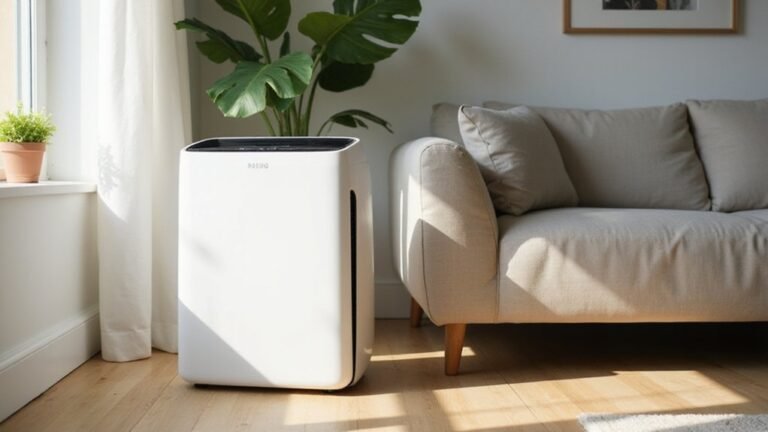
Placing your dehumidifier in the center of the room is the best way to improve airflow and efficiency. Avoid pushing it against walls, furniture, or curtains, as this can block airflow and reduce its effectiveness. Keep space around the unit to prevent blocking the intake or exhaust vents, which ensures proper air circulation. In connected rooms, positioning the dehumidifier centrally and openly helps it draw air from adjacent areas, enhancing overall moisture removal. Using a separate smart thermostat can help you monitor and adjust indoor conditions alongside your dehumidifier for balanced comfort. For further home refreshment, you can also explore fragrance oil diffusers to complement the dry air with pleasant scents. Adding an air purifier to the bedroom can further improve your comfort and health by filtering out airborne allergens and dust.
Target your priority zones, such as basements, bathrooms, kitchens, and laundry rooms. In areas with localized humidity, place the unit near the source, like a shower or stove. For optimal mold prevention, set the humidistat between 40% and 50% relative humidity. Going below 40% can dry out wood and cause discomfort in your sinuses. Regularly clean the filter to maintain performance, and consider using the continuous drain feature to avoid frequent tank emptying. These placement tips and settings maximize your dehumidifier’s ability to fight mold effectively.
Other Mold-Fighting Steps That Work With a Dehumidifier
Even with the right placement and settings, your dehumidifier cannot prevent mold if moisture keeps entering your home. To effectively reduce humidity, fix leaks, seal windows, and improve air circulation by opening windows when outdoor humidity is low and running bathroom fans. External factors like leaky gutters and rainwater penetration are common culprits that require outside repairs, not just interior fixes, to stop ongoing dampness. Dry wet materials within 48 hours using fans in conjunction with your dehumidifier. Always clean mold off hard surfaces with detergent and water before it spreads further. Consider applying mold-resistant paint after cleaning, but never paint over existing mold. To keep indoor moisture in check, vent dryers outside and avoid drying clothes indoors. Maintain your home’s relative humidity below 60%, which a hygrometer can confirm. Without these additional steps, mold will reappear regardless of your dehumidifier’s efforts.