How Often to Change HEPA Filter in an Air Purifier
Wondering how often you should change your HEPA filter? Usually, replacing it every 6 to 12 months works well, depending on usage and air quality.
Knowing the signs that it’s time for a swap helps keep your indoor air clean and healthy. Keep reading to see what factors influence filter lifespan and how to stay on top of maintenance.
HEPA Filters Last 6–12 Months in a Typical Home
Most HEPA filters should be replaced every 6 to 12 months, but the ideal timing depends on your home’s conditions. In a typical household with average air quality, you’ll probably need to change your filter around the 8 to 12 month mark. If your home has heavy usage or poorer air quality, replacing the filter closer to 6 months is advisable. Conversely, lighter use or better air conditions could mean extending the interval to 12 months. Keep in mind that this recommendation specifically pertains to particle filters; gas or odor filters usually require more frequent changes. Always check your purifier’s manual for the manufacturer’s recommended schedule. A good rule of thumb is to plan for roughly 2,000 to 2,500 hours of operation before replacing a HEPA filter. In normal conditions, replacing once per year works well, but adjust based on your environment and how often you use your purifier. Be aware that factors like pet hair or smoke can shorten the lifespan of your HEPA filter. To ensure safety, always follow precautions for portable heaters like keeping the unit away from flammable materials. For basements, using a dedicated dehumidifier can help manage humidity levels, which in turn reduces the burden on your air purifier’s HEPA filter. If your unit sits near a window, consider how window AC placement affects airflow and filter loading.

𝗖𝗢𝗠𝗣𝗔𝗧𝗜𝗕𝗟𝗘 𝗠𝗢𝗗𝗘𝗟𝗦 - ①Smilyan HPA300 hepa r filter replacement is fully compatible with Honeywell Air Purifier HPA100/200/300 and 5000 Series including HPA090, HPA100, HPA200, HPA250, HPA300, HPA5200, HPA5220 HPA5250, HPA5300, HPA5350, HPA8350. Replacement for Honeywell R Filter including HRF-R3 & HRF-R2 & HRF-R1 ② The HRF-A300 activated carbon A Pre-Filters are compatible with Honeywell HPA300 series air purifier.

【Package includes】: 4 True HEPA Filters + 8 Carbon Booster Pre-Filters. Designed to fit aer1 ready air purifiers,Replaces A Filter,D Filter,K Filter. Compare to Holmes aer1 hepa-type total air filter HAPF30AT
What Shortens Your Filter’s Life (and What Makes It Last Longer)
Your HEPA filter’s lifespan is primarily affected by the amount and type of particles it’s asked to capture. Heavy particle loads from dust, cigarette smoke, cooking grease, and pet dander cause the media to clog faster, reducing its effective time before needing replacement. Running your air purifier continuously or at high fan speeds increases airflow through the filter, which accelerates particle buildup and airflow blockage. Unlike reed diffusers, which rely on passive evaporation with no moving parts, an air purifier’s active airflow system draws particles directly into the filter, leading to a more rapid clogging if the fan is run constantly. Excess moisture from high humidity or water exposure weakens the filter’s rigidity, making it more prone to damage and requiring earlier replacement. A weak pre-filter allows larger particles to pass through and reach the HEPA stage, so routine maintenance of the pre-filter—such as regular cleaning or replacement—is essential to protect the main filter. Proper system design and correct installation help ensure even particle distribution and prevent premature clogging. Lastly, staying within the manufacturer’s recommended airflow rate keeps the filter operating at optimal performance and prolongs its lifespan. A dehumidifier that reduces indoor humidity can also help limit the moisture that attracts centipedes and other pests. For spaces where traditional ducted cooling isn’t an option, hose-free portable AC units offer a convenient alternative that doesn’t compromise on air circulation, though they still rely on your purifier’s filter to handle airborne debris.
3 Telltale Signs Your Filter Is Past Its Prime
Your filter is past its prime when you notice a significant reduction in airflow from your air purifier. If the unit sounds louder but moves less air, it’s a clear sign of increased resistance caused by a clogged HEPA filter. This resistance slows down the rate at which your room is cleaned.
Check the filter for visible discoloration—dark spots or a grayish buildup indicate trapped particles saturating the media. Don’t rely solely on slight tint changes; look for heavy dust or debris that stubbornly remains even after regular pre-filter cleaning.
Finally, trust your nose. Unpleasant odors such as musty or stale smells emanating from the unit suggest the filter is overwhelmed with captured particles. If you detect these odors despite performing normal maintenance, it’s a strong indication that the filter needs replacing. Combining these signs—reduced airflow, discoloration, and persistent odors—will help you determine the right time to put in a new filter.

𝐆𝐄𝐍𝐔𝐈𝐍𝐄 𝐑𝐄𝐏𝐋𝐀𝐂𝐄𝐌𝐄𝐍𝐓 𝐅𝐈𝐋𝐓𝐄𝐑: Designed specifically for the Core 300-P / Core 300S-P air purifiers to maintain its peak performance. Use genuine filters for premium quality and longer lifespan. We recommend replacing your filters every 6 to 8 months.

PERFECT FIT: Our C545 True HEPA Replacement Filter S Olny Compatible with Winix C545 Air Purifier, Filter S Compare to part number 1712-0096-00 and 2522-0058-00, Please check your purifier model before making an order.
Why You Can’t Wash a HEPA Filter (and What to Clean Instead)
You can’t wash a clogged HEPA filter because standard HEPA media isn’t designed to handle water. Washing it causes fibers to break apart and deteriorate, which permanently reduces its filtration efficiency by roughly 15 to 23 percent. Moisture trapped inside the filter also creates a perfect environment for mold and bacteria to grow, which you could end up breathing in. Unless the manufacturer explicitly states that the filter is washable, you should avoid rinsing it. Instead, consider replacing the filter or using methods recommended by the manufacturer to clean or maintain it.

【Perfect for AP-1512HH Air Purifiers】: Fully compatible with Coway Airmega AP-1512HH and Airmega 200M (AP-1518R) Air Purifier, AP-1512HH-FP, AP-1518R, and AP-1519P. Compared to Part # 3304899. work like original ones but half the price.

Work Great As Name Brand Filter -- Multiple tests in our factory have proven that Colorfullife core 300 replacement filters are fully compatible with LEVOIT Core 300, Core 300-P and Core 300S Air Purifier. Compatible withLEVOIT Core 300-P Air Purifier Replacement Filter, Compared to Part # Core 300-RF.

【Core 300-RF For Levoit Core 300 Replacement Filter】
How to Build a Replacement Schedule That Actually Works
Adjust your schedule based on your home’s air quality and load. If you notice heavy dust, pet dander, or wildfire smoke, expect filters to need replacing more often. During your worst normal month—like allergy season—you should tighten the interval to maintain indoor air quality. To contrast with a portable or window unit, consider that portable air conditioners often have lower overall performance and higher running costs compared to window models, which can affect how often you need to service filters in a combined system. Use filter-stage-specific schedules: pre-filters typically need cleaning every 2 to 4 weeks, since they trap larger particles and can clog quickly. HEPA filters, on the other hand, last longer due to their dense filtration, often up to 6 to 12 months, but always check manufacturer recommendations. For homes using a diffuser for essential oil alongside an air purifier, the oil particles can coat the HEPA filter and reduce its lifespan, making more frequent checks necessary. A flush mount ceiling fan with a light can be a practical choice for rooms with limited vertical space, but its airflow pattern differs from that of an air purifier’s circulation needs.
Incorporate performance checks such as a PM2.5 monitor to catch declining efficiency early. If the monitor shows increasing particle counts or the filter appears visibly dirty, replace the filter sooner. Set a simple monthly reminder to review your filter’s condition and establish a targeted replacement window—aim for a range rather than a fixed day—so you stay on top of maintenance without relying solely on memory.

Wide Compatibility: Our MK06 MK01 filter replacements are compatible with AROEVE MK01 MK06 MK01A MK06A, VOOPNU DH-JH12, Kloudi DH-JH01, Tolife TZ-K1 and FreAire KN6391 Air Purifier

Package includes: 2 True HEPA Filters + 4 Carbon Booster Pre-Filters. Designed to fit aer1 ready air purifiers,Replaces A Filter,D Filter,K Filter. Compare to Holmes aer1 hepa-type total air filter HAPF30AT

Premium Replacement Filter: Our Core Mini Filter H13 True HEPA Filters is specially designed with advanced technology to keep your machine running at peak performance. *NOTE: This Core Mini Replacement Filter is ONLY compatible with LEVOIT Core Mini Air Purifier. Please check your air purifier model before purchasing
When Should You Actually Replace Your HEPA Filter?
You should replace your HEPA filter when you notice reduced airflow, persistent odors, or visible dirt buildup on the pre-filter. Additionally, if your PM2.5 monitor shows rising particle readings, it indicates the filter is failing. Heavy dust, pet dander, or wildfire smoke can shorten the lifespan to about 3 to 6 months, so consider replacing the filter sooner under these conditions. Trust your air purifier’s filter indicator alert, especially if it uses runtime or pressure sensors. A louder or harder-working unit also signals that a filter change may be needed. Ultimately, rely on the performance of your purifier—if it starts to work harder or doesn’t clean the air as effectively, it’s time for a swap. For cat allergies, pet dander is a common airborne allergen that can clog filters faster. If you are using a humidifier alongside your purifier, selecting a cool mist humidifier can help reduce the dust load on the filter by adding moisture without raising the temperature. Understanding how HEPA filters trap particles through a combination of interception, impaction, and diffusion helps explain why a clogged filter loses efficiency and requires replacement.
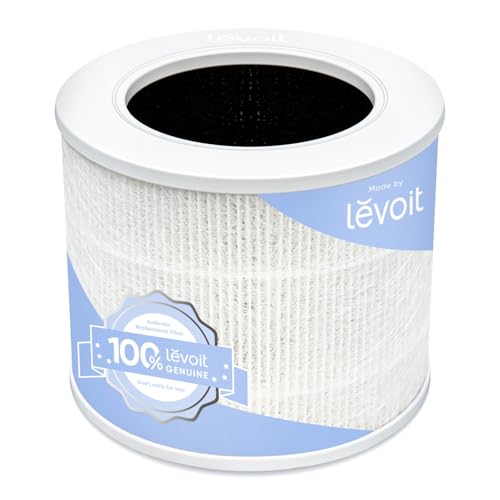
𝐆𝐄𝐍𝐔𝐈𝐍𝐄 𝐑𝐄𝐏𝐋𝐀𝐂𝐄𝐌𝐄𝐍𝐓 𝐅𝐈𝐋𝐓𝐄𝐑: Designed for Core Mini-P air purifiers to maintain peak performance. Use genuine filters for premium quality and longer lifespan.