Water Air Purifier vs HEPA: What’s the Difference?
Many people wonder whether a water air purifier or a HEPA filter offers better clean air for their homes.
The choice often comes down to what’s more important to you: capturing tiny pollutants or adding moisture to dry air.
Understanding how each works can help you pick the right purifier for your needs.
Keep reading to see which option suits your home best.
What’s the Core Difference Between Water and HEPA Purifiers?
Water purifiers rely on a liquid medium to clean the air through filtration and moisture addition, but they struggle with tiny allergens and particles. Understanding the science behind humidifiers shows that while water-based systems can add moisture, they lack the mechanical filtration needed to consistently trap ultrafine particles. HEPA purifiers use a certified mechanical filter that traps at least 99.97% of particles as small as 0.3 micronss making them highly effective against dust, pollen, and smoke. While water-based systems can improve humidity and provide broader air treatment, they cannot match HEPA’s efficiency in removing microscopic airborne allergens. For a natural approach to air quality, certain top indoor plants can also help remove common toxins like formaldehyde and benzene. HEPA units focus solely on fine particle capture, offering proven, high-standard air purification. If your goal is serious allergy relief or controlling fine dust, HEPA purifiers deliver the performance that water purifiers cannot provide. In contrast, the best window air conditioners often combine cooling with basic filtration, but lack the specialized allergen capture of a dedicated HEPA purifier.

𝐖𝐇𝐘 𝐂𝐇𝐎𝐎𝐒𝐄 𝐀𝐇𝐀𝐌 𝐕𝐄𝐑𝐈𝐅𝐈𝐃𝐄 𝐀𝐈𝐑 𝐏𝐔𝐑𝐈𝐅𝐈𝐄𝐑𝐒: AHAM (Association of Home Appliance Manufacturers) is an ANSI-accredited organization that sets strict standards for appliance performance. Air purifiers with the AHAM VERIFIDE seal have been independently tested for air cleaning performance and energy efficiency. When you choose an AHAM certified air purifier, you're choosing a product trusted for reliable and effective indoor air quality improvement

𝗪𝗛𝗬 𝗖𝗛𝗢𝗢𝗦𝗘 𝗔𝗛𝗔𝗠 𝗩𝗘𝗥𝗜𝗙𝗜𝗗𝗘 𝗔𝗜𝗥 𝗣𝗨𝗥𝗜𝗙𝗜𝗘𝗥𝗦: AHAM (Association of Home Appliance Manufacturers) is an ANSI-accredited organization that sets strict standards for appliance performance. Air purifiers with the AHAM VERIFIDE seal have been independently tested for air cleaning performance, safety, and energy efficiency. When you choose an AHAM certified air purifier, you're choosing a product trusted for reliable and effective indoor air quality improvement
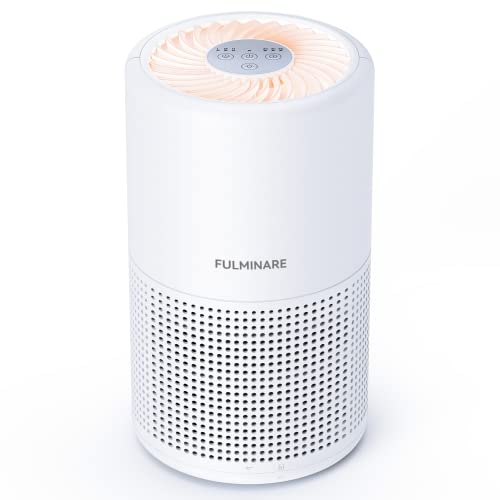
Efficient Particle Filtration: FULMINARE air purifier uses an H13 HEPA filter. Simply turn it on and maintain a clean and peaceful environment and give families health.
How Does a Water Air Purifier Trap Particles?
Water air purifiers trap particles primarily through physical contact with water. As airborne particles pass through the device, they collide with water droplets, which capture larger contaminants like dust, pollen, and some bacteria. These particles settle into the water, effectively removing them from the air. However, ultrafine particles such as PM0.3—those that are 0.3 micrometers or smaller—are difficult to trap with this method. Their tiny size allows them to slip between water droplets because of limited contact time and droplet size. In contrast, a dehumidifier works by condensing moisture from the air rather than washing particles, which is a fundamentally different approach to improving indoor air conditions. For those suffering from dry eyes, a humidifier can provide relief for dry eyes by increasing moisture levels. While water purifiers can improve air quality by reducing visible dust and increasing humidity, they do not provide thorough filtration against the tiniest airborne pollutants. For comprehensive removal of ultrafine particles, additional filtration technologies like HEPA filters are recommended. In fact, for those seeking relief from dry mouth, a humidifier for dry mouth often incorporates similar water-based humidity benefits.
How Does a HEPA Purifier Physically Filter Air?
A HEPA purifier filters air using a dense, mechanical filter made of randomly arranged fibers, often glass fiber or PTFE. The filter’s pleated design increases surface area, allowing air to flow through efficiently. Its fibers are densely packed, forcing particles to collide with them through three physical mechanisms: impaction, interception, and diffusion. Impaction captures larger particles like pollen that have enough momentum to collide directly with fibers. Interception traps mid-sized particles that come within close proximity to a fiber, touching it. Diffusion targets tiny particles under 0.1 microns, whose Brownian motion causes them to move randomly and increases the likelihood of striking fibers. This combination of mechanisms ensures that the filter traps 99.97% of particles at 0.3 microns, relying solely on physical contact and adhesion rather than a mesh sieve. A key factor in a purifier’s effectiveness is maintaining a consistent airflow rate to maximize particle collisions with the filter fibers. For apartment dwellers, a dehumidifier can complement this process by managing moisture levels, which is why reviewing the best dehumidifier options is essential for maintaining air quality. These devices also work together to boost overall comfort by reducing airborne irritants that thrive in humid conditions.
Which One Catches More Fine Particles Like Smoke and Dust?
HEPA purifiers catch significantly more fine particles like smoke and dust than water-based units. They’re designed to trap 99.97% of airborne particles at 0.3 microns, which includes most smoke particles that are often smaller, under 100 nanometers. This makes them highly effective at reducing PM2.5 levels and capturing ultrafine particles that water purifiers typically miss. Water-based units rely on contact filtration, which misses many tiny particles because smoke and dust can pass through or around the water medium. For example, in testing, the best HEPA models like the Winix removed smoke particles in 31 seconds with no detectable residue, while smaller units struggled significantly. For those prioritizing bedroom air quality, the best HEPA models also maintain consistent low noise levels during sleep mode. Understanding how these technologies interact with airflow helps explain why HEPA filters outperform water-based designs in real-world conditions. For instance, many top-rated HEPA models feature replaceable filters that maintain long-term performance without degradation.
Because of this, HEPA filters provide superior performance for fine particle removal, especially for smoke. However, HEPA units tend to produce more noise due to their stronger fans and often have a bulkier, boxy design that may not blend seamlessly with your room decor. Water purifiers run quieter and may be better for environments where noise is a concern, but they sacrifice efficiency on fine dust, smoke, and ultrafine particles. If your main goal is to filter out tiny particles like smoke and dust effectively, a HEPA purifier is the better choice despite the increased noise and size considerations.

WHY CHOOSE AHAM VERIFIDE AIR PURIFIERS: AHAM (Association of Home Appliance Manufacturers) is an ANSI-accredited organization that sets strict standards for appliance performance. Air purifiers with the AHAM VERIFIDE seal have been independently tested for air cleaning performance and energy efficiency. When you choose an AHAM certified air purifier, you're choosing a product trusted for reliable and effective indoor air quality improvement

Cleaner Air In Minutes: Purivortex is proven to filter common pollutants from your home’s air. This air purifier purifies rooms up to 880 ft² in one hour. It can purify a 215 ft² room in about 15 minutes, giving you noticeably fresher air in a short time. Breathe clean, crisp air and feel the difference in your space. (*Tested in an ISO 17025 certified laboratory under typical residential room ventilation conditions.)
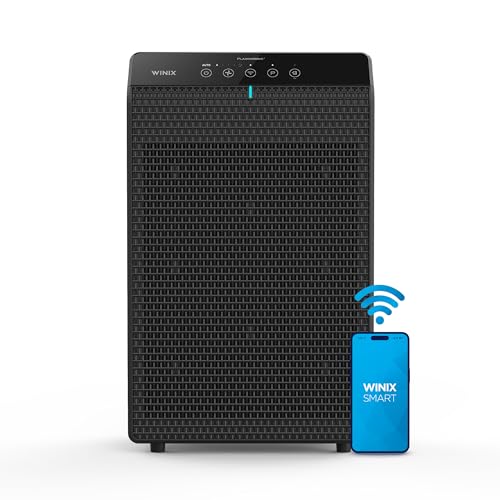
𝐀𝐇𝐀𝐌 𝐕𝐞𝐫𝐢𝐟𝐢𝐝𝐞 𝐚𝐭 𝟑92 𝐬𝐪 𝐟𝐭.: Also cleans rooms up to 1,882 sq ft in 1 hour (941 sq ft in 30 minutes, 627 sq ft in 20 minutes, 470 sq ft in 15 minutes)
How Often Should You Clean or Replace Each System’s Parts?
Water air purifiers require more frequent maintenance compared to other types. You should empty and refill the water reservoir regularly—typically once a week or as needed—to ensure the water remains fresh and effective at filtering. Wash or scrub washable parts, such as the water tank and any removable components, at least once every month to prevent the buildup of biofilm and bacteria. For comparison, HEPA purifiers often only need filter replacements every six to twelve months, which is less hands-on. However, similar to a water air purifier, a Honeywell tower fan also benefits from regular cleaning to prevent mold and dust buildup on its internal components. Worn parts that degrade over time due to moisture exposure, such as seals or gaskets, may need replacement every six to twelve months. Consistent sanitation and timely part replacement are essential for optimal performance and to avoid foul odors or decreased air quality. When selecting a model, consider how washable filter options can reduce ongoing costs compared to disposable HEPA filters.

Helps remove odors from the refrigerator

Save time and money with this 4204490 and 7007067 combination pack from Sub-Zero.

【Fully Compatible with】: This MIRO PRO humidifier replacement filter is fully compatible with Afloia MIRO PRO and KILO PRO Air Purifier Humidifier 2-in-1 Combo. Matched ASIN: B088FJ8YBJ, B08ZRWPMZR, B08YT4TNJD
How Do Water Purifiers Create Mold Risks: and HEPA Avoid Them?
Water purifiers create mold risks because they trap moisture and organic debris inside dark, enclosed spaces. This environment provides ideal conditions for mold to grow, especially if you neglect regular maintenance like replacing cartridges on time. Stagnant water and trapped sediment in the media serve as breeding grounds, increasing mold risk over time. To prevent mold, it’s essential to keep the system dry between uses and ensure proper drainage so moisture doesn’t accumulate. For example, dry throat relief humidifiers from the review must also be kept meticulously clean to avoid mold buildup. Choosing a dehumidifier for mold prevention instead can address humidity without creating standing water. Using a device designed to reduce indoor humidity can also help deter centipedes, which thrive in damp environments.
In contrast, HEPA air purifiers eliminate this problem because they do not involve standing water. They filter airborne particles instead of water or sediment, so the internal environment remains dry. While HEPA units can capture mold spores suspended in the air, they do not create damp conditions that promote mold growth. Routine filter checks are sufficient for maintenance, and you don’t need specialized mold prevention steps. The primary cause of mold in water purifiers—persistent dampness—is simply absent in a HEPA system.
When Does Added Humidity Make a Water Purifier Worth It?
Added humidity makes a water purifier worth it when your indoor relative humidity drops below 30 percent. At these levels, dryness symptoms like itchy skin, sore throat, or congestion become your main concern. During winter, heating systems often strip moisture from the air, making a water purifier that doubles as a humidifier a practical choice. It can increase comfort without clashing with your home’s decor, especially in living spaces where static electricity or cracked wood are common issues. Just remember to keep relative humidity between 30 and 55 percent; levels above 60 percent can reduce HEPA filter efficiency and promote mold growth. When dry air is an issue, the added moisture from a water purifier can significantly improve your indoor comfort. Ultrasonic technology, for example, uses high-frequency vibrations to disperse water and essential oils into a fine mist, providing both humidity and aromatherapy benefits. However, if you are considering a DIY air purifier design, you will find that these built-from-scratch units typically lack the humidifying capabilities of a dedicated water-based system.
Is a HEPA Purifier Enough Without a Humidifier?
A HEPA purifier alone is sufficient only when indoor humidity levels stay above 30 percent. Since HEPA filters focus solely on removing airborne particles like dust, pollen, and smoke, they do not affect moisture levels. If your home’s relative humidity remains comfortably above this threshold, adding a humidifier is unnecessary.
However, if your indoor air feels dry—often below 30 percent humidity—a HEPA purifier won’t improve that dryness. Dry air can irritate your throat, skin, and sinuses despite cleaner air. In this case, a humidifier is needed because the purifier cannot add moisture to the air. So, while a HEPA purifier suffices in preventing airborne irritants, it only supports comfort when humidity isn’t a problem.
Which Purifier Fits Dry Climates or Heavy Pollution?
For dry climates, a water-based purifier is your best option. It adds moisture to the air while trapping larger dust particles, helping to alleviate dry skin and static electricity. These units often come with smart technology that allows you to monitor humidity levels easily. However, they tend to be less energy-efficient because the humidifying process consumes additional power. Keep in mind that water-based purifiers are ineffective against microscopic pollutants like smoke or tiny allergens, so if heavy pollution is a concern, they may not be sufficient alone.

High Effective Air Purifer: Expericially for large room and small room, living room, bathroom, warehouse, office, etc. ap airpleasure air purfier lead a better life

Water-based air revitalizer – Freshen your room with a compact water-based air washer that circulates air through water to help refresh your space and create a cleaner-feeling, more comfortable room atmosphere.

【 Powerful 3-in-1 Air Purification & Humidification】:Combines HEPA-grade air filtration, gentle humidification, and essential oil diffusion in one sleek device. With a coverage area of up to 1,000 sq. ft, it effectively filters out smoke, unpleasant smells from the air in your large or small room, bedroom, living room or office.. Breathe fresher, cleaner air and feel revitalized all day.
Should You Buy a Water Purifier, a HEPA Purifier, or Both?
If you need both humidity control and high-efficiency filtration in a single space, then buying both a water purifier and a HEPA purifier makes sense. The water purifier adds moisture to dry air while also filtering out large particles and some bacteria through filtration or UV treatment. Meanwhile, a HEPA purifier targets airborne allergens, dust, pet dander, and tiny particles that can cause irritation or allergic reactions. Using both lets you address dryness and airborne irritants simultaneously, which is particularly helpful in very dry climates or homes with multiple allergy sufferers.
If humidity isn’t a concern and your main goal is reducing airborne irritants, then a HEPA purifier alone is usually the better choice. It’s more effective at filtering small particles like pollen, mold spores, and pet dander, all of which are common household allergens. Water purifiers are helpful for improving moisture levels but don’t significantly filter out smaller airborne particles. So, for general allergen reduction and cleaner indoor air, a HEPA purifier provides a broader, more effective solution.

𝐋𝐞𝐯𝐨𝐢𝐭 𝐄𝐥𝐞𝐯𝐚 𝟑𝟎𝟎𝐗: 𝐄𝐧𝐣𝐨𝐲 𝐘𝐨𝐮𝐫 𝐌𝐨𝐫𝐧𝐢𝐧𝐠 𝐖𝐢𝐭𝐡 𝐋𝐞𝐬𝐬 𝐀𝐥𝐥𝐞𝐫𝐠𝐞𝐧𝐬 𝐢𝐧 𝐭𝐡𝐞 𝐀𝐢𝐫
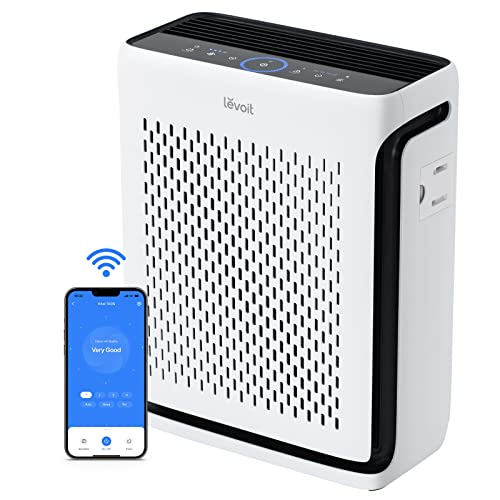
𝐖𝐇𝐘 𝐂𝐇𝐎𝐎𝐒𝐄 𝐀𝐇𝐀𝐌 𝐕𝐄𝐑𝐈𝐅𝐈𝐃𝐄 𝐀𝐈𝐑 𝐏𝐔𝐑𝐈𝐅𝐈𝐄𝐑𝐒: AHAM (Association of Home Appliance Manufacturers) is an ANSI-accredited organization that sets strict standards for appliance performance. Air purifiers with the AHAM VERIFIDE seal have been independently tested for air cleaning performance and energy efficiency. When you choose an AHAM certified air purifier, you're choosing a product trusted for reliable and effective indoor air quality improvement

See Your Air Improve: With CleanSense IQ, watch the display as your air quality adjusts in real time. No guessing your air quality––just fast, visible results. "Clean Air 100%" indicates that airborne particle concentration (PM 1.0–10) is at or below the sensor’s detection limit, not that the air is free of all pollutants.