Reed Diffuser vs Candle: Which Lasts Longer?
Wondering which lasts longer, a reed diffuser or a candle? The quick answer is that a 100mL reed diffuser can keep your space smelling fresh for three to four months, while most candles burn out in about 60 to 90 hours.
It all comes down to how you use them and your habits. Stay with me to see how temperature and routines can make or break both options.
How Long Does a Reed Diffuser Typically Last?
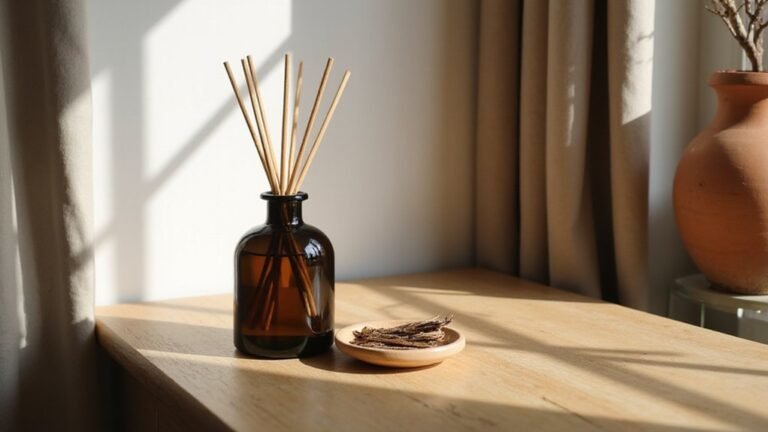
A standard 100 mL reed diffuser typically lasts about 3 to 4 months. Larger bottles, like a 500 mL version, can last between 6 to 12 months. The longevity depends on how often you flip the reeds—flipping once a week generally maintains a fresh scent without wasting oil. Temperature and airflow also play significant roles; warm, drafty rooms accelerate evaporation, reducing the diffuser’s lifespan, while cooler, still spaces help preserve it. Understanding how passive evaporation works can help you predict how long your diffuser will last. Unlike reed diffusers, which rely on passive evaporation, essential oil diffusers that use ultrasonic technology actively atomize oil and water into a fine mist. Since diffusers operate continuously, they often last longer in calendar time compared to candles, but you can adjust the scent intensity by how frequently you flip the reeds. Using a maximum of 25% fragrance in the mixture ensures the diffuser base allows liquid flow up the reeds for consistent performance. For a similar comparison in cooling appliances, the top window air conditioners also rely on passive and active mechanisms to maintain efficient operation.

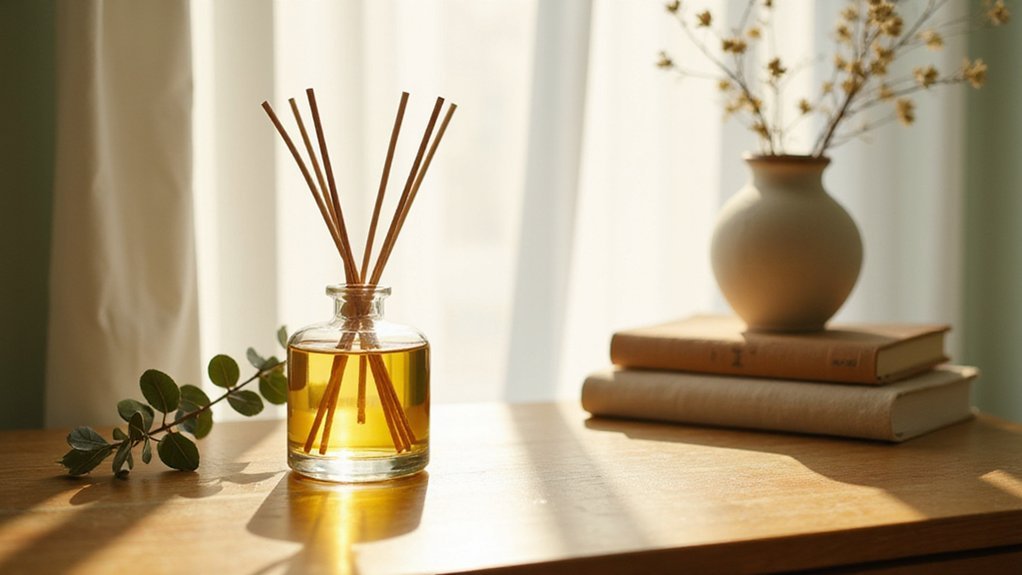
Easy DIY Diffuser: Transparent glass bottles allow you to see remaining oil volume and adjust intensity by adding or removing reeds.

△DIY YOUR OWN FRAGRANCE--These perfume reed diffuser bottles offer the freedom to experiment and create your own signature fragrances. Glass diffuser bottles are perfect for essential oils or perfumes, and comes in a matte black. They're ideal for adding a touch of aroma to homes, hotels or offices and can be used for events or relaxation practices like Spa and Meditation. The 100ml capacity provides ample space for creating unique scents without frequent refills.

Lavender Eucalyptus.The fragrance like taking a stroll in a peaceful lavender garden. With each step, the fresh mint flavor greets you, and the soothing earthy scent of vanilla embraces your senses
What’s the Average Burn Time for a Candle?
Candle burn times vary widely, but a typical large jar candle can last between 60 to 90 hours or more. The exact duration depends on factors like size, wax composition, and usage habits. Larger candles generally burn longer, so a 12-ounce jar might give you around 60 to 84 hours of illumination. Wax type also affects burn time; soy wax tends to burn slower per ounce compared to paraffin, providing more hours of use. Fragrance oils can influence burn rate as well—heavily scented candles often burn slightly faster because of added oils, which can slightly reduce overall longevity. To maximize burn time, limit each session to 2 to 4 hours, and always trim the wick beforehand to prevent tunneling and uneven burning. Proper care ensures you get the most out of your candle’s size, wax, and fragrance choice.
Why Reed Diffusers Outlast Candles Every Time
Reed diffusers outlast candles because they release fragrance continuously through evaporation rather than in quick bursts from burning. This passive diffusion means your diffuser can last between one and three months or longer, making it more economical and convenient. In contrast, candles typically offer a burn time of 20 to 90 hours, which depletes quickly and requires frequent replacement. With reed diffusers, you don’t need to worry about relighting or monitoring; simply flip the reeds occasionally to maintain a steady scent. For a more interactive experience, you can even build your own oscillating fan to improve air circulation in your room. Adjusting the reeds also allows you to control the intensity and longevity of the fragrance. This low-maintenance method keeps your space consistently fragrant without taking up visual space or creating wax waste, resulting in a more sustainable and longer-lasting air freshening solution. Additionally, unlike candles that can dry out the air, reed diffusers provide consistent moisture that helps soothe respiratory passages and reduce allergy symptoms. When selecting a reed diffuser, consider the top essential oil diffusers reviewed in buyer guides to ensure you choose a model with premium reeds and high-quality fragrance oils.
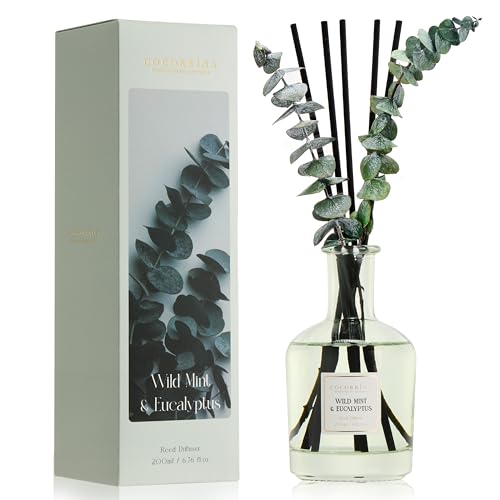
Wild Mint & Eucalyptus: Cool and invigorating, blending crisp eucalyptus and fresh mint with bright citrus and juicy fruit, creating a lively green scent that feels refreshing and uplifting

A Trio of Scents in One Set: Discover three distinct fragrances: the crisp freshness of Clean Linen, the breezy invigoration of Ocean Mist & Sea Salt, and the soothing clarity of Lavender Eucalyptus. Each scent embodies a different mood, allowing you to choose a favorite or rotate them to suit your moment

3.4 oz of our diffuser oil come packaged in a classic 4oz amber colored round bottle that goes well with most decors and is perfect for home offices.
5 Factors That Shorten Your Reed Diffuser’s Lifespan
Heat and direct sunlight cause faster oil evaporation, so avoid placing your diffuser near radiators or sunny windows. Using more reeds than needed—more than 3 or 4 sticks—increases scent intensity but drains the oil quickly. Flipping the reeds refreshes the fragrance but accelerates oil loss, so do this every week or two. Drafty areas near open windows or vents use up the oil faster and can affect both the look and scent variety of your diffuser. Low-quality oils or small bottles also reduce lifespan, so opt for higher-concentration oils and store your diffuser in a cool, dry place to keep it lasting longer. For similar reasons, drink dehumidifier water should not be used in place of fragrance oils, as its impurities can clog reeds and shorten diffuser life. To ensure your diffuser lasts as long as possible, consider placing it in a bedroom dehumidifier environment to reduce airborne moisture that can interfere with oil absorption. When assembling your own air purifier at home, a simple method involves using a box fan and a high-efficiency filter to trap airborne particles effectively.

Clean linen:Our Reed Diffuser Oil releases a clean and invigorating scent,transforming any space into a rejuvenating oasis.

UNSCENTED REED DIFFUSER BASE: High-quality reed diffuser base unscented, designed to carry fragrance without altering scent profiles. Ideal diffuser base for consistent, clean scent throw.

Description - This luxurious fragrance is inspired by the signature scent of an iconic New York luxury hotel—known for its crystal-clear elegance, timeless sophistication and warm opulence. It features notes of sandalwood, cedar, jasmine, musk, ambergris, iris, orchid and bergamot.
5 Factors That Slash Your Candle’s Lifespan
Avoid these five common mistakes to extend your candle’s lifespan. First, always follow the first burn rule: let the melt pool reach the jar edges during your initial burn. This prevents tunneling, where wax burns down the center and wastes wax, reducing how long your candle lasts. Second, don’t burn your candle for less than two hours at a time. Shorter sessions don’t allow the wax to melt evenly, which can cause uneven burn and diminish the candle’s overall life and look. Third, trim your wick to about a quarter inch before each burn. A longer wick burns hotter and faster, leading to quicker wax consumption and potential soot buildup, and this is often caused by an incorrect wick choice that leads to incomplete combustion. Fourth, keep burn sessions between three and four hours. Burning longer increases the risk of overheating the container or causing uneven burning. Fifth, store your candles in a cool, dark place and keep the wax free of dust and debris. Proper storage prevents wax discoloration, ensures a clean burn, and helps your candle stay attractive for longer. Not maintaining your candle properly shortens its lifespan and dulls its appearance, unlike reed diffusers which generally last much longer.

Ideal Size for Deep Candles:Measuring approximately 18 x 6 x 2 cm (7.28 x 2.26 x 0.88 inches), this candle wick trimmer comes with a 7-inch length, specially designed to easily reach the deepest pillar or jar candles for effortless trimming.

Ideal Size for Deep Candles - Measuring approximately 18 x 6 x 2 cm (6.97 x 2.2 x 0.83 inches), this candle wick trimmer features a 7-inch length designed to easily reach into the deepest pillar or jar candles for effortless trimming.

Size of ChefBee Candle Wick Trimmer - the wick trimmer is approx. 18 x 6 x 2 cm/ 6.97 x 2.2 x 0.83 inch (L x W x H), 7" length allows it to get down into even the deepest pillar candles.
How Temperature and Airflow Kill Both Lifespans
Heat and airflow both significantly shorten the lifespan of candles and reed diffusers. High temperatures accelerate evaporation; for every 10°C increase, diffuser oils can lose nearly twice as much, while candles melt faster and burn out sooner. Warm spots near radiators or in direct sunlight cause these effects to happen quickly. Airflow, especially drafts, worsens the problem by making candle flames flicker unevenly and increasing the rate at which diffuser oils evaporate. In breezy areas, diffuser oils can be depleted faster than in calm, still-air corners. A dehumidifier works by removing excess moisture, which can also help stabilize the evaporation rate of fragrance oils in such environments. For the best results, consider using a cool mist humidifier to add balanced moisture that prevents the air from drying out overly sensitive oils.
Initially, you might notice a stronger fragrance in warm or drafty rooms because of the rapid release of scent molecules. However, this is misleading—it’s a sign of quick consumption rather than efficiency. To extend their lifespan, place candles and diffusers in cooler, stable areas away from vents, windows, or direct sunlight. A corner with gentle, consistent airflow can help maintain the fragrance longer without hastening depletion.
3 Burn Habits That Double Your Candle’s Hours
Keep your candle burns between 2 and 4 hours each time. Staying within this range prevents the vessel from overheating, which can cause the flame to grow too large and accelerate wax loss. Conversely, burning for less than 2 hours can lead to tunneling, where wax near the wick remains unused and melts down the sides. By sticking to this routine, you’ll achieve longer, cleaner burns from every candle, maximizing your wax’s lifespan and ensuring an even melt pool every time. For those seeking a different cooling approach, consider that portable air conditioners for camping can provide sustained comfort without the burn time limits of candles. Just as with candles, choosing a smart thermostat can help manage energy usage efficiently by optimizing heating and cooling schedules. To ensure your space remains comfortable in damp conditions, a basement dehumidifier with a high pint capacity can continuously remove excess moisture, unlike the passive evaporation of a candle’s melt pool.

Bow tie clip design: held the wick in place when pouring the wax; will make your homemade candle process much easier

Sufficient quantityL: Includes 50 candle centering tool, each with 7 holes. These are a sufficient quantity and uniform specifications to meet the needs of batch DIY candle making and are suitable for various candle making scenarios.

INCLUDING 20 pack candle wick centering device, which is constructed in metal that is 3.9 inches in length, Pack of 20 value pack,a gift to all candle making lovers
Which Option Gives You More Total Hours?
Reed diffusers provide significantly more total hours of fragrance than candles. A typical candle offers only 50 to 80 hours of burn time, which limits its scent to the periods when it is actively lit. In contrast, a reed diffuser continuously releases fragrance for 2 to 6 months, totaling hundreds of hours of aroma exposure. This extended duration means you experience a consistent scent without having to light or relight anything. Because the diffuser doesn’t require daily maintenance, it maximizes the overall hours of fragrance in your space and maintains a long-term aromatherapy benefit. To achieve optimal performance, controlling humidity levels is essential, as high moisture can reduce the effectiveness of a dehumidifier used to keep the reeds dry. A similar cleaning approach for your reed diffuser reeds can prevent mold and buildup, just as it does for an oscillating fan. You can further extend this longevity by flipping the reeds weekly to refresh the scent delivery.
The Verdict: Reed Diffusers Win for Long-Lasting Scent
Reed diffusers last significantly longer than candles, providing weeks to months of continuous scent release. Unlike candles, which typically burn out after a few dozen hours, diffusers rely on slow evaporation through the reeds, ensuring a steady, gentle fragrance all day long. This consistent release requires minimal effort—you just flip the reeds every few weeks to refresh the scent. For even better airflow in a room, an air circulator can help distribute the fragrance more evenly than a standard fan. Unlike candles that produce heat, reed diffusers operate without altering the temperature of a room, making them a safe and passive option that uses cold air diffusion to disperse scent effectively. For those seeking a cooling solution in warmer months, a portable air conditioner can also provide comfort while the diffuser handles fragrance.
You’ll find a variety of color options for diffusers, allowing you to match your décor with ease. While candles often deliver a stronger scent burst in short intervals, diffusers offer a consistent, low-maintenance presence without the need for flames or wax. Their durability and minimal upkeep make diffusers the better choice for ongoing, flameless home fragrance that operates constantly.