
Compare Smart Thermostats: Which One Is Best?
Choosing the right smart thermostat can feel overwhelming with so many options.
If your goal is to save the most on energy bills, the Google Nest Learning Thermostat is known to cut energy use by up to 15%, which can save you over $200 in colder climates.
But if you want broader smart-home features, the Ecobee Premium offers voice control and air quality sensors.
Your decision depends on whether you want maximum efficiency or more multifunctional capabilities.
Keep reading to find out how these options compare and which one might be best for you.
How Experts Define The “Best” Smart Thermostat In 2026
Because no single thermostat excels at everything, experts evaluate the “best” models through four key criteria: independent lab-testing, smart-home integration, compatibility and installation, and long-term value.
In lab-testing, publications like Consumer Reports use rigorous performance benchmarks to assess thermostats objectively, rather than relying on manufacturer claims. High-ranking models such as the Ecobee Smart Thermostat Premium stand out by balancing features, ease of use, and reliability. Consumer Reports tested 26 smart thermostats, finding that 3 budget models outperformed models costing over $200, proving that price does not always dictate performance. This type of testing helps identify energy-saving potential that may not be obvious from a product’s price tag. When considering smart-home integration, experts look for remote control capabilities, compatibility with voice assistants, and support for sensors. Advanced models now utilize AI algorithms that learn your preferences and adjust heating and cooling automatically based on your routines, making automation a major plus. Similarly, humidifiers rated as best for a blocked nose often undergo lab evaluations that prioritize moisture output and ease of cleaning over flashy features. Experts also note that the top window air conditioners undergo similar lab testing to verify cooling capacity against advertised claims.
Compatibility and installation ease are equally important. A thermostat cannot be considered the best if it cannot work with your existing HVAC system or requires complex wiring. Most thermostats install in 40 minutes or less; many do not require a C wire thanks to power-sharing technology, which simplifies setup for older homes. DIY-friendly models that offer clear instructions and C-wire support tend to be favored, as they simplify setup and reduce the need for professional installation.
Which Smart Thermostat Saves The Most Energy?
The Google Nest Learning Thermostat (4th Gen) generally saves the most energy among smart thermostats. It often delivers 10–15% energy savings, which can amount to approximately $130–$145 annually, depending on your climate. Its AI-powered learning feature optimizes heating and cooling schedules based on your habits, reducing unnecessary energy usage and increasing efficiency over time. Proper bedroom humidity control can further enhance overall home comfort and efficiency. Using a dehumidifier like those designed to deter silverfish infestations can also help maintain optimal conditions.
While ENERGY STAR certification guarantees at least 8% energy savings, the Nest’s real-world performance tends to surpass this benchmark. In colder regions, savings can exceed $200 annually, leading to notable cost reductions and increased user satisfaction. Its data-backed approach and adaptive learning make it a top choice if maximizing energy efficiency is your priority. For even better air quality while managing your home’s climate, consider pairing it with a top HEPA air purifier.
The Ecobee SmartThermostat Premium is a strong alternative if your home has uneven temperatures. Its room sensors target specific zones in your house, allowing for more precise heating and cooling. This targeted approach typically results in 8–15% savings, comparable to the Nest, especially in homes with multiple zones or varying heat needs. However, in most cases, no single model consistently outperforms the Nest in documented annual energy savings. The optimal choice depends on your home’s unique layout, your climate, and your HVAC system’s efficiency.
Compare Smart-Home Features Across Top Models
The Ecobee Smart Thermostat Premium offers the most comprehensive set of smart-home features in a single device. It includes built-in voice control, air quality sensors, and home security integration. You can add remote room sensors to improve occupancy detection and temperature adjustment, ensuring comfort in every part of your home. Its platform compatibility spans Alexa, Google Home, Apple HomeKit, and SmartThings, allowing seamless integration with your existing smart setup. The device also supports automation routines, so your home responds intelligently to your habits and preferences. While other models may focus on specific functions, the Ecobee Smart Thermostat Premium combines versatility with advanced features to serve multiple needs efficiently. These capabilities can generate energy savings that offset the higher upfront cost over time.

Save up to 26% on your energy bills: ENERGY STAR certified. Automatically adjusts your temperature based on occupancy. Compared to a hold of 72°F

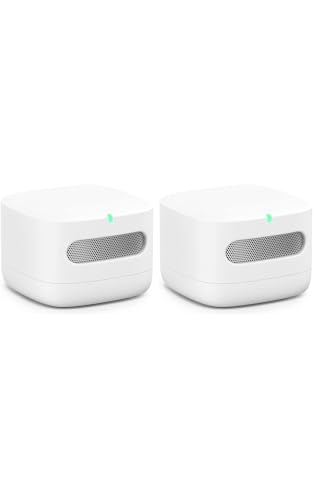
Know your air – An Alexa air quality monitor that makes it easy to understand what’s in your indoor air.

An Alexa thermostat - Amazon Smart Thermostat is an easy way to switch from a traditional thermostats for homes and help reduce energy usage.
How Top Smart Thermostats Rank On Ease Of Use
The Google Nest consistently ranks highest for ease of use. It excels in setup, display readability, programming, and manual operation, making daily interactions smooth. Users praise its simple installation process and intuitive controls, especially through the Nest app, which allows for seamless adjustments. The Ecobee Smart Thermostat Premium offers a clean, user-friendly interface that scores well in these areas, earning a 4.5 rating from PCMag. Meanwhile, the Cielo Breez Max provides straightforward LCD controls that are easy to navigate. Similarly, choosing a dehumidifier for your camper requires comparing top options to find the right balance of ease and performance. Designs favor minimalism and app-driven experiences, such as the Nest app’s smooth adjustments and the Honeywell Home T9’s strong manual controls, which help reduce frustration during daily use. Proper placement near a window ensures the thermostat senses accurate room temperature and operates efficiently. Both Sensibo Air and Mysa apps also receive high marks for straightforward setup, demonstrating that simplicity can go hand-in-hand with powerful features. Overall, these models show that it’s possible to have a thermostat that is easy to operate without sacrificing performance. To further enhance your smart home experience, avoiding common diffuser mistakes ensures your device delivers consistent results.

Save up to 23% every year on heating and cooling costs, adjusts to your set schedule to save energy when you’re gone and optimize comfort when you’re home. Compared to a hold of 72

CUSTOMIZE: Choose to receive change air filter reminders and select display settings to optimize this thermostat for home.The RTH20B is a direct replacement for the RTH2300, and replacement for the RTH221 offering 5-2 scheduling

COMMON WIRE REQUIREMENTS: Designed to work without a C-wire in most homes, but for some systems, including heating only, cooling only, and heat pump systems, you’ll need a C-wire or other compatible power accessory
Why The Ecobee Premium Works As A Multi-Purpose Device
The Ecobee Premium functions as a multi-purpose device by combining smart thermostat features with additional capabilities. It includes a built-in voice assistant—either Alexa or Siri—that allows you to control music, news, and other smart devices hands-free. Its user interface is designed to be intuitive, providing access to air quality readings for VOCs, CO2, smoke, and freeze alerts for safety. It is also compatible with 95% of HVAC systems including furnaces, heat pumps, and boilers, making it suitable for nearly any home setup. This device can improve indoor air quality by monitoring VOCs and CO2 levels in real time.
For energy efficiency, it offers eco+ features that automate scheduling and optimize your energy use based on time-of-use data, helping you save up to 26 percent annually. Included SmartSensors enable you to manage hot spots and occupancy, while window detection features pause your HVAC system to avoid unnecessary energy waste.
This device serves as a central command hub, combining climate control, safety monitoring, air quality assessment, and voice control in one streamlined package.

[Matter Compatibility with Zigbee & Thread] The W100 supports both Zigbee and Thread protocols, ensuring seamless integration with major smart home ecosystems like Apple Home, Amazon Alexa, Google Home, Samsung SmartThings, Home Assistant and Homey. Future-proof your home automation setup with broad compatibility and enhanced flexibility (*Thread mode:a Matter Controller of this ecosystem and a Thread Border Router are required;Zigbee mode: Aqara Zigbee hub required*)

PRIVACY PROTECTION*: Sensi won’t sell your personal information to third parties
Can The Vivint Smart Thermostat Really Save $300 A Year?
Vivint’s data indicates that you can expect typical savings of $50 to $200 per year, aligning with ENERGY STAR standards. While the $300 savings figure is not impossible, it only occurs under ideal conditions, such as consistent use and optimal settings. To maximize your savings, enabling the Smart Comfort feature to run automatically is key, as it adjusts temperatures based on your habits and can lead to greater efficiency. Without using this feature, your savings are likely to be more modest. So, while achieving $300 in annual savings is possible, it is not a standard outcome for most households. Similarly, using a humidifier for cough relief can provide comfort benefits that vary depending on your home’s humidity levels and usage patterns, much like thermostat savings depend on consistent settings. Choosing a ceiling fan color that matches your bedroom decor can also influence how comfortable and relaxing the space feels. For optimal air circulation, pairing a smart thermostat with a high-performance ceiling fan ensures balanced temperature control throughout your home.

High use of the scheduling feature of the T5 thermostat saved customers between 8 and 16% on heating and cooling bills. Dollar savings range based on nationwide average annual single-family detached home's heat and cooling bills; actual savings varies based on consumption.


Please scan the QR code to DO a Compatibility Check before purchase. Besides, a common wire (C-wire) is required for all vine thermostats
Budget Smart Thermostats: Sensi Touch 2 Vs. Ecobee Essential
The Sensi Touch 2 generally costs around $99, making it the more budget-friendly option. Its lower price tag is appealing if you want a smart thermostat without spending too much. It features a 4.3-inch touchscreen, providing larger and more responsive controls for quick adjustments. However, it requires a C-wire to install, which can be a hurdle if your current setup lacks one.
In contrast, the Ecobee Essential costs about $139.99 but includes the Power Extender Kit, which helps resolve wiring issues by eliminating the need for a C-wire in many cases. Ecobee’s software, eco+, is designed to optimize energy savings by up to 23 percent, making it a good choice for those focused on long-term savings. It also supports Apple HomeKit, giving you enhanced smart home compatibility that the Sensi Touch 2 lacks.
While the Sensi Touch 2 offers a lower upfront cost and a larger display, the Ecobee Essential’s included wiring solution and smarter energy management software could make it more cost-effective over time.

CONTROL: Connect to WiFi and control from anywhere using the First Alert app - Matter Certified and also compatible with Amazon Alexa, Google Assistant, Apple Home Kit
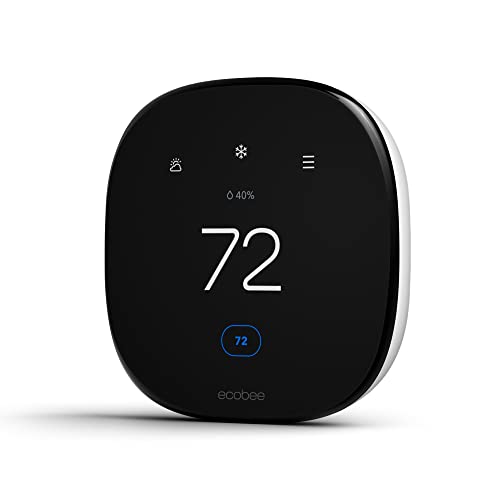
Saves you energy automatically — Save up to 26% per year on heating and cooling costs.* The Smart Thermostat Enhanced automatically adjusts your home’s temperature when you’re away or asleep, helping reduce energy use without sacrificing comfort.
Prioritize Smart Thermostat Features, Usability, Or Cost
Choosing a smart thermostat often comes down to what you prioritize most: features, usability, or cost. Each path involves tradeoffs. If you prioritize features, look for advanced options like learning algorithms and geofencing, which can optimize your comfort automatically. These features typically come with a higher price tag upfront. For those who also value a healthier home environment, considering indoor plants for cleaner air can complement your smart thermostat by naturally improving air quality without additional energy use. For a constant background aroma, reed diffusers offer a passive low-maintenance option compared to the active flame of candles.
If ease of use is your main concern, focus on models with intuitive apps, straightforward installation, and simple setup processes. These tend to forgo some of the more complex features but make daily operation hassle-free.
For those prioritizing cost, aim for basic models that include core remote control and scheduling functions. You’ll generally miss out on ecosystem integrations or advanced automation but save money on your initial purchase.
Don’t ignore battery life, especially if your wiring lacks a C-wire—longer battery life reduces the hassle of frequent replacements. Also, check whether the thermostat receives regular firmware updates, which help fix bugs and add new features over time. Just as humidifiers address dry skin by maintaining humidity levels, your decision should reflect what you’re willing to compromise on—automation sophistication, ease of use, or budget constraints—so think about your daily routines to find the best fit.
Match Your Priorities To The Right Smart Thermostat
Once you know your top priorities, matching them to the right smart thermostat becomes easier. If saving energy is your main goal, look for models like tado° V3+ or tado X. These devices feature geofencing and open-window detection, which help optimize heating when you’re away or open windows are detected. For voice control enthusiasts, ecobee4 is a good choice because it integrates with Alexa, and you should check if it’s compatible with your existing assistants like Google Home. For those prioritizing air quality, consider a washable filter design that is easy to clean and maintain. Understanding how air purifiers capture particles relies on knowing the difference between HEPA and other filtration technologies. To further narrow your choice, review a comparison of top portable air conditioners for insight into cooling performance and value. Installation can be tricky, especially with older or mixed heating systems. Focus on models with guided apps and clear instructions; tado X stands out for its straightforward setup and helpful support. Always verify system compatibility before buying—ensure your boiler or heat pump works with your chosen model. Confirming this early saves you time and frustration, allowing you to focus on features that matter most to your needs.