Can an Air Quality Monitor Detect Mold?
Wondering if an air quality monitor can tell you if you have mold? While it doesn’t detect mold spores directly, it can show clues like high humidity levels, increased VOCs, or particle counts that might include spores.
Think of it as an early warning system that helps you spot potential issues before they become visible or harmful.
The full story on what these devices can really do is right below.
What an Air Quality Monitor Can Tell You About Mold
Your air quality monitor can give you indirect clues that mold might be growing in your space. It tracks humidity levels, and when these stay above 60%, it’s a sign that conditions are favorable for mold development. Adding a smart thermostat can provide more precise control over indoor humidity and help prevent moisture buildup. Elevated PM2.5 or PM10 particle counts can also indicate airborne spores, although the monitor cannot distinguish mold spores from dust particles. Since monitors use laser-based particle detection technology to count and size particles, they can detect mold spores within the 1–30 micron range but still lack specificity. Rising volatile organic compounds (VOCs) may signal active mold colonies releasing microbial gases. When you notice sustained high humidity alongside spikes in airborne particles or VOC levels, it suggests that damp areas may be breeding grounds for mold. Use these signals to examine areas with excess moisture and improve your air filtration methods. Acting promptly to reduce moisture and control humidity can turn your monitor into an early warning system—helping you catch potential mold issues before they become serious. Implementing practical tips from experts can optimize your thermostat’s settings for consistent humidity regulation. For instance, setting your thermostat to run the fan periodically can reduce moisture accumulation in stagnant corners.

Save up to 23% every year on heating and cooling costs, adjusts to your set schedule to save energy when you’re gone and optimize comfort when you’re home. Compared to a hold of 72

Customizable Display: A sleek 4.3” display delivers enhanced visibility with the option to choose the color and style to match your home
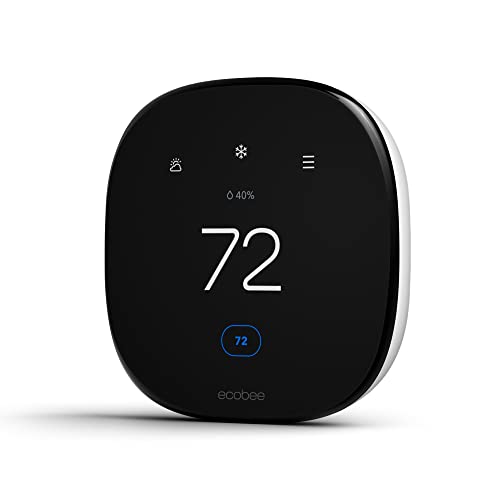
Saves you energy automatically — Save up to 26% per year on heating and cooling costs.* The Smart Thermostat Enhanced automatically adjusts your home’s temperature when you’re away or asleep, helping reduce energy use without sacrificing comfort.
Why Can’T Particle Sensors Tell Mold Spores From Dust?
Particle sensors cannot tell mold spores from dust because they measure particles based on size and count, not their biological or chemical makeup. Mold spores typically range from 3 to 30 microns in diameter, a size that overlaps with many other airborne particles like dust, pollen, and pet dander. Since sensors use laser-based detection to determine particle size, they produce identical readings for particles of similar size regardless of what they actually are. Consequently, a spike in particle counts after activities like vacuuming may appear to indicate mold presence, but it is often just dust resettling. Without biological analysis, these monitors can warn you that there are particles in the air but cannot specify whether they are mold spores, dust, or other allergens. For reliable mold prevention, using a bedroom dehumidifier can help control humidity levels that allow mold to grow. For those also seeking cool comfort, the best window air conditioners can help maintain a dry environment that discourages mold growth.
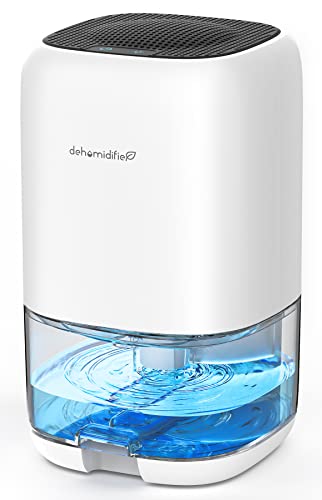
High Efficient Dehumidifiers for Home: Still annoyed about the muggy weather? Just Take it easy! have a try at TABYIK 35OZ Peltier dehumidifier, in a closed small room with humid environment of 86°F and 80% RH, it can collect a max of 16oz(450ml) of water in 24 hours, and with very low energy consumption (no more than 1-kilowatt hour a day).
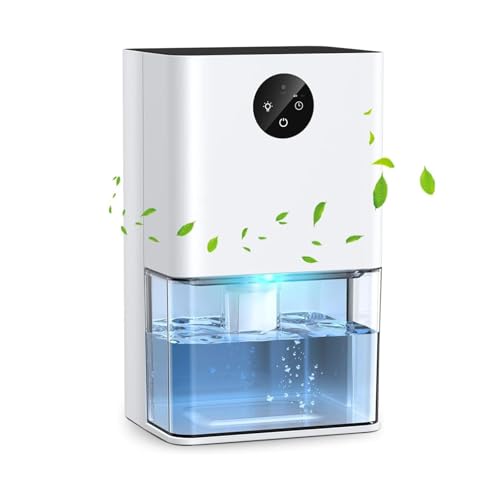
High Efficient Dehumidification for Home: The DY501 dehumidifier removes excess moisture effectively in closed small rooms with humid environments of 86F and 80% RH, collecting a maximum of 400ml of water in 24 hours with very low energy consumption (no more than 1-kilowatt hour a day)
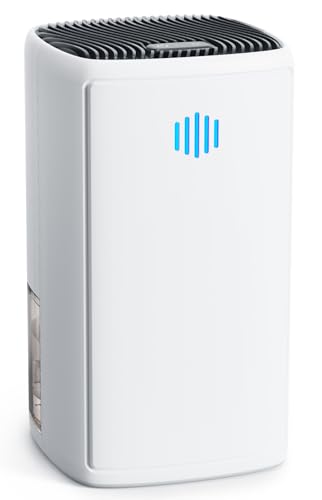
Efficient dehumidification helper: Using advanced semiconductor technology, it can dehumidify 11 OZ of water every 24 hours in an 86°F, 80% humidity equipment environment, effectively removing excessive humidity from small spaces such as bathrooms, closets and RVs, thus keeping you away from moisture.
What Air Quality Monitors Miss About Hidden Mold
Air quality monitors often miss hidden mold entirely. They can’t detect mold behind walls or under floors because these colonies rarely release spores into the air you’re measuring. Since particle sensors only sample airborne particles at the moment, concealed mold remains invisible until disturbed and spores become airborne. They also can’t trace airflow pathways that could carry spores from hidden sources like attic leaks or ductwork into living spaces. Elevated particle counts on a monitor might suggest an issue, but they can easily be confused with pet dander or cooking smoke, so you can’t rely solely on these devices to confirm the presence of mold. Visual inspections and moisture testing are essential steps to locate hidden mold and address problems your air quality readings won’t reveal. For a more thorough approach, checking for correct placement of sensors near potential moisture sources can improve detection accuracy. For respiratory issues like bronchiolitis, however, a proper humidifier can help manage symptoms by adding moisture to the air. Unlike particle sensors, an essential oil diffuser uses ultrasonic technology to disperse fine vapor, which can affect how humidity levels are sensed.
The Humidity Reading That Matters Most for Mold Prevention
The humidity level that most impacts mold prevention is relative humidity (RH), not the total amount of water vapor in the air. RH indicates how close the air is to its saturation point at a specific temperature. Maintaining RH below 60% is crucial because higher levels increase the risk of condensation and mold growth. The recommended safe range is between 40% and 60%, with adjustments based on the season—40% to 50% in winter and 45% to 60% in summer. Using a hygrometer helps you monitor and keep track of these levels. If the RH goes above 60%, you should act immediately by turning on a dehumidifier (such as one of the best dehumidifiers) or increasing ventilation to lower the moisture. To save on electricity costs while running a dehumidifier, consider setting it to an energy-saving mode to reduce power draw. Managing this single measurement is the key to controlling mold growth in your space. For additional protection, a unit with a HEPA filter can capture airborne mold spores that have already become suspended in the air.

2-in-1 Thermometer Hygrometer Meter: Built-in probe for unparalleled precision. It serves as both a digital electronic thermometer and a hygrometer, meticulously engineered for indoor environmental monitoring.

【HIGH-PRECISION DIGITAL HYGROMETER】 High-precision digital temperature and humidity meter, top-notch probe sensor. Short response time, strong anti-interference ability, and more accurate data collection, for a wide range of applications.

[High-Precision Sensor]: Advanced probe sensor for rapid and accurate temperature and humidity measurements. Sample rate up to 8 times per second, with a display update rate of 3 times per second.
How to Read High VOCs and Humidity Together
Monitoring VOCs and humidity together requires careful interpretation. A sudden increase in humidity followed by a VOC spike indicates moisture-driven emissions from existing materials. Conversely, high VOCs with stable humidity levels suggest a continuous source such as solvents or new furnishings. Be aware that high humidity above 90% relative humidity can lead to false readings, making VOC measurements unreliable. Always compare VOC levels against humidity data to accurately identify sources and avoid misinterpretations. For instance, proper window placement minimizes outdoor moisture intrusion, which can otherwise skew your sensor’s humidity baseline and complicate source detection. Adding a device like an air cleaner can help filter out VOCs and particulates, but it does not reduce humidity, making it distinct from a humidifier’s function. Since air quality monitors detect changes in particulate matter and gases rather than directly identifying mold spores, a sustained humidity spike paired with VOC rise often signals the microbial growth that a mold-specific test would confirm.

Know your air – An Alexa air quality monitor that makes it easy to understand what’s in your indoor air.

NEW GEN 2 AIR QUALITY MONITOR – 90-DAY HISTORY & 6-HOUR BATTERY: The latest BREATHE Airmonitor Plus Gen 2 features upgraded battery performance with up to 6 hours of portable use, plus 90-day app data history and data export. Monitor longer, review historical trends and export your indoor air quality data for deeper analysis.
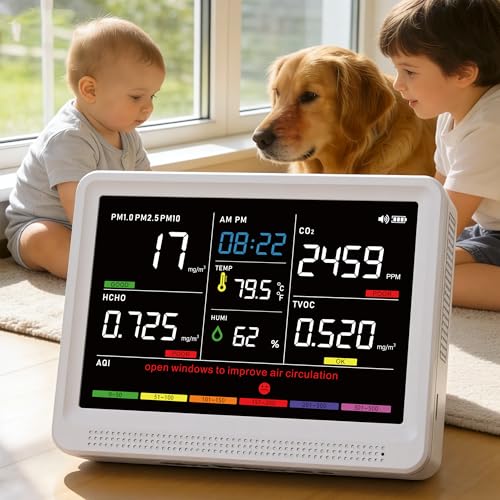
【Professional 16-in-1 Indoor Air Quality Monitor】 Experience the ultimate indoor air quality monitoring with our 16-in-1 Air Quality Monitor, offering real-time detection of 9 key parameters including CO2, PM2.5, PM1.0, PM10, HCHO, TVOC, Temperature, Humidity, AQI, and Time. With 7 distinct AQI alert buzzers, this air quality tester ensures your family breathes with ease. (*Note: "16-in-1" refers to the combination of 9 key detectable parameters and 7 types of AQI alert buzzers.)
Using an Air Quality Monitor for Early Warning Signs
A small device can alert you to a mold problem before you see or smell it by monitoring patterns over time rather than reacting to single spikes. Your air quality monitor tracks high humidity levels—an early sign of mold growth—and records particle counts, including potential mold spores. However, it cannot distinguish spores from dust or pollen. Focus on trends in moisture-prone areas like bathrooms and basements, especially when indoor airflow is poor. Repeated particle spikes in these spaces, combined with sustained high humidity, can indicate conditions conducive to mold. Seasonal changes, such as increased summer humidity, often lead to higher readings. While your monitor doesn’t confirm mold presence, consistent rises in particles alongside elevated humidity signal risks worth further investigation. Use these alerts as screening tools to identify potential issues early, rather than as definitive diagnoses. An oil heater provides steady, even warmth that can help prevent the temperature swings and condensation that encourage mold growth. Maintaining optimal humidity levels between 40-60% reduces the risk of mold-prone conditions, and choosing a device equipped with a humidistat can help regulate moisture in these vulnerable zones. For vehicles parked in humid climates, a portable air conditioner can function as a dehumidification tool to help keep interior spaces dry.

Wellness Indicator: This humidity meter with humidity level icon indicates air conditions - DRY/COMFORT/WET, allowing this humidity sensor to ensure you’re always aware of changes to your home/household with just a quick glance

Face Icon Comfort Indicator: Humidity temperature gauge features face icons to indicate DRY/COMFORT/WET air conditions, quickly informs you how to adjust your humidifier or dehumidifier to achieve optimal comfort.

Maintain the Right Room Temperature and Humidity Levels: This wireless indoor thermometer/hygrometer combination is perfect to pair with humidifiers or dehumidifiers
Confirming Mold: Inspection and Lab Testing Only
A visual inspection and lab testing are necessary to confirm the presence of mold. An air quality monitor alone can indicate conditions that might support mold growth, but it doesn’t detect mold itself. During a professional inspection, you look for signs like moisture damage on walls, ceilings, and HVAC components, along with musty odors that often accompany hidden mold. Remember, normal indoor air quality readings can be misleading because mold can hide in wall cavities and other concealed areas. For reliable cool comfort in summer, a top portable air conditioner can help manage humidity and temperature to reduce mold-friendly environments. Using an air purifier can also help remove airborne spores and improve overall air quality, but it does not resolve the source of mold growth.
To definitively confirm mold, you need lab analysis of indoor air and surface samples. Air sampling compares spore counts inside to those outdoors; a higher indoor spore count suggests mold growth. Surface sampling, such as tape lifts from visible moldy materials, can identify mold species and confirm contamination. Combining visual evidence with lab results provides the factual basis needed for effective mold remediation. Without this process, you’re left guessing about your home’s true indoor air quality. Maintaining optimal humidity during winter can reduce the conditions that support mold growth, a key benefit highlighted in reviews of top-rated humidifiers.